

BY ABDULKADIR M LAWAN, SEPTEMBER 30, 2024 | 7:31PM
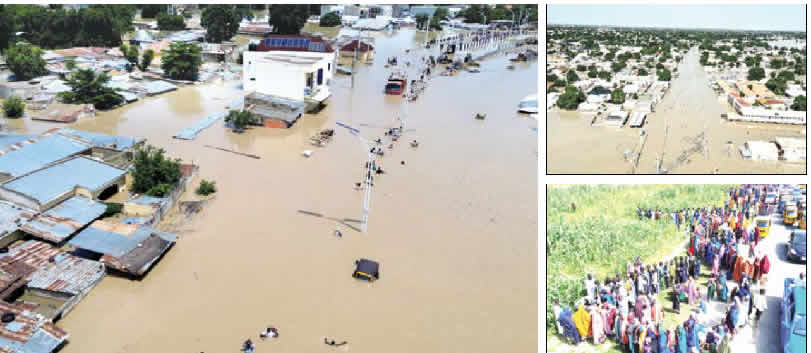
Three weeks after the devastating floods in Maiduguri, Jere, and Mafa Local Government Areas of Borno State, many women and children remain uncertain about their fate. The disaster has displaced over one million people, mostly women and children, who are now struggling to survive.
The floods have ravaged farmlands, leaving many farmers without livelihoods. Some victims rely on their harvests for sustenance, but the floodwaters washed away their crops, leaving them with nothing.
Despite government interventions, some victims are yet to receive relief materials, forcing them to roam the streets in search of shelter and food.
The government's efforts to provide aid through official camps have been hindered by communication gaps, leaving some victims unaware of the available support. Furthermore, irregularities in food distribution and insecurity issues have plagued the process.
Recently, the government urged victims living outside official camps to relocate to nearby camps to receive aid. However, many victims remain unaware of this directive, highlighting the need for effective communication strategies.
Women and children are the most vulnerable members of our society, and their well-being is crucial to our collective future. As caregivers, mothers, and educators, women play a vital role in shaping the next generation. Their loss of livelihoods not only affects their families but also has far-reaching consequences for our communities.
The impact on children is equally alarming. Deprived of education, healthcare, and stability, these young minds are at risk of being forever scarred. The long-term effects of this trauma can lead to a lost generation, perpetuating cycles of poverty and inequality.
Moreover, women's economic empowerment is essential for community development. Their contributions to local economies, food security, and social cohesion cannot be overstated. Neglecting their needs now will have devastating consequences for our societal fabric.
This crisis highlights the need for:
Effective communication strategies to reach all affected victims.
Transparent relief distribution mechanisms.
Enhanced security measures to protect women and children.
Access to healthcare, education, and psychosocial support.
Economic empowerment programs for women.
Agricultural support for affected farmers.
Furthermore, we must recognize:
Women's leadership roles in crisis management and decision-making.
Children's rights to education, healthcare, and protection.
Community-based initiatives for sustainable recovery.
Collaboration between government, NGOs, and local organizations.
Long-term investment in disaster preparedness and infrastructure.
To address the information gap, the government should:
Utilize local languages (Hausa and Kanuri) in communication.
Leverage community leaders and influencers.
Establish feedback mechanisms.
By supporting these critical members of our society, we invest in a resilient, thriving, and equitable future for all.
The fate of Borno's women and children hangs in the balance. Let us act with compassion, urgency, and collective responsibility to alleviate their suffering and rebuild their lives.
We owe it to ourselves, our children, and future generations to ensure that no one is left behind in times of crisis.