

BY: NEWS DESK.
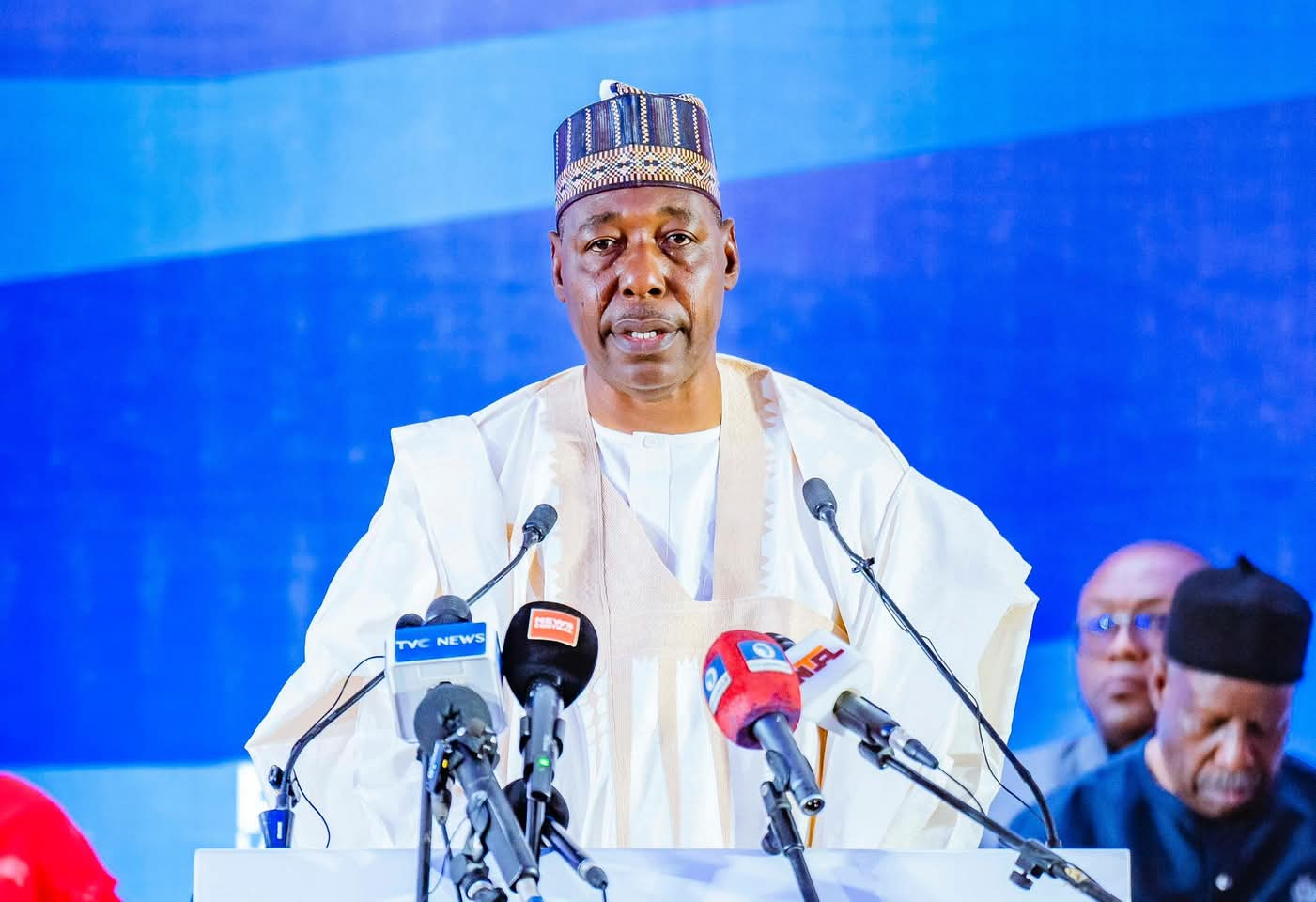
Borno State Governor, Prof. Babagana Umara Zulum, has called for the establishment of large-scale irrigation farms to combat food insecurity in the Lake Chad Basin region.
He made the call on Thursday during a panel discussion at the 5th Lake Chad Basin Governors' Forum in Maiduguri.
The governor emphasized the need for collaboration between regional governors, critical partners, and the United Nations to establish irrigation farms that can be efficiently managed by agricultural experts.
'We need to invest in irrigation. Irrigated agriculture is the only solution. Unfortunately, our investment in irrigated agriculture is very low. We have vast fertile land. Borno State alone has a total land mass of 72,000 sqkm, out of this, over 70% are arable land,' he said.
He noted that reliance on rainfed and subsistence farming practices is no longer sustainable due to the region's growing population.
'There is increasing population growth while our food production is going down because of overdependence on rainfall. What we need to see through this forum is how the region will establish larger irrigation farms that can be operated either by surface irrigation or drip irrigation systems that will ensure sufficient utilisation of the limited water resources,' Gov. Zulum added.
He highlighted the importance of livestock development, pointing out that the Lake Chad Basin is the leading producer of livestock in the sub-region.
The governor suggested that irrigation schemes could support the growth of animal pastures, thus boosting beef and milk production.
'We have a low-hanging fruit in irrigation. The shores of Lake Chad provide ample water resources and even where surface water is scarce, we can easily drill tube wells. What we need now is the political will from governors, regional partners, the federal government, and the national governments of Chad, Cameroon and Niger Republic to drive this process,' he explained.
The 5th Lake Chad Basin Governors' Forum is a three-day event that features panel discussions on critical issues affecting the region, cultural exhibitions, and other activities aimed at promoting regional cooperation and development.