

BY MUSA IDRIS UMAR, DECEMBER 21, 2025 | 10:12 AM
President Bola Ahmed Tinubu’s visit to Borno State was framed not only by project commissioning but by the daily realities of women, children, and vulnerable groups still recovering from years of conflict.
For many families displaced by insurgency, access to safe schools has remained a major gap, especially for girls whose education was often the first to be disrupted.
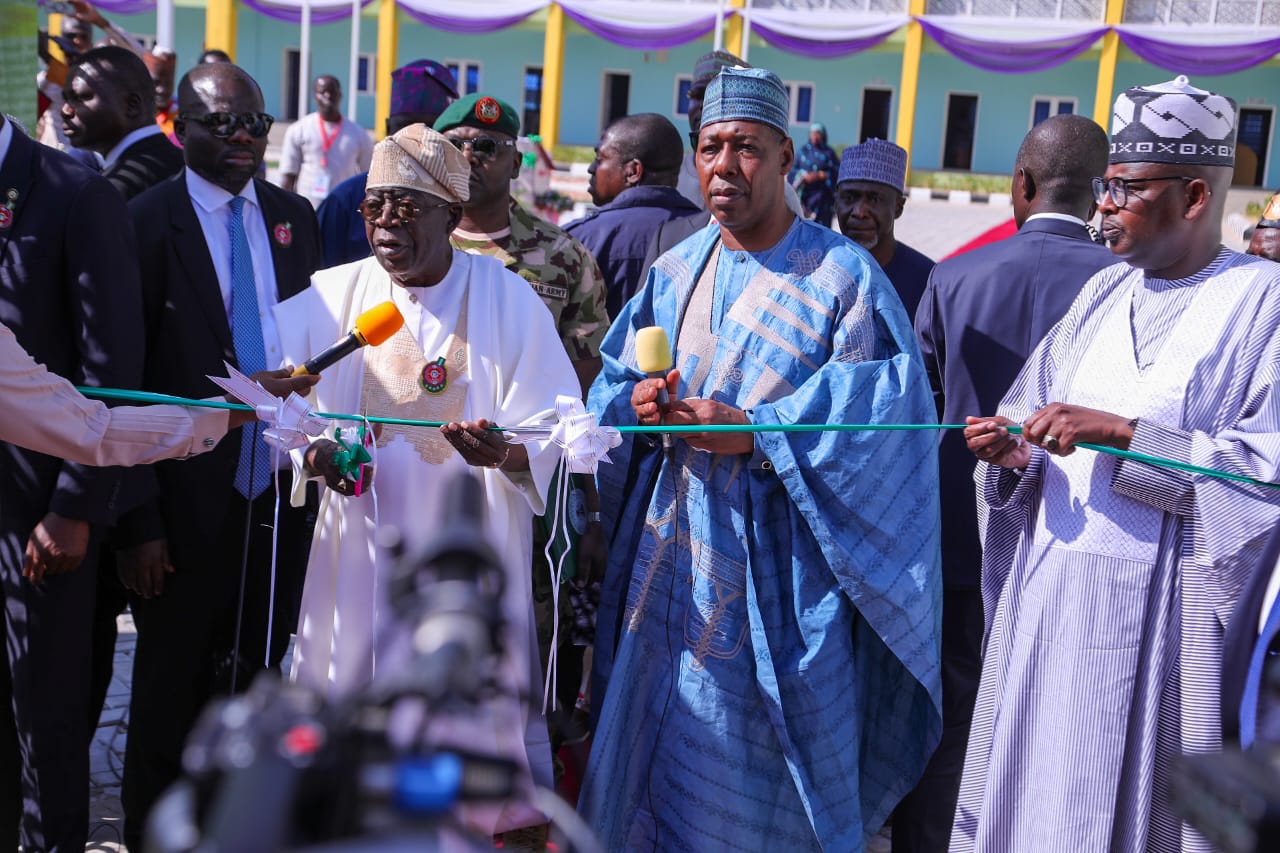
The commissioning of Mafoni Day Secondary School, Bola Ahmed Tinubu Government Day Secondary School, and Mafoni Primary School signaled a renewed push to close that gap.
The new schools expand learning spaces for thousands of children, reduce overcrowding, and create safer environments that encourage parents to send girls back to class.
With classrooms, laboratories, libraries, and sports facilities in place, the schools are designed to support learning continuity for children who have known more disruption than stability.
President Tinubu on Saturday, said the projects reflect governance that puts people first, noting that education remains central to rebuilding lives affected by conflict.
He praised Professor Babagana Umara Zulum’s leadership, describing the initiatives as evidence of care for ordinary people and long-term development planning.
Beyond education, the commissioning of 620 fully electric vehicles and tricycles addressed another challenge facing women and vulnerable residents, which is affordable and safer transportation.
The vehicles are expected to support livelihoods by easing movement for petty traders, widows, persons with disabilities, and families who rely on daily transport to survive.
For women engaged in small-scale businesses, improved transport means easier access to markets, health centers, and schools without high transport costs.
President Tinubu also commissioned the international terminal of the Muhammadu Buhari International Airport, Maiduguri, opening pathways for economic activity that could translate into more jobs and services.
Governor Zulum said the projects reflect his administration’s focus on rebuilding human capital and restoring dignity to communities affected by violence.
He reaffirmed his commitment to policies that prioritize education, mobility, and basic infrastructure as tools for protecting the most vulnerable.
The ceremony brought together government officials, traditional rulers, and community leaders, underscoring shared responsibility for recovery.
As the president concluded his visit, the projects stood as reminders that rebuilding Borno is not only about structures but about restoring opportunity for those who lost the most.