

BY: YAKARU LAWAN KACHALLAH, AUGUST 08, 2026/ 03:01PM
'Some people are broken by adversity; others allow it to shape them into people who inspire change.'
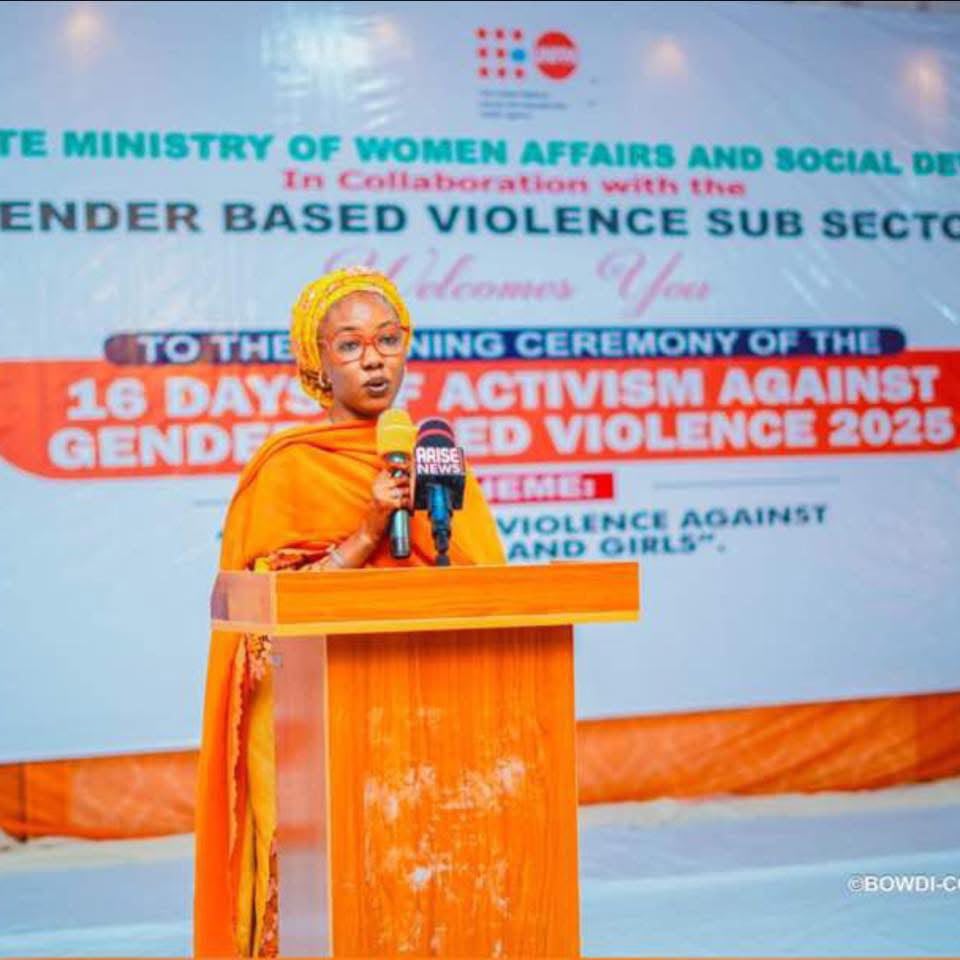
In Borno State, Aisha Alhaji Kabu has turned the hardships of conflict into a life dedicated to helping others.
From watching her school burn during the Boko Haram insurgency to fleeing Damboa after her family's home was destroyed, Aisha's story reflects resilience, determination, and service.
Today, the 29-year-old humanitarian, entrepreneur, and founder of the Zenith of Girls Child and Women Initiative Support (ZEGCAWIS) is working to improve the lives of women, girls, and vulnerable communities across Borno State.
According to the organization's 2025 annual report, ZEGCAWIS reached 110,709 people through its programs.
Born and raised in Damboa, Aisha attended local schools before continuing her education at Government Girls Unity College, Damaturu, and Government Day Technical College, Damboa.
Her life changed in 2009 when the insurgency reached her community.
'Our school was burnt on a Sunday night,' she recalled.
'The next day, we sat under a tree and continued our classes.'
Rather than ending her education, the experience strengthened her resolve.
'Whenever people say they cannot go to school because they are afraid, I tell them the best response is resilience,' she said.
As the violence intensified, students were forced to change examination centers repeatedly.
In 2014, Boko Haram attacked Damboa and her family's house was burned down.
The family relocated to Maiduguri.
While many of her peers dropped out of school, Aisha enrolled in a diploma program in Social Work.
'Education created another path for me,' she said.
'If not for education, I wouldn't be where I am today.'
While studying, she volunteered with Save the Children in 2015 as an Infant and Young Child Feeding Community Volunteer in internally displaced persons camps.
The experience exposed her to a major challenge in humanitarian work.
She observed that many aid workers could not communicate effectively with local communities because they did not speak their languages.
'How do you teach a mother about breastfeeding when you don't speak her language?' she asked.
'How do you discuss gender-based violence when they cannot understand you?'
As someone displaced by the conflict herself, she found it easier to connect with people in the camps.
'When I entered an IDP camp, I told them I was also displaced,' she said.
'The only reason I wasn't living in the camp was because education created another path for me.'
The experience inspired her to establish ZEGCAWIS in 2018 at the age of 21.
'I didn't establish ZEGCAWIS to create another organization,' she said.
'I wanted humanitarian responses to reflect the realities of our communities.'
She said the organization's approach is based on community participation.
'If we are working in Chibok, we recruit from Chibok,' she said.
'That is how real impact is made.'
Aisha said advocating for women and girls has not always been easy.
'People called us feminists and women who would never keep a marriage,' she said.
'It was painful.'
She said many of those who once criticized her now celebrate her achievements.
'If you remain focused, your work speaks louder than criticism,' she added.
Her advocacy focuses largely on girls' education with support from the Malala Fund.
'We are human beings first,' she said.
'If boys deserve education, girls deserve the same.'
She disclosed that her next initiative is the Gambo Sawaba Civic Leadership Training, a 12-week mentorship program for young women in Northern Nigeria scheduled to begin in September.
She also plans to launch Zenith Grill and Lounge, a hospitality business designed to provide a suitable environment for meetings and social gatherings.
Aisha credited her late father for inspiring her commitment to education.
'He believed in education,' she said.
'He wanted us to become somebody in life.'
'I wish he were alive to see the impact we are making today.'
According to the organization's 2025 annual report, ZEGCAWIS reached 110,709 beneficiaries, including 68,178 females, 42,426 males, and 105 persons with disabilities.
The interventions covered girls' education, menstrual hygiene, child health, nutrition, gender-based violence prevention, sexual and reproductive health rights, and social cohesion.
'Behind every number in this report is a human story,' she wrote.
'We saw girls gain confidence to remain in school, women participate more actively in community decision-making, families adopt healthier practices, children receive essential health support, and survivors connect to services and care.'
She said the organization will continue to strengthen partnerships while keeping women, girls, children, and marginalized groups at the center of its work.
Aisha has represented Nigeria at the United Nations General Assembly and the United Nations Commission on the Status of Women.
She thanked the organization's board, donors, staff, volunteers, and community members for supporting its work.
Asked to describe her journey in one sentence, she said:
'It's a journey full of determination, courage, resilience, and commitment to civic responsibility.'
From studying under a tree after her school was burned to representing Nigeria on international platforms, Aisha's journey shows how adversity can inspire service and leadership.
'Together, we are building resilience, expanding opportunity, and working toward a future where every woman and girl can live with dignity, safety, and realize their full potential,' she said.
NOTE: Yakaru Lawan Kachallah is a 300-level student of Mass Communication, University of Maiduguri.