

BY: ADAMA ADOMAI, SEPTEMBER 15, 2026/ 08:05PM
For Fauziyya Isa, getting to a 7 a.m. lecture at the University of Maiduguri can depend on whether she finds a tricycle to take her to class.
The Education student said transportation around campus was sometimes difficult before the introduction of solar-powered tricycles, especially in the morning when some conventional tricycles were unavailable or out of service.
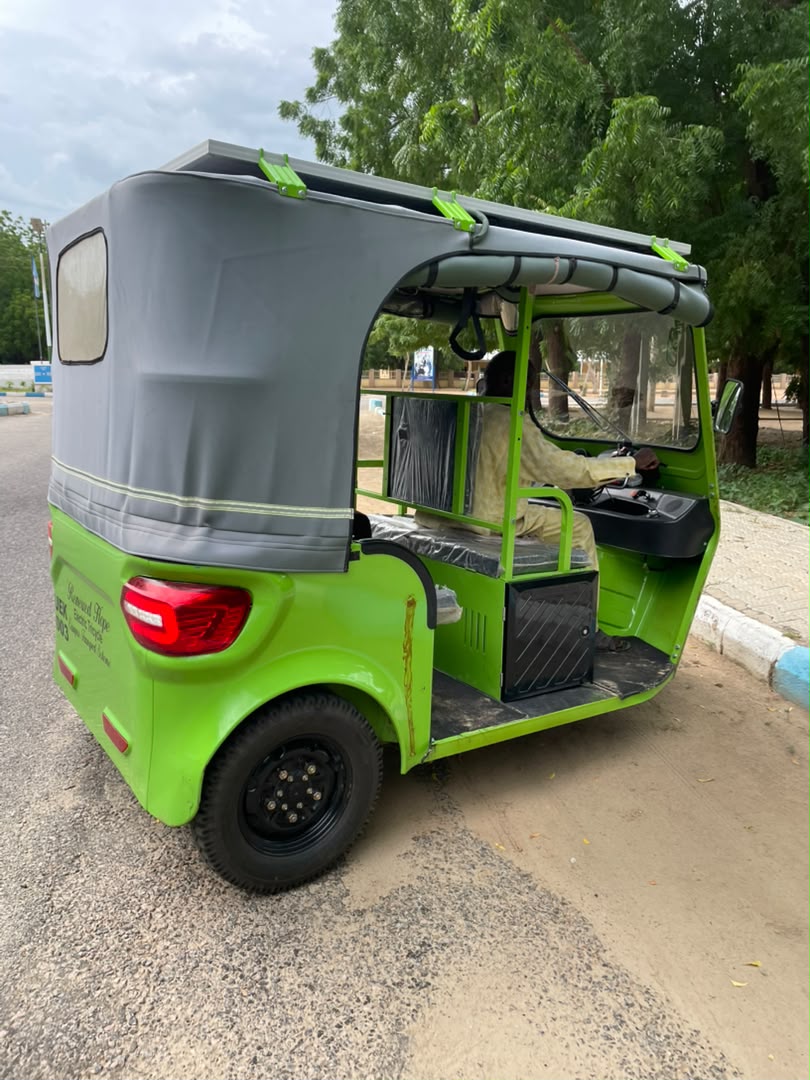
The solar-powered tricycles have added another transport option, taking students to destinations across the university for ₦100 per ride.
For Khadija Nura, the lower fare has helped reduce her daily transportation costs because students often move between different parts of the campus.
‘The cost of transport has reduced to ₦100 per ride to anywhere within the university, and as students, we move a lot, so this has allowed us to save some money and go about our day,’ she said.
The tricycles are part of the Federal Government’s Renewed Hope Campus Transport Scheme, which was introduced to reduce transportation costs for students following the removal of fuel subsidies and foreign-exchange reforms.
The Federal Government launched the scheme on December 2, 2025, with 240 solar-powered electric tricycles deployed to 12 public universities across Nigeria.
The University of Maiduguri was among the beneficiaries, receiving 20 electric tricycles and one solar-powered charging station through the Tertiary Education Trust Fund.
The charging station has solar panels, battery storage and an inverter system to support the operation of the vehicles.
The participating universities were selected from Nigeria’s six geopolitical zones, with the University of Maiduguri included among the beneficiaries.
The Federal Ministry of Education said the scheme was designed to provide affordable transportation for students and reduce the cost of movement within university campuses.
Tunji Alausa, minister of education, said the initiative was developed in response to the financial pressure students faced after the removal of fuel subsidies and foreign-exchange reforms.
He said President Bola Ahmed Tinubu had directed the ministry to develop transportation solutions that were sustainable and responsive to students’ needs.
The government did not provide the tricycles as free transportation, instead handing them to student union governments to operate at reduced fares.
The operators are expected to use the fares to cover maintenance costs and keep the service running.
At the University of Maiduguri, the administration says the use of solar power fits the city’s conditions because of its sunlight.
Muhammad Ahmed Waziri, deputy vice chancellor for Academic Services at the University of Maiduguri, said the university was exploring cleaner energy as part of efforts to address transportation challenges.
‘The world is increasingly moving toward greener energy, and solar power provides an opportunity to address some of the university’s transportation challenges,’ Waziri said.
He said TETFund sponsored the project and that the university does not receive a commission from the tricycle operators.
Students instead pay ₦100 per ride, which Waziri said gives operators enough income to maintain the service.
Mallam Ibrahim, one of the riders, said the solar tricycles cost less to operate than vehicles that use petroleum.
‘It is more economical and cheaper to use compared to the ones that use petroleum,’ he said.
Ibrahim also said the tricycles use a mobile application called Uniride, which allows students to book rides to destinations within the university.
The service, however, faces challenges during the rainy season because reduced sunlight can affect the charging of the tricycles.
Maidugu Mustapha, another rider, said the system works well with enough sunlight but that rainy weather can reduce the energy generated by the solar panels.
He said the batteries sometimes do not reach the required charge level, forcing riders to use electricity at the charging terminal.
Mustapha said unreliable electricity supply can create another problem, with rain sometimes affecting power poles and connections.
The charging stations were equipped with solar panels, battery storage and inverter systems to reduce reliance on the national electricity grid.
For Fauziyya, the main benefit is having another transportation option when conventional tricycles are unavailable.
The Federal Government has indicated that more tricycles are planned under the 2026 TETFund cycle, while students at the University of Maiduguri are already using the first 20 vehicles to move around campus.