

BY: ABDULKADIR M LAWAN, NOVEMBER 01, 2026/ 03:06AM
It was supposed to be another night of gunfire in the North East. Instead, it became a week of reckoning for Boko Haram and ISWAP, and a month that broke their backbone.
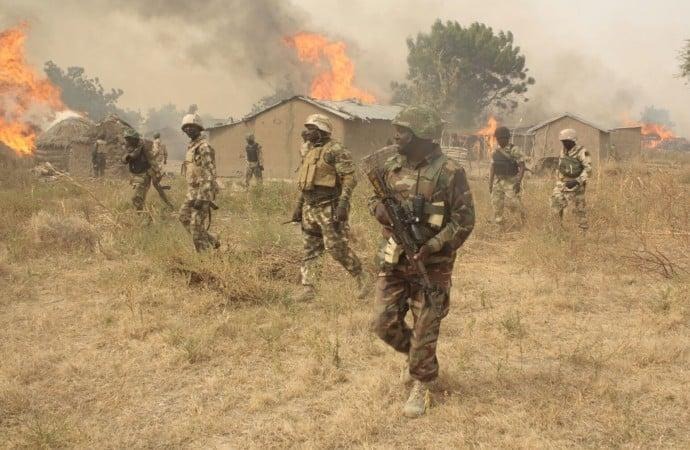
Between October 28 and 30, 2026, what began as coordinated terrorist attacks on military positions in Borno and Yobe ended with battlefields littered with their dead — more than 100 fighters killed in 72 hours, their commanders taken out, and a stockpile of rifles, machine guns and mortars seized.
But that bloody week was only the climax.
In less than a month, ground troops and the Air Component of Joint Task Force North East, Operation Hadin Kai (OPHK), killed a hundreds of confirmed Boko Haram and Islamic State West Africa Province (ISWAP) fighters from Kukawa to Buni Yadi. It is the bloodiest month for the insurgents in years.
What it means for security
For security forces, October was more than a body count.
It was a shift from defending positions to dictating the battlefield.
First, fortified positions now hold. ISWAP's doctrine has been to overrun isolated camps, cart away weapons, and use the victory video for recruitment. That failed twice in one week.
At Bitta on October 29 and at the North East Theatre Training School (NETTS) in Buni Yadi — a five-hour battle coordinated directly by Theatre Command with ISTAR drones feeding real-time feeds — troops did not just repel, they fixed the enemy and destroyed him.
48 killed in Buni Yadi alone means fewer ambushes on the Damaturu-Buni Yadi and Maiduguri-Monguno roads that have killed soldiers and civilians for years.
Second, mobility and logistics were cut. Four vehicles, over 49 motorcycles and nine boat engines critical for Lake Chad movements were destroyed. Those are not just transport.
In Lake Chad, boat engines are ISWAP's supply trucks.
Motorcycles are how they mass 50 fighters in 20 minutes around a patrol. Destroying them means slower, smaller attacks — and more time for troops to react.
It also means fewer attacks on fish dams and farms where soldiers are often called to protect civilians.
Third, command and IED capacity collapsed. The strikes killed an Arab commander, Abu Zubiru, Qayids Abu Musanna and Hassan Abu Huraira, a Shura member Abul Kissa, and critically injured the Wali of Marte and Wali of Tunbunma.
These are the men who approve IED laying, complex attacks, and taxation.
The IED hub destroyed north of Kerenoa on October 28 and the IED-laying team foiled the same day directly reduces soldier casualties — IEDs remain the number one killer of troops on the Marte-Monguno and Maiduguri-Damboa axes.
In short: fewer weapons to face, fewer commanders to plan attacks, and fewer boats and bikes to move fighters. That is how troop casualties drop and how patrols can go further beyond the trench.
October began with fire
October began with a fierce battle in Kukawa LGA where troops of 101 Special Forces Battalion crushed a four-flank ISWAP assault.
Over 25 terrorists were neutralised, with 14 bodies recovered and six AK-47 rifles seized.
Days later on October 10, the Air Component struck an ISWAP Murabitun enclave at Badu Village south of Gudumbali, killing 40 fighters including a Qaid and destroying two vehicles and 20 motorcycles.
The offensive extended to Adamawa where troops at Forward Operating Base Garaha in Hong LGA repelled a night attack, killing six terrorists and recovering one PKT machine gun with 67 rounds, six AK-47 rifles, eleven magazines, 157 NATO rounds, 120 special rounds and a 60mm mortar bomb.
Between October 10 and 18, Army Aviation, NARPAS drones and the Air Component executed a seven-strike campaign across Gudumbali, Badu in Monguno, Mairari, East Badu, Duste Uku in Gombi and Arina Woje — the alternate residence of Abu Saleem, the Wali of South Lake Chad.
The strikes collectively killed 103 terrorists, including Jindullah who was Abu Saleem's chief security guard and Abul Kissa who was a member of the Shura Council, while nine boat engines and logistics hubs were destroyed.
On October 23, a precision air strike north-west of Pulka in Gwoza LGA killed 15 terrorists, and on 25 October troops ambushed ISWAP along the Targejeri axis in Kaga LGA killing six.
Combined, 21 terrorists were killed within 24 hours, while 11 suspected collaborators were arrested and one JAS fighter surrendered with his AK-47.
The three hammer blows that ended the month
The tempo peaked between October 26 and 30.
On October 26, coordinated air and artillery strikes on three enclaves in Tunbunma in South Lake Chad killed 16 fighters including Abu Zubiru, an Arab ISWAP commander, and his associates Baana Nglewa and Jindullah Sadiq.
Between October 26 and 28, sustained operations killed another 44 terrorists — 28 in Kukawa LGA, eight by the Maritime Component of Naval Base Lake Chad in Baga, and eight in an air interdiction mission that foiled an IED-laying team and destroyed their vehicle and IED materials.
Then came the final three hammer blows.
On October 28, north of Kerenoa, Marte LGA, a precision night strike on an IED logistics hub killed 15 terrorists including top Qayids Abu Musanna and Hassan Abu Huraira, while the Wali of Marte was critically injured.
On the night of October 29, ISWAP attempted to overrun troops' position in Bitta, Gwoza LGA, but were disorganised by close air support. Hours later, a much larger force descended on the North East Theatre Training School (NETTS) in Buni Yadi, Yobe State, in a five-hour battle coordinated directly by the Theatre Command with ISTAR drones feeding real-time feeds. When the gun smoke cleared, 48 terrorists lay dead.
Weapons recovered and destroyed: The armoury that was stopped
Troops recovered 56 AK-47 rifles, six PKT machine guns, four General Purpose Machine Guns, one 60mm mortar and one mortar bomb, plus 116 AK-47 magazines, 2,738 rounds of special ammunition, 223 NATO rounds, 2,054 PKT rounds and 30 rounds of 12.7mm armour-piercing incendiary ammunition.
Four vehicles, over 49 motorcycles and nine boat engines critical for Lake Chad movements were destroyed, along with uniforms, phones, video cameras and IED materials.
What it means for women and children in Lake Chad
In Lake Chad region, the most important casualty figures are not the hundreds of terrorists killed, but the number of women and children who will not be abducted, taxed, or killed.
The Lake Chad fringes — Kukawa, Marte, Guzamala, Baga — are where ISWAP's economy of terror is most brutal for women and children.
The Murabitun and Wali Abu Saleem's network ran three systems that hit women hardest.
First, forced taxation. ISWAP boat engines and motorcycles destroyed at Arina Woje and Badu were used to collect levies on fish and crops farmed largely by widows.
With nine boat engines destroyed, fishing routes around Tunbunma are now open for women traders for the first time in months.
Second, IEDs. The IED hub destroyed at Kerenoa assembled the roadside bombs that killed children fetching water and women going to market between Marte and Monguno. Its destruction directly reduces child casualties.
Third, forced marriages. Commanders like Abu Musanna, Hassan Abu Huraira and Abu Zubiru approved abductions of girls for forced marriages and indoctrination of boys.
Their deaths decapitate that system.
'There is no hiding place for terrorists.
'Troops remain committed to degrading their capabilities and protecting communities,' a military officer said.
For the mothers in Baga waiting to take their children home to Lake Chad, the message is simpler: the soldiers held the line.