

.jpeg "Bwele's water crisis: A threat to health, education, and hope")
BY COMFORT ENOCH ISTIFANUS
Bwele, a rural town in Gombe State, is parched and desperate. Water scarcity has ravaged the community, leaving women and children vulnerable to its harshest consequences.
Every day, they embark on treacherous journeys to fetch water, sacrificing precious time, energy, and opportunities.
Children's education is disrupted, and their futures hang in the balance. Women, already shouldering the burden of caregiving, are now forced to endure the physical and emotional toll of water collection.
As the drought tightens its grip, the people of Bwele cry out for help. Will their pleas be heard, or will the cycle of scarcity continue to crush their dreams?
According to the World Bank, 70 million Nigerians lack access to clean drinking water, while 114 million are without basic sanitation services. In Bwele, this statistic translates to a harsh daily struggle, where residents are forced to prioritize water collection over other vital needs.
Victims share their stories
Hauwa, a 52 Year-old woman from Surkan, recounts her experiences.
'We have a borehole, but during January and February, it barely supplies enough water. Sometimes, I trek for three hours to fetch water, only to find it's not hygienic because animals drink from and pollute it,' she lamented.
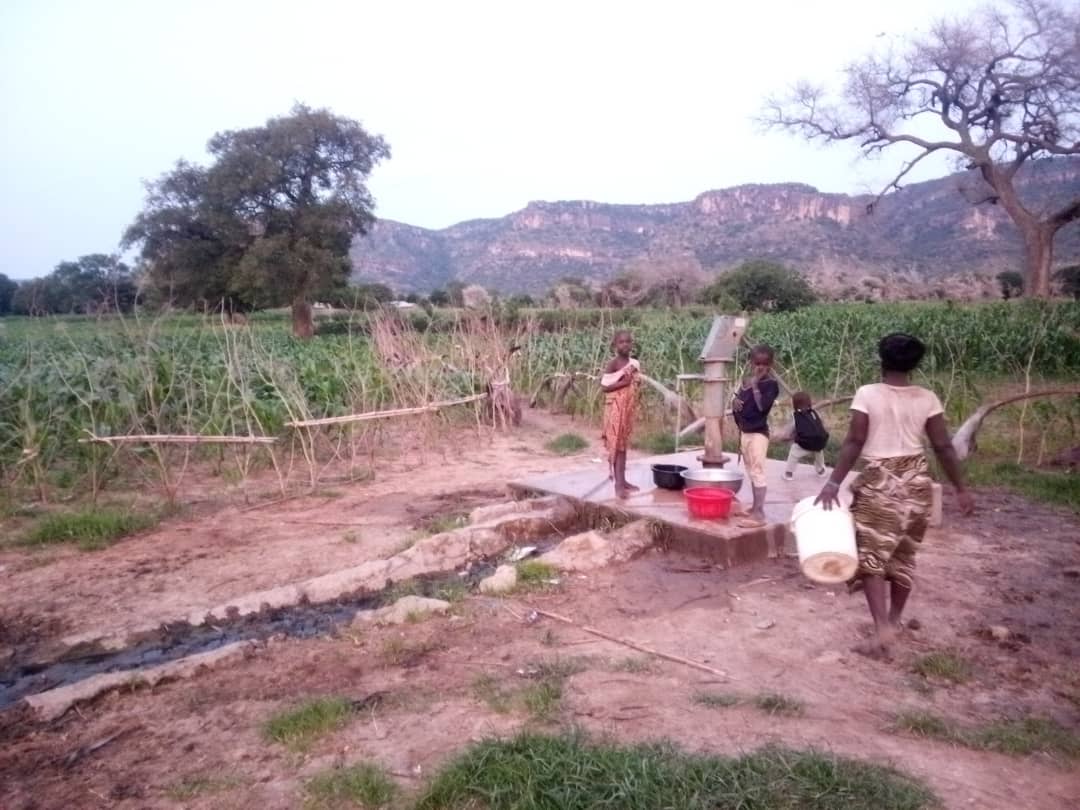 Photo credit: Comfort Enoch
Despite the borehole, Hauwa's family still faces water shortages, affecting their health and children's education.
'Our doctors say our illnesses are caused by the water we consume,' she said.
Martha Daniel, 47, echoes similar concerns.
'We walk long distances, dig for water, and wait for it to surface. We share this water with animals, leading to stomach aches and malaria among our children,' she said.
Istifanus Ibrenu, a Junior Secondary School student, highlights the impact on education.
'Fetching water makes us late for school, and sometimes we lack the strength to study,' the student said.
Community leader's plea
Idomi Duna, a 40-year community leader, urges the government to intervene.
'The only accessible borehole is insufficient, and the alternative sources are unhygienic. We've had just one borehole for over 40 years, with no further government assistance. The situation is severe, and we need help,' he emphasized.
'We've been neglected for too long, and our people are suffering. We need functional boreholes to alleviate this water scarcity. Our children's education and health are at stake,' Duna appealed.
Healthcare perspective
Bilkisu Yahaya, a nurse at Billiri General Hospital, warns of the dire health consequences of unclean water.
'Contaminated water can cause diseases like cholera, typhoid, diarrhea, and polio. Water-borne illnesses are rampant in this community, and it's heartbreaking to see children suffering from preventable diseases,' she said.
Moreover, the lack of clean water exacerbates existing health issues, such as kidney stones, skin infections, and respiratory problems.
It also hinders medical care and has severe psychological impacts, particularly on women and children.
Government response
Mrs. Abubakar Isah, a local government chancellor, outlines the government's efforts.
'We've assessed and plan to repair existing boreholes, acknowledging their age-related issues,' he said.
However, for Bwele residents, words are not enough.
They await tangible solutions to their water crisis, hoping for a future where water flows freely, and life is lived without scarcity's shadow.