

BY ZAINAB BUKAR MAIJALO, OCTOBER 09, 2025 | 12:52 PM
In Maiduguri, a city once defined by violence, displacement, and floods, a quiet transformation is unfolding.
For years, Borno State’s capital was known as the heart of Nigeria’s insurgency, where classrooms turned into shelters and playgrounds became deserted fields.
But today, in neighborhoods like Mafoni, Ajilari, and Maisandari, the sound of hammers and laughter now replaces gunfire.
New classrooms are rising, children in fresh uniforms are returning to school, and education is slowly becoming a symbol of recovery.
Rebuilding Hope Through Schools
Since 2019, the Borno State Government has taken bold steps to rebuild its education system.
Governor Babagana Umara Zulum’s administration has constructed more than 104 new schools across the state and rehabilitated over 2,900 classrooms destroyed by insurgency and floods.
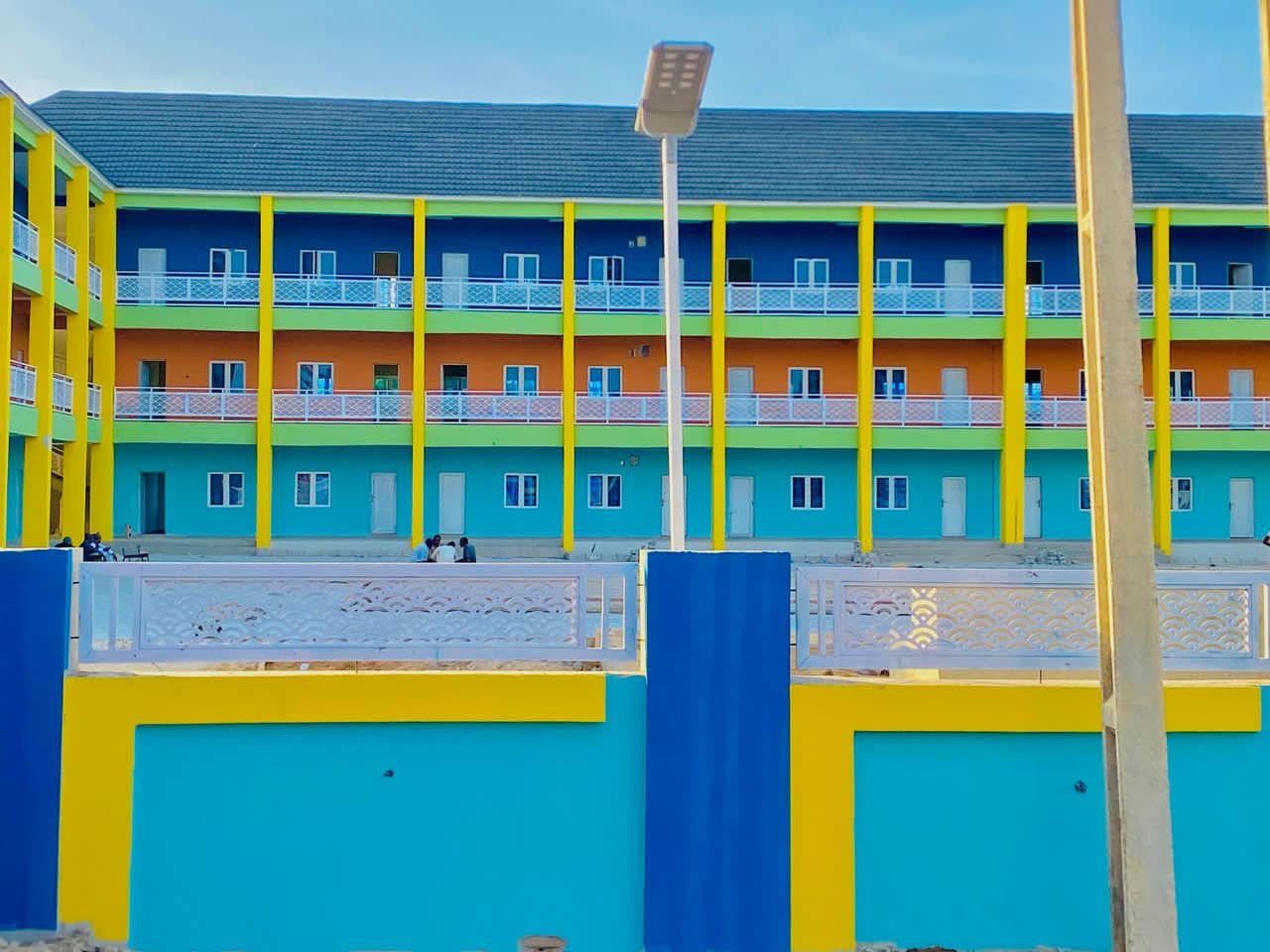
One of the most striking examples is the newly commissioned 96-classroom mega school in Mafoni, designed to accommodate thousands of pupils and reduce severe overcrowding in public schools.
Similar mega schools in Ajilari Cross and Maisandari have also opened their gates, offering free education, uniforms, and textbooks to children from low-income families.
For many parents, these schools represent not just infrastructure, but hope — a promise that their children can still dream despite years of uncertainty.
Changing the Numbers
Before these interventions, Borno had one of the highest numbers of out-of-school children in Nigeria — over two million, according to state estimates.
Today, that number has dropped to around 700,000, marking a reduction of nearly 70 percent in five years.
Officials say about 1.5 million children have now been enrolled under the state’s new education programs.
It is one of the most significant educational turnarounds in northern Nigeria’s recent history.
Partnerships That Strengthen Learning
The progress in Maiduguri is not driven by government alone.
Partnerships have played a vital role in accelerating reconstruction and improving access to quality education.
Through the World Bank–funded Adolescent Girls Initiative for Learning and Empowerment (AGILE), 47 out of 52 planned schools have been completed across the state.
Many now have libraries, science laboratories, ICT facilities, and safe spaces for girls.
AGILE also focuses on empowering adolescent girls with digital and life skills, helping them build confidence in communities where many had been kept away from classrooms.
The Numbers Behind the Recovery
In the last few years, the Borno State Government has distributed over 20 million exercise books, two million textbooks, 15 million uniforms, and 700,000 school bags to support public education.
Over ₦1.6 billion was also approved after last year’s floods to rehabilitate 33 schools across Maiduguri and its suburbs.
These efforts aim to ensure that children can return to learning spaces quickly after disasters strike.
Challenges That Remain
Despite these achievements, obstacles persist.
Flooding continues to damage infrastructure, displacing pupils and teachers in low-lying areas of the city.
Some schools, especially in rural or recently reclaimed communities, still face a shortage of qualified teachers.
Resources such as electricity, clean water, and adequate furniture are unevenly distributed.
And while enrollment numbers are rising, retention — particularly for girls — remains a challenge due to cultural norms and household poverty.
Education as a Symbol of Recovery
Still, the transformation of Maiduguri’s education landscape tells a powerful story of resilience.
Children who once studied under trees now sit in bright classrooms.
Teachers who once fled are returning to the profession with renewed commitment.
Parents who once doubted the future are watching their children read, write, and dream again.
As Governor Zulum once said, “We are not just rebuilding schools, we are rebuilding lives.”
The Road Ahead
The city’s journey is far from over, but the foundation is firm.
Sustained funding, teacher training, flood-resilient infrastructure, and stronger community participation will be key to keeping this progress alive.
For Maiduguri, education has become more than a policy — it is an act of defiance against despair.
In a region long defined by conflict, the classroom has become the most powerful symbol of peace.
BY Zainab Bukar Maijalo Department of Mass Communication, University of Maiduguri, Borno State.