

BY MUSA IDRIS UMAR, APRIL 2, 2026 | 9:45PM
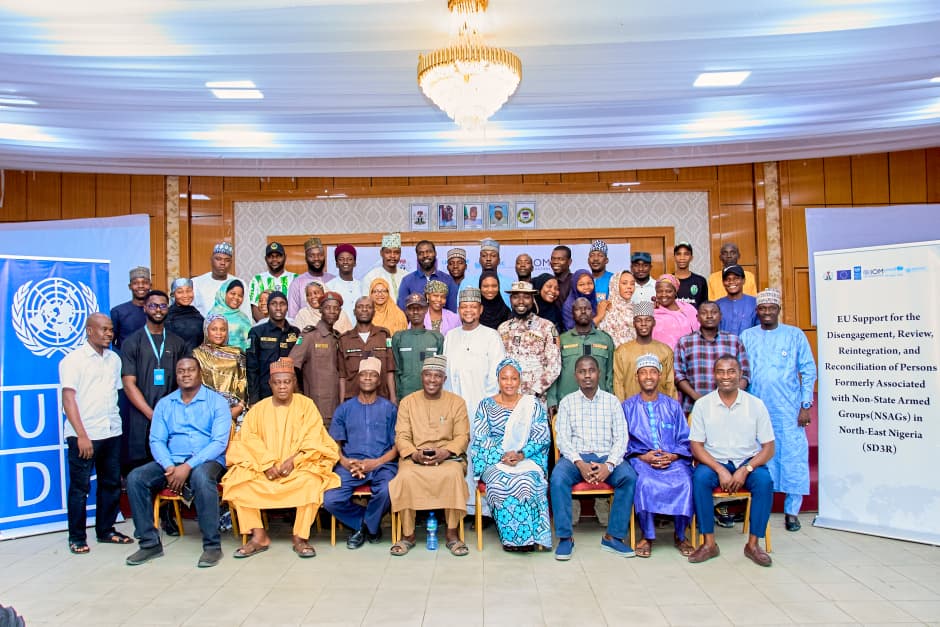
European Union (EU)-funded project implemented by the United Nations Development Programme (UNDP), in partnership with the Borno State Security Trust Fund (BSSTF), has trained Volunteer Security Outfits (VSOs) and stakeholders in the state.
The training covered mental health and psychosocial support, early warning systems, reconciliation, and transitional justice to help participants contribute to community safety and security.
The training was held at Borno State Hotel from March 31 to April 2.
It brought together Volunteer Security Outfits (VSOs), government officials, and other stakeholders from Monguno, Gwoza, Bama, MMC, and Jere local government areas.
According to UNDP, ‘The initiative aims to help community-based security volunteers better understand trauma, stress management, early warning and early response, including transitional justice and reconciliation.’
It added, ‘Many volunteer security operatives experience trauma without recognizing it,’ noting that the training equips them with skills to identify early warning signals and respond appropriately, while also stating that ‘the program includes the development of community response plans across Monguno, Gwoza, Bama, MMC, and Jere’ to address evolving conflict dynamics in Borno State.
Additionally, UNDP noted that it has trained over 5,000 volunteers since 2021 in partnership with the Borno State Security Trust Fund, adding that gender inclusion is part of the selection process.
The Borno State Security Trust Fund (BSSTF) said, ‘The training equips VSOs and community leaders with early warning and early response skills. Participants come from four main VSO groups, CJTF, Hunters, Vigilantes, and Kesh Kesh, as well as community leaders and members of the Emirates Council.’
‘The training addresses challenges in timely reporting of security issues. It enables participants to detect and report suspicious activities promptly, ensuring swift intervention,’ it added.
The government commended UNDP, saying, ‘We appreciate UNDP’s support in community education, skill acquisition, and livelihood programs, which strengthen both the government and local communities. We urge participants to return to their communities and share these skills widely, ensuring everyone is equipped with early warning systems.’
Charles Pen, early warning and early response facilitator for UNDP, described the training as timely.
‘Volunteer security groups play a critical role in intelligence gathering due to their close ties with communities,’ he said.
He added, ‘Their grassroots presence enables them to detect suspicious activities early,’ and called for stronger collaboration with formal security agencies.
Accordingly, participants underscored the impact of the training, noting that it would improve their overall understanding of early warning and response.
Mohammed Bukar Abbaji, Deputy Commander (Administration) of the Vigilante Group of Nigeria, said, ‘The training reinforces the importance of promptly reporting suspicious activities and also helps operatives manage mental stress in the course of their work,’ urging participants to share the knowledge within their communities.
Binta Bukar said, ‘The sessions also addressed stress management and personal wellbeing,’ stressing that volunteers must prioritize their health while carrying out their duties.