

BY: LADI MAXWELL, SEPTEMBER 04, 2026/ 09:04PM
For Agatha Marcus, a student at the University of Maiduguri, charging her phone was an academic expense.
Her phone was how she got updates on classes, tests, and assignments, and how she joined virtual lessons, but with the university’s power supply, staying connected came at a cost.
Now in her final year, Miss Marcus said she use to spend 200 naira daily to charge her phone at a commercial charging point.
For a student managing tuition, books, and feeding, that added daily N200 was necessary, without it, she risked missing school information.
Agatha’s story was common before a solar project at the school. Power shortages affected student life at UNIMAID as study plans were built around 'light hours' instead of learning hours.
For night readers like Rukaiya Ahmadu, it was not only difficult, but a situation forcing a habitual change.
'There were nights when there was no electricity. It was hard to read, use laptops, charge phones, or join online classes,' she says.
The problem went beyond hostels as Jennifer Joseph, a Microbiology student puts it.
'Sometimes our practicals get canceled because there is no electricity for the lab to function,' she said.
Darkness also brought safety concerns, when dark environments on campus at night made students vulnerable to phone theft and harassment.
Unreliable power decided how, when, and where students could learn; but, all that changed with the commissioning of the solar plant.
With electricity running through classrooms, libraries, labs, hostels, and staff quarters, students are no longer tied to the national grid.
'I can now study at night without worrying about power outage or going back to the hostel in the dark,' Rukaiya said.
She added that she can attend online classes, research materials, and meet deadlines.
For Ijanada Samuel, also a Mass Communication student, the change also means freedom.
'My study routine now has no limit. I study anytime, especially at night, and charge my phone in the hostel without spending money,' she said.
According to her, students now get 18 to 21 hours of power daily.
Another student, Gabriel Sule, from Medical Laboratory Science department said that he now spends more time on campus.
'I had a good academic session since the solar project, and lighting has made hostels safer and reduced theft,' he noted.
The impact goes beyond light bulbs, students now control their time.
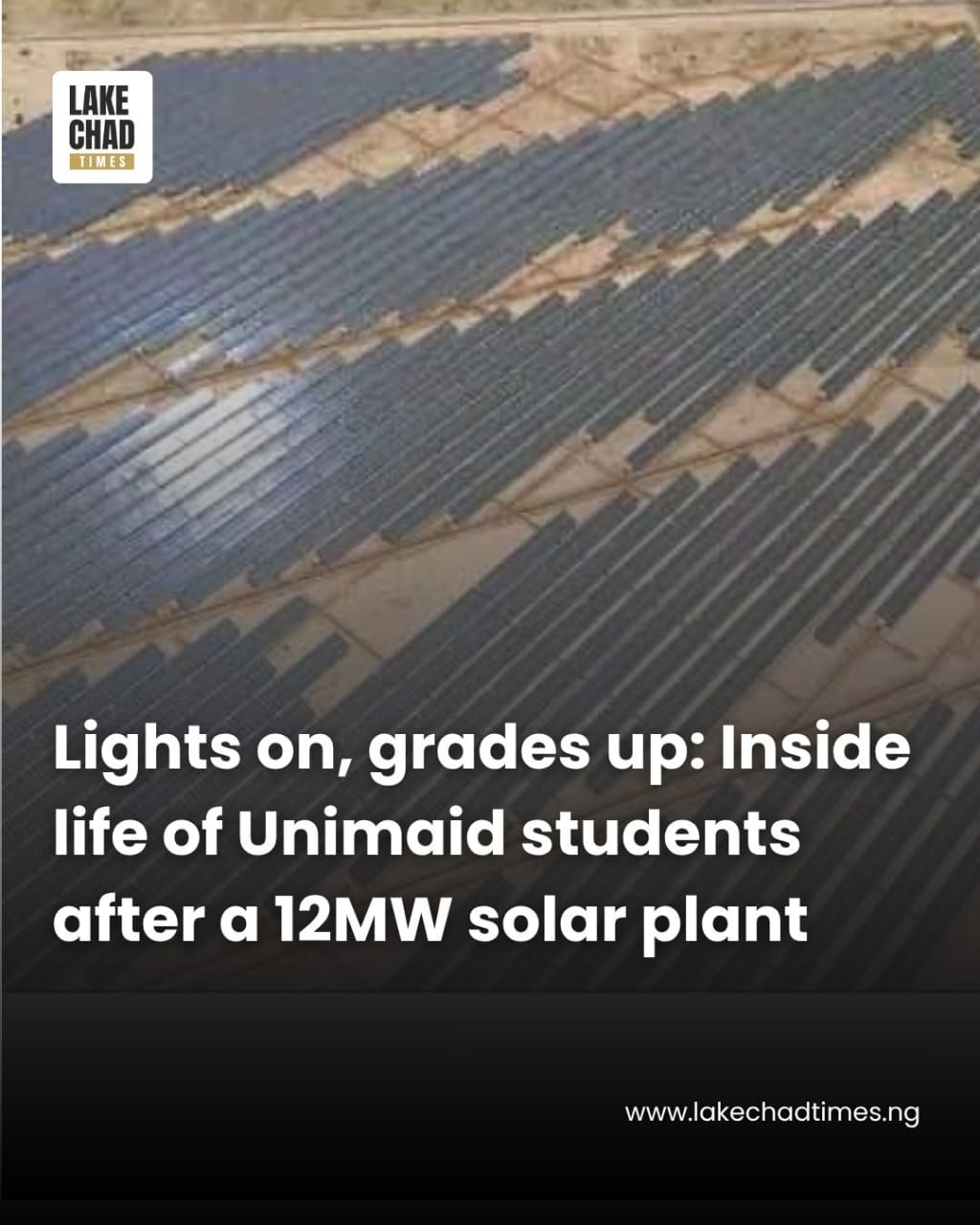
The difference is a 12-megawatt hybrid solar power plant, funded by the World Bank in partnership with the African Development Bank, (AFDB) and implemented with Nigeria’s Rural Electrification Agency, (REA).
The goal was to reduce dependence on diesel, costs, and deliver power, while the plant will be owned by the university.
However, 'the panels alone don’t keep the lights on,' Engr. Mwada Emmanuel Wapah, one of the plant's managers told this reporter.
'We carry out inspection round the plant to check for obstruction from dust, or cracked panels,' he explains, noting that the system runs from 8AM to 8PM daily, and sometimes longer.
Engineers also monitor the energy storage through a SCADA system to detect faults. Without this maintenance, the reliability students now have wouldn’t be possible.
Similarly, the solar plant hasn’t removed every challenge.
According to Engr. Mwada, low sunlight and high demand can strain the storage system. During those periods, backup generators charge the batteries to maintain supply.
The infrastructure is built for long-term use. Panels can last up to 40 years, inverters about 20 years, and batteries around 10 years. Sustaining the gains will require maintenance and battery replacement.
Since operations began in February 2025, UNIMAID saves between 30 to N35 million monthly on what it paid YEDC for electricity. The university also relies less on generators.
For students like Agatha, Rukaiya, Ijanada, and Gabriel, the impact is direct, money saved, hours gained, and safety improved.
The 12MW solar project is more than an alternative power source. It removed a barrier that shaped how students studied, moved, and managed their education.
With maintenance and planning, electricity can do more than power a campus. It can power learning.
For now, with the lights staying on, students can focus on their education.
Editor's Note: This story was produced under a collaborative fellowship programme between Yerwa Express News (YEN), Lake Chad Times, and the Union of Campus Journalists (UCJ), University of Maiduguri.