

BY HARUNA UMAR, SEPTEMBER 03, 2026 | 03:59 PM
For Hussaina Muhammad, voting is more than walking into a polling unit, receiving a ballot paper and casting a vote.
It is a journey that begins long before she reaches the ballot box.
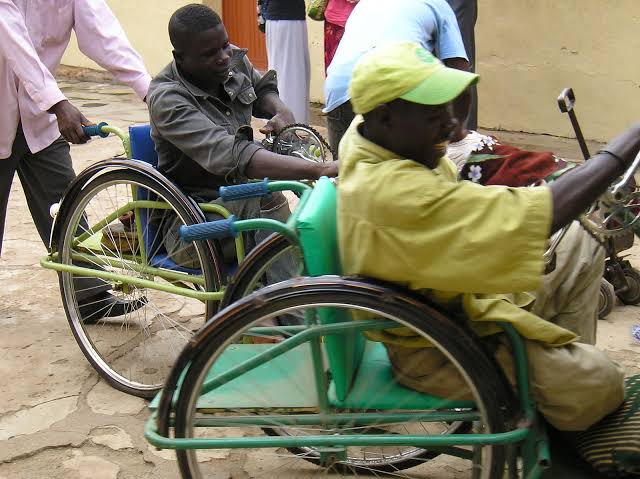
At 27, Hussaina lives with visual impairment and uses a wheelchair.
During the last general election, she arrived at her polling unit hoping to exercise what should have been a straightforward democratic right.
Instead, she encountered overcrowding, long queues and blocked access routes.
The heat was intense, while people crowded around the polling area, leaving little room for her wheelchair.
What should have been an opportunity to participate in choosing the country’s leaders became a struggle for space, assistance and dignity.
Hussaina remembers that some election officials tried to help, making the experience easier through their willingness to assist.
But the support was not consistent.
Some officials appeared unresponsive to the needs of voters with disabilities, leaving her feeling overlooked at a moment when every citizen was supposed to have an equal opportunity to participate.
Her experience reflects a wider concern among persons with disabilities: having the right to vote does not always mean having equal access to the voting process.
A right that can become a struggle
For many voters, getting to a polling unit may involve walking a short distance and joining a queue.
For persons with disabilities, the same journey can involve navigating poor roads, inaccessible entrances, crowded spaces and inadequate transportation before they even reach the voting point.
At Hussaina’s polling unit, assistive materials were available for some voters with visual impairments, but she said they were not sufficient for everyone who needed them.
For voters with hearing impairments, there was another barrier: no sign language interpreter was available.
The challenges did not necessarily come from a lack of willingness to vote.
Rather, they came from an electoral environment that did not always accommodate the different ways people move, communicate and interact with the voting process.
Hussaina believes this must change before the 2027 general election.
She wants polling units to be equipped with appropriate facilities and assistive devices for different categories of persons with disabilities.
She also wants priority voting and separate queues for PWDs so they do not have to endure lengthy waits in crowded spaces.
For her, these measures are not special privileges.
They are about dignity.
When accessibility determines participation
Muhammad Aji, 35, secretary-general of the Joint National Association of Persons with Disabilities (JONAPWD), Borno State Chapter, has also witnessed the difficulties faced by members of the disability community.
A wheelchair user himself, Aji acknowledges that the electoral process has improved in some respects.
He said persons with disabilities receive special consideration at polling units, including priority voting for people with mobility challenges and those using wheelchairs.
He also noted that measures are available to assist voters with visual impairments, while persons with albinism may receive protective glasses to improve visibility.
These interventions, he said, represent progress.
But progress, he argues, should not be confused with completion.
One of the biggest problems remains transportation.
For persons with disabilities, particularly those with visual impairments, simply getting to a polling unit can be difficult.
In rural communities, poor roads and limited transportation options can turn what should be a routine trip into a major obstacle.
A person may have a Permanent Voter Card.
They may be willing to vote.
They may even know exactly where their polling unit is.
But if they cannot get there, their right to vote remains only a right on paper.
Aji is also calling for greater flexibility for visually impaired voters.
He wants them to be able to choose trusted family members to assist them in casting their ballots while maintaining the secrecy and integrity of the voting process.
He believes that giving voters greater confidence in who assists them can make the process more comfortable and trustworthy.
The people behind the policy
Ahead of the 2027 elections, the Independent National Electoral Commission is seeking to address some of these barriers.
The commission is strengthening disability-inclusive measures through provisions under the Electoral Act 2026 and its Framework on Access and Participation of Persons with Disabilities in the Electoral Process.
Among the planned measures are improved disability data capture during registration, Braille ballot guides and other assistive voting materials, more accessible polling-unit layouts and access routes, specialized training for election officials and targeted voter education for PWD communities.
INEC is also working more closely with disability advocacy organizations, including JONAPWD, while exploring the engagement of qualified persons with disabilities as ad hoc election personnel.
That measure could be significant.
PWDs understand the barriers because many of them encounter those barriers themselves.
Their participation in election administration could therefore help officials identify problems that might otherwise remain unnoticed.
For Aji, more professionals with knowledge of disability inclusion should be recruited and trained to participate in the electoral process.
He believes officials who understand different disabilities would be better positioned to communicate with voters and provide appropriate assistance.
Beyond the polling unit
But an accessible election cannot be created by INEC alone.
The environment around the polling unit matters too.
Crowds can block access routes.
Voters can become impatient when PWDs are given priority.
Well-meaning members of the public may offer assistance without considering whether the voter wants or needs it.
For persons with disabilities, even seemingly small actions can affect whether voting feels empowering or humiliating.
Respectful assistance, therefore, matters as much as physical accessibility.
Members of the public have a role to play by respecting priority arrangements, keeping access routes clear and allowing voters with disabilities to exercise as much independence as possible.
Political parties, community leaders, election observers and the media also have a responsibility to ensure that disability inclusion remains part of the national conversation before, during and after elections.
A ballot within reach
For Hussaina, the hope is simple.
She wants to arrive at a polling unit without having to fight through a crowd.
She wants the route to be accessible.
She wants the necessary assistive materials to be available.
And she wants election officials to understand that disability should never become a reason for a citizen to feel invisible.
Aji shares that expectation.
He is encouraging persons with disabilities to register, collect their Permanent Voter Cards and participate actively in future elections.
‘Persons with disabilities must exercise their right to vote. Our participation in elections is essential for building a more inclusive and better society,’ he said.
The 2027 election will eventually come down to millions of individual choices made at polling units across Nigeria.
For some voters, reaching the ballot box will be almost effortless.
For others, it will still depend on whether a road is accessible, whether a queue is manageable, whether an official is willing to help and whether the system has remembered that voters do not all experience the world in the same way.
Hussaina’s experience is a reminder that democracy is not fully inclusive simply because everyone is given the same ballot.
Sometimes, equality means making sure everyone can actually reach it.
Editor's Note: This story was produced under a collaborative fellowship programme between Yerwa Express News (YEN), Lake Chad Times, and the Union of Campus Journalists (UCJ), University of Maiduguri.