

BY MUSA IDRIS UMAR, AUGUST 14, 2025 | 02:40 PM
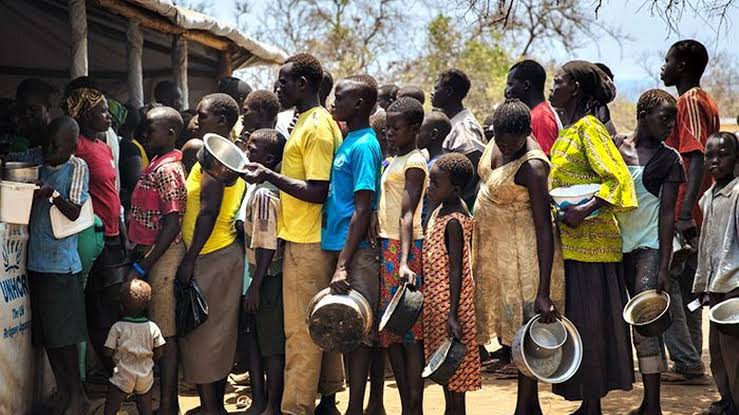
The humanitarian situation in North-East Nigeria has reached alarming levels in 2025, with millions of women, children, and other vulnerable groups facing acute food insecurity, malnutrition, and disrupted health services.
According to multiple humanitarian agencies, the United Nations warns that nearly 31 million Nigerians could experience acute food insecurity this year, with the highest burden in conflict-affected states of Borno, Adamawa, and Yobe.
In Borno alone, 150 nutrition clinics risk closure due to dwindling funding, potentially leaving 300,000 children and 700,000 displaced persons without life-saving support.
Médecins Sans Frontières (MSF) reported that 652 children died from malnutrition in Katsina State between January and June — a 208 percent increase compared to the same period in 2024.
The UN has also warned that up to 2.5 million children in the North-East are at risk of severe malnutrition this year.
Critical health services under threat
Aid cuts are also disrupting essential health services.
The Guardian reports that 70 percent of aid-supported health facilities in the region have been affected, undermining maternal health, antenatal care, and emergency services. Without renewed support, 23,000 children could die during the upcoming lean season.
Conflict and disasters compound the crisis
Security remains fragile.
A June suicide bombing in Konduga, Borno State, killed over a dozen people at a crowded market. Governor Babagana Zulum has warned that Boko Haram is regaining strength and territory in parts of the state.
At the same time, natural disasters have added to the humanitarian burden.
Heavy flooding in Adamawa earlier this year displaced thousands and destroyed homes, worsening food and health access for already vulnerable populations.
Local responses offer glimmers of hope
Despite the challenges, local and international agencies are providing targeted interventions.
The International Red Cross has distributed seeds and farming tools to more than 21,000 families to boost local food production .
Earlier this month, the SUSTAIN Project was launched in Borno and Adamawa to benefit 9,000 people, including 2,000 farmers, through agribusiness training and climate-smart farming.
Funding gap remains a major obstacle
The UN’s 2025 humanitarian appeal for Nigeria seeks US$910 million to assist 3.6 million people in the North-East. However, less than half of this has been secured, raising fears that millions could be left without aid.
The humanitarian crisis in North-East Nigeria is worsening as conflict, climate shocks, and severe funding shortfalls converge.
Women, children, and displaced communities face the brunt of the suffering, and humanitarian actors warn that without urgent international support, the situation could deteriorate further in the coming months.