

BY MUSA IDRIS UMAR, DECEMBER 23, 2025 | 09:39 PM
For many displaced children in Borno State, learning has meant squinting into darkness while hoping education would still lead somewhere.
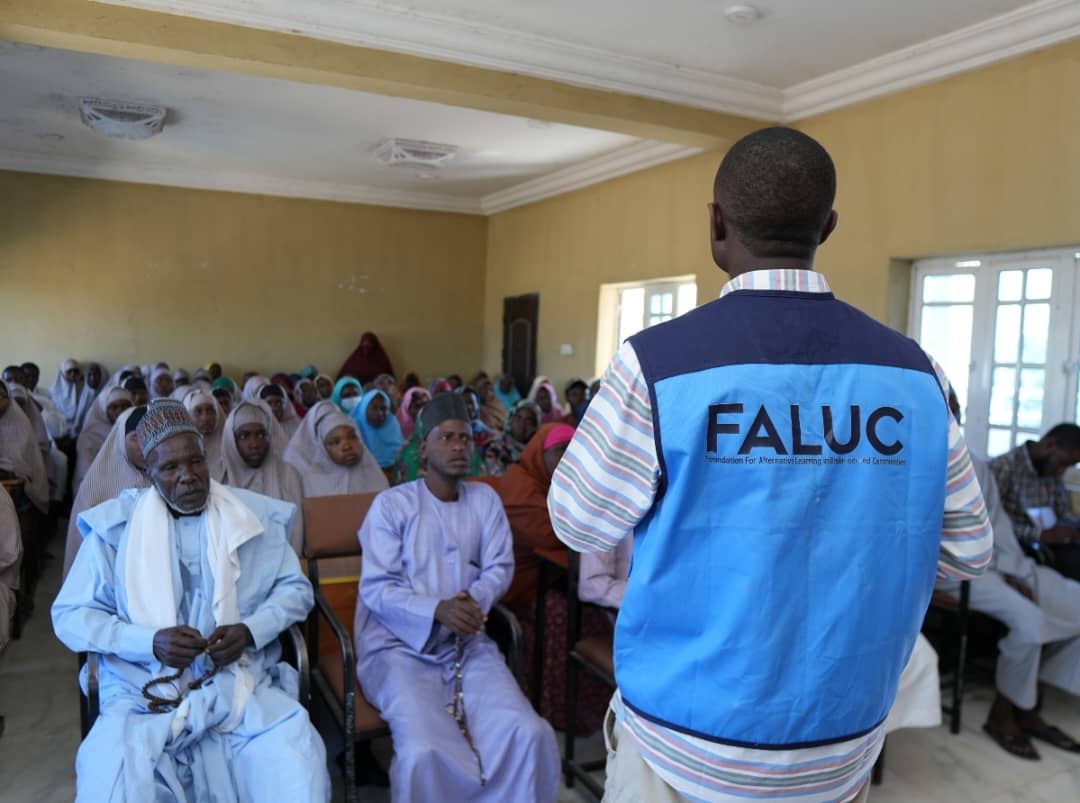
That darkness briefly lifted on Tuesday at Mai Deribe Memorial Government Secondary School in Jere with the official launch of the Light Up EDU Naija Project.
The initiative was launched by the Borno State Ministry of Education, Science, Technology and Innovation in partnership with Chrysalis Care Initiative and executive partner FALUC.
The project targets underserved internally displaced students in Maiduguri and Jere who face daily barriers to education caused by conflict, poverty, and displacement.
At its core, the intervention combines WAEC sponsorship, solar-powered study lamps, learning materials, and psychosocial support for vulnerable learners.
The launch brought together students, parents, educators, and community leaders who rarely see education interventions that reach this deep.
Speaking at the event, FALUC executive director Abdulkadir Ahmed said the Light Up EDU Naija Project was born from lived realities rather than policy documents.
He said for many children in Borno, education has meant studying in darkness, surviving displacement, and watching classmates drop out because survival became more urgent than school.
Ahmed said the loss of opportunity, not intelligence, is what continues to deny many children a future.
Drawing from his upbringing in the region, he said conflict and deprivation quietly destroy dreams when young people are denied access to education.
He said the project was built on the belief that disadvantaged students deserve more than just completing secondary school.
According to him, they deserve access to universities, colleges, vocational centers, and skills that can change their families’ futures.
Ahmed disclosed that the pilot phase supports 50 students, including 40 girls and 10 boys selected based on vulnerability and academic commitment.
He told beneficiaries that the support was not charity but an investment in their potential.
He said the solar lamps were meant to remove the barrier of darkness while symbolizing hope beyond their current limitations.
Ahmed also acknowledged parents who continue to keep their children in school despite hardship, describing their effort as courage.
Quoting education advocate Malala Yousafzai, he said one educated child can change the world.
He expressed confidence that future leaders and innovators could emerge from Maiduguri and Jere.
Ahmed said FALUC hopes beneficiaries will one day look back and identify the Light Up EDU Naija Project as a turning point in their lives.
He thanked Chrysalis Care Initiative, government partners, donors, and supporters for backing community-driven solutions.
A community leader from Shuwari, Bulama Muhammad Saleh, urged parents to take shared responsibility for children’s education.
He called on women to ensure children attend school while men go out for daily work.
Saleh warned that failing to educate children would leave them working for others using resources from their own land.
He encouraged young people, especially girls, to continue their education even after marriage.
For many parents, the intervention arrived when hope was already thinning.
Zuwairah Muhammad, a mother, said her family could not afford school or examination fees before the project.
She said her children were sent to street hawking due to lack of resources.
According to her, the intervention allowed her children to sit for WAEC and receive materials needed to study.
She appealed to donors to extend similar support to other vulnerable families in IDP camps.
The principal of the school, Alhaji Ibrahim Mohammed, described the intervention as timely.
He said several parents of SS3 students could not afford WAEC fees without assistance.
Mohammed said without the support, some students would not have written the exams.
He called for continued assistance, noting that many students still lack basic school uniforms.
The principal urged donors to expand support to other schools facing similar challenges.
For 18-year-old beneficiary Kamairam Bukar Galtimari, the intervention meant survival in school.
She said without the support, her education might have ended.
Kamairam said her dream is to study MBBS or nursing to help people in need.
She appealed for continued sponsorship beyond secondary school.
Another beneficiary, 18-year-old Fatima Hassan Machina, said the organization provided what many parents could not.
She described the donors as parents who stepped in when families could not cope.
Fatima said she hopes the support continues after graduation so students can pursue their dreams.
As evening fell in Jere, students switched on their solar lamps, proving that for the first time in a long while, learning no longer ends when the sun goes down.