

BY FALMATA ABBA, NOVEMBER 27, 2026 | 10:55 PM
At 4am, while Maiduguri is still asleep, 54-year-old Ramatu John is already awake.
Not to pray. Not to rest. But to think about what her orphaned grandchildren will eat that day.
In an interview with our reporter, Ramatu said for 11 years, this has been her life.
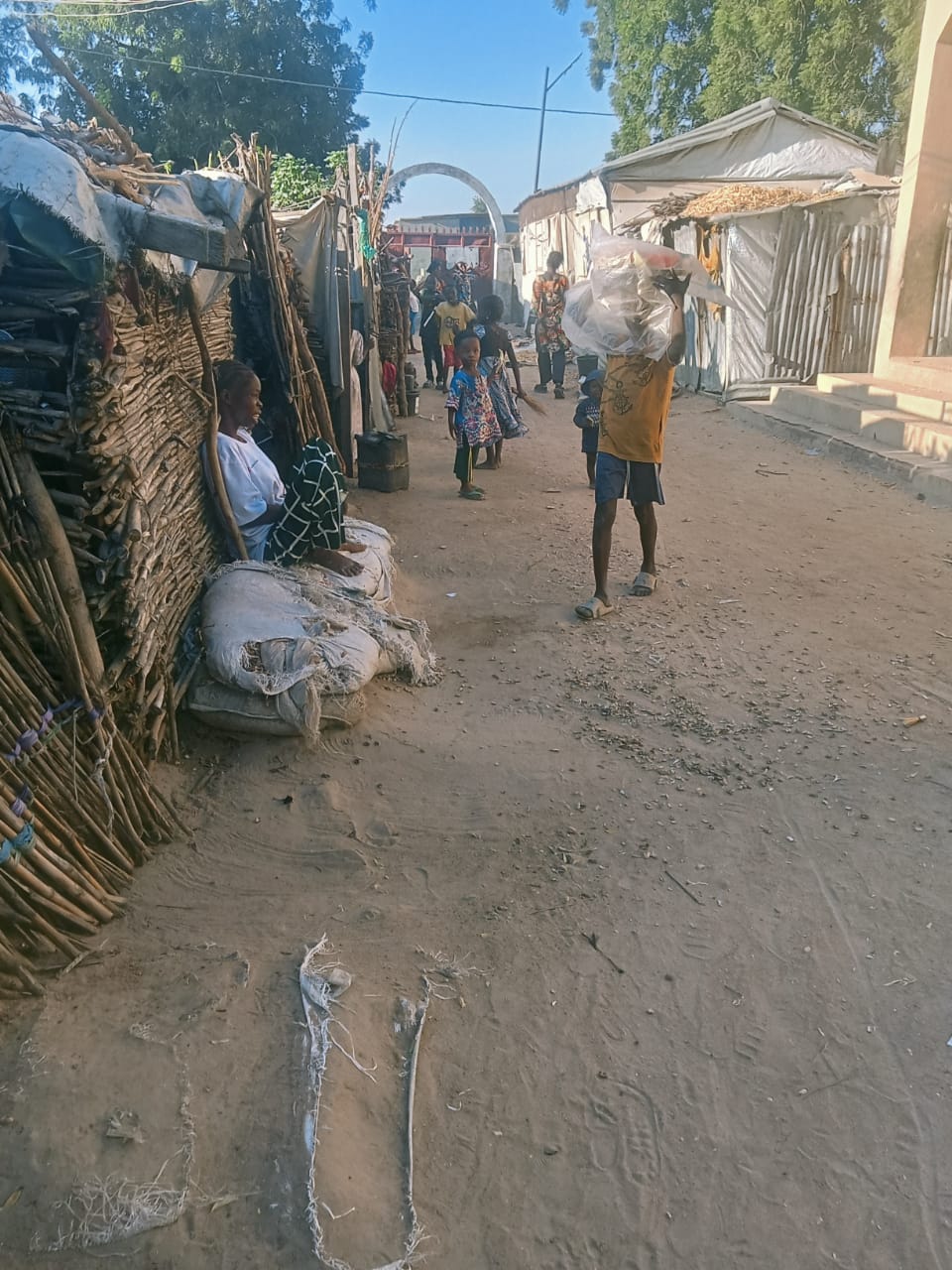
She fled her hometown Dahul to escape insecurity, hoping the camp in Wulari Ward, Maiduguri, Borno State, would give her safety. It did. But safety did not bring food, medicine, or comfort.
'I have been here for 11 years. This is how we survive,' she said quietly.
During the rainy season, Ramatu goes to farms to work as a labourer. Sometimes she is paid in cash. Other times, she is paid in grains. When the dry season comes, she turns to the bush to gather firewood to sell.
It is back-breaking work for a woman her age, but she has no choice. She is mother, grandmother, and breadwinner all at once.
'The government gives us assistance once in a long while. Since the NGOs left the state, we barely receive any help,' Ramatu said.
Her story is not unique in Wulari. It is the story of hundreds of families who escaped violence, only to face another war, the war for daily survival.
Pregnant, but no hospital
For 31-year-old Patience Illiya, the battle is different but just as painful.
She is seven months pregnant, yet she has not received antenatal care even once.
'We only go to the hospital when labour starts,' she said.
The health centre near the camp has been closed. For any medical need, residents must travel all the way to the State Specialist Hospital, a journey many cannot afford.
As a result, many women wait until labour forces them to seek help. Others turn to nearby chemists, buying injections and drugs on credit, sinking deeper into debt.
'I am currently sick and taking injections, but nothing is getting better,' one resident lamented.
Children paying the price
Beyond food and healthcare, parents in the camp are watching their children’s future slip away.
A mother of seven said she can barely feed her children, let alone buy uniforms, shoes and other school requirements.
'We don’t have money to buy uniforms, shoes and other things they ask of us in school because we are struggling to feed,' she said.
Even though the children attend government schools, parents are still asked to provide those items.
Children whose parents cannot afford them are sometimes sent home.
Some of the children also complain about the quality of teaching they receive, adding to their parents’ worries.
Tents that cannot stand the rain
Life in the camp is also a struggle for shelter and dignity.
Many of the tents are worn out. They leak when it rains and shake violently when the wind blows.
With limited space, families are crammed together, with little privacy.
Sanitation is another nightmare.
Poor drainage, inadequate toilets, and overcrowding have made it difficult to keep the camp clean.
Some residents say the shortage of toilets sometimes forces them to use nearby bushes.
A safety that is not enough
For families who have spent years away from home, displacement is no longer just about losing houses and farms.
It is about losing the basics that make life livable: food, health, education, shelter and dignity.
They escaped insecurity in search of safety. But 11 years later, in Wulari, safety alone is not enough to survive.