oppinion

oppinion

BY: Dauda Iliya, DECEMBER 18, 2025/ 11:08AM

“Beneath the rubble and bloodshed also lie whispers of a different path paved with empathy, understanding and innovative solutions... The path to peace is not paved with bombs and bullets, but with courage, compassion and long-term vision” General Lucky Iraboh 2025

Wise men say, in leadership and good governance, it is better for a leader to roam around the led, consoling and providing succour to them in situations of adversity than remain within the comfortable confines of his office, lamenting over the adversities.

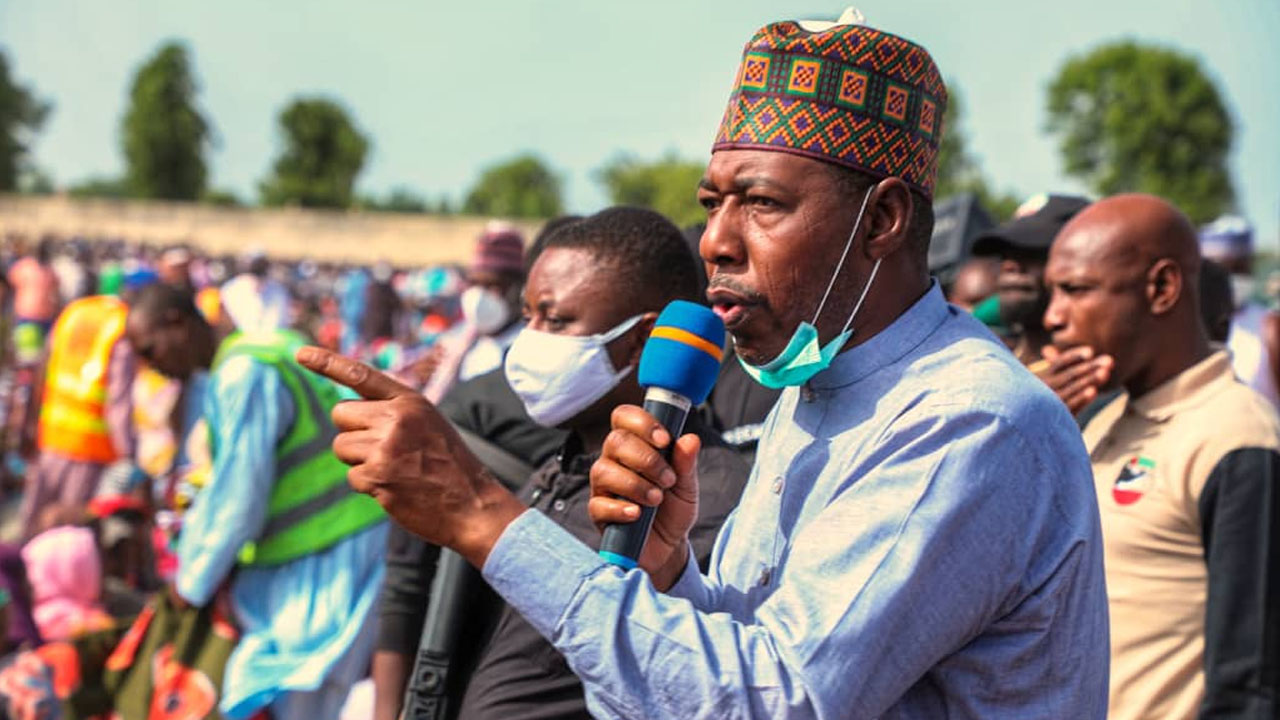
In keeping with his tradition of trotting around the state to minister to the people according to needs, Borno State governor, Professor Babagana Umara Zulum, from 4th-9th December 2025 undertook a Security and Resilience Tour to the Southern Senatorial Zone of the state for four cardinal reasons.

The reasons: To fulfil his constitutional mandate as the chief security officer of the state; To develop the absorptive capacity of his dear Bornoans to terror-inflicted shocks; To develop their resilience-building capacity to terror to enable them rebuild their lives, reminiscent of their glorious pre-Boko Haram past; and To leverage the level of security so far restored to coordinate the reconstruction of the state from the rubbles of terror.

The constitutional provision that squarely thrusts the critical responsibility of security on government mandates every leader at every of the three tiers of government to ensure the restoration and maintenance of security according to the constitutional powers allotted to him, and according to the prevailing imperatives in his entity of governance.

It takes a leader worth his weight in gold to surmount every seemingly insurmountable challenges on his way of discharging this cardinal responsibility, to purposefully navigate the complexities of security restoration and maintenance in today's insecurity-tattered Nigeria.

Compliantly, therefore, Prof Zulum, whose one of enviably defining characteristics is regular trotting around his terror-tattered state to lend credible support to the military, and develop and sustain the resilience of his terrorized and gradually resettling communities to leverage the gradual restoration of security to rebuild their lives, has kept pace and maintained the tempo, most times going the extra mile to spectacularly do much more.

He exhibited this disposition in the 120-Hour Security and Resilience Tour to the state's Southern Senatorial district. He, in keeping with his tradition, went the extra mile, crossing the border to Cameroon to console and express amity with Boko Haram war refugees and prepared their minds for returning home to rebuild their lives and restore prosperity to the state.

Zulum’s first port of call was Warabe, a community in Gwoza where he met with bereaved families and community leaders. He offered his condolences and prayers for the repose of the souls of those that lost their lives.

The governor then proceeded to Askira-Uba where he spent Thursday night coordinating security responses and reviewing current security strategies to formulate a more robust framework to protect vulnerable communities and prevent future attacks.

During a separate visit to the Emir of Askira, Alhaji Abdullahi ibn Muhammadu Askirama, and that of Uba, Alhaji Ali Isma’ila Mamza, Governor Babagana Zulum underscored the critical role of community involvement in ensuring peace and security.

Governor Zulum also visited hospitals at Lassa, in Askira-Uba local government area where he expressed government's commitment for the reconstruction, rehabilitation and equipping of these hospitals in addition to recruitment of professionals that will manage the hospitals.

Earlier that Saturday, the governor met with grieving families in Chibok, where he commiserated with them over the loss of lives and property, offering condolences and immediate relief to those that lost properties.

At Chibok, the governor announced concrete measures to protect lives and property, noting that the state government, in collaboration with the federal government and security agencies, is implementing enhanced measures to protect vulnerable communities against future attacks.

“We are here to offer our condolences over what happened these past days in Chibok general area, especially to those who lost their lives. The situation is painful. We are here to show our sorrow over what happened," he commiserated the bereaved Chibok families.

He assured: "God willing, the issue of insecurity in Chibok will be resolved. We will provide a permanent solution and put an end to it. We will take action." Consoling, "Please be patient. Our thoughts are with you, and one thing that made me happy is how you have remained calm and stayed in your communities despite everything,” Zulum said."

The governor announced financial assistance of N1 million to the bereaved families and N500,000 to those whose properties were destroyed during the recent unfortunate attacks.

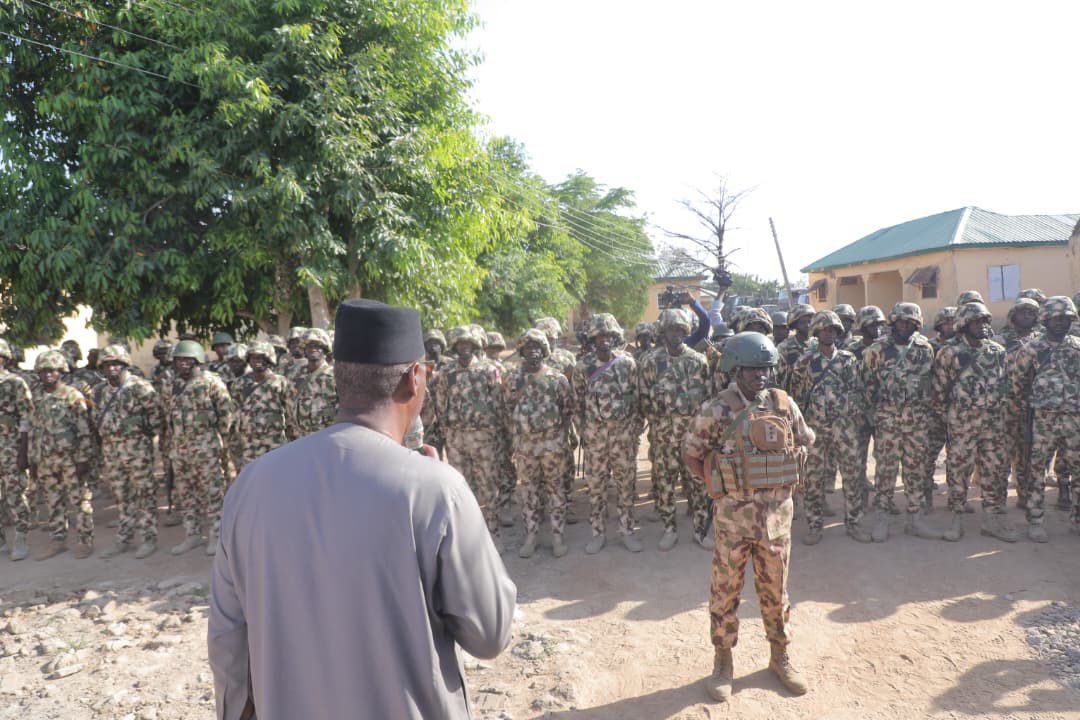
While in Damboa, Zulum injected the security forces with sermons of courage to bolster their morale for the terror war.

"We are behind you,” Zulum assured while addressesing the troops of 25 Task Force Brigade of Nigerian Army, declaring the state's and its people's support for their relentless fight against Boko Haram/ISWAP insurgents.

The governor, speaking at a front-line military base in Damboa, sympathised deeply with the officers and soldiers, acknowledging the immense personal sacrifice and hard work they put in daily.

Zulum stated, “On behalf of the government and good people of Borno State. We are here in Damboa purposely to commiserate with you over the recent setback which claimed the lives of some of your colleagues."

Consoling the troops further, Zulum said, "For those of you who are still alive and healthy, we pray that God will protect you, give you the vision and strength to carry out your duties effectively. You have been doing very well. We have acknowledged your support and would like to commend you."

In his vintage tradition of resilience building among the terrorized communities, Zulum rolled out his reasons for the Damboa visit in an on-the-spot interview with newsmen.

Governor Zulum tied development to peace and security, underscoring the imperative for the restoration and maintenance of security for infrastructural development to flower across the communities.

"The nexus between peace, security and development cannot be overemphasized. we have seen some critical infrastructures in this locally especially schools and hospitals. Damboa has a population of over 200.000 people, before now, they don't have a big hospital, we have now constructed a befitting general hospital which shall be commissioned very soon".

Professor Zulum then crossed the border to the Republic of Cameroon to console and provide warmth to the thousands of his fellow Bornoans taking refuge there from the Boko Haram/ISWAP terror.

"Road Home is Open": Zulum broke the cheery news that injected hope in 12 000 Nigerian Refugees in that Francophone nation.

He reaffirmed his administration's commitment to restoring the dignity of victims of insurgency, including Nigerian refugees in the neighbouring countries of Cameroon, Chad, and Niger.

Addressing the refugees at the Minawao camp in Cameroon’s Far North region, he said his visit was part of the government's efforts to repatriate those who remain.

Over 12, 000 Nigerian refugees from Kirawa, Ngoshe, Ashigashiya and surrounding communities in Gwoza Local Government Area have been living in the camp for more than a decade.

The governor’s visit provided a significant relief and renewed optimism as he interacted with the refugees. For many, his presence signalled that the long road home was finally opening, describing the moment as their "first real assurance".

“The welfare of refugees, internally displaced persons, and returnees remains a priority for us,” Zulum said, noting that rebuilding the lives of insurgency survivors is a core pillar of his administration’s humanitarian and development agenda.

The governor also announced cash support for shelter rehabilitation for those willing to return, a measure designed to help returnees begin reconstructing their homes. In addition, he pledged to drill boreholes for the refugees.

“Borno State in partnership with the federal government will provide a cash assistance of N500 000 to each refugee that is willing to return home, while women households will be given N100,000 each," Zulum announced.

The governor of the Far North Region, Cameroon, Mijinyawa Bakari, praised Governor Zulum’s unwavering commitment, describing his continued support for displaced Nigerians in Cameroon as exemplary and deeply humanitarian.

“Borno State Governor has consistently demonstrated genuine concern and responsibility for his people, even beyond Nigeria’s borders,” Bakari stated.

He acknowledged the sustained humanitarian assistance, particularly the governor’s long-standing interventions in the Minawao Refugee Camp.

“Zulum’s physical presence and hands-on support has not only provided relief to the refugees but has also strengthened cooperation between Nigeria and Cameroon in addressing displacement and regional stability,” he added.

During his visit, Governor Zulum also toured farmlands allocated to the refugees by the Cameroonian government, which have become their primary source of livelihood.

While assessing the fields, he commended the refugees’ resilience and the host authorities’ generosity. He assured farmers that his administration would support their agricultural activities by providing irrigation kits and water sources to boost productivity.

Babagana Umara Zulum, a Professor of Agricultural Engineering in the academic sphere, is incontrovertibly an exemplary leader, the intertwine of security and peoples resilience with reconstruction and development in an entity rubbled by terror.

Dauda Iliya is the Special Adviser on Media/Spokesperson to Borno State Governor

BY ABUBAKAR MU'AZU, DECEMBER 10, 2025 | 01:41 PM


The news of the coups d'etat in Benin has become a topic of discussion stirring different strands of concerns. Believers in the Western imposed democracy of the 1990s are expressing concerns over change of government through the barrel of the gun rather than through the ballot. This is coming after the Republics of Burkina Faso, Guinea and Mali have executed successful coups leading to military rule.

The Coups in these countries were condemned by ECOWAS, Nigeria and Western countries and some individuals. As soon as the coups succeeded, the three countries decided to show France the door in a real drive to assert their sovereignty and control their resources. They also drove away the Western mining companies that were profiteering, keeping poor and undeveloped in the name of business and investments. The West is angry at their decision to take over the control of their mineral resources. They are still being threatened. Their fear of the West working with wiling African countries to sabotage them seems real. They are very apprehensive and suspicious.

The Nigerian President, Bola Ahmed Tinubu, in his capacity as ECOWAS Chairman, opposed the coups, announced sanctions including cutting off power supply from Nigeria to Niger including the threat of the use of military force to "restore democracy.' Although ECOWAS opposed the military change of government, the citizens in the three countries appeared to welcome the change, thereby conferring legitimacy on the military regimes.

The announcement by the Nigerian President - as the Chairman of ECOWAS - triggered reactions from within and without Nigeria, united by one position: no war against a sister African country. The people in the northern parts of Nigeria opposed the idea of deploying the military against the Republic of Niger. Very important dignitaries raised their voices against fighting Nigeria's most friendly neighbour. Religious leaders, traditional rulers and business persons joined in the opposition to any military response. The sanctions announced against Niger stood. Fortunately, no senseless war against Africans in another country happened.

The Republic of Niger became apprehensive and highly suspicious of Nigeria. The relationship between the Nigerian and the Nigeriene Government was never the same. The regime in Niger, along with Burkina Faso and Guinea, announced its withdrawal from ECOWAS. They formed what they called the Alliance of Sahelian States (AES). Although there were attempts to woo them back into the fold of ECOWAS, the three countries remained adamant, opting to go their way. This withdrawal from ECOWAS is a sad commentary on the way the regional body handled the situation. The platitudes about democracy was the best form of government became challenged, particularly among young people who argue, correctly, that the elections lack legitimacy, were manipulated and based on unconstitutional abolishing of term limits. So with or without democracy, the same abuse, misuse and exploitation to remain in power - a surviving culture of "sit-tightism."

It is important to note that the return to democracy, with all the beautiful epithets attached to it, had become for many countries a hollow ritual, promising a lot but delivering frustrations. The AES countries exposed the character and degree of exploitation of Africa despite their declared independent. It was democracy without sovereignty. Burkina Faso took the lead in demonstrating what African countries need to do to free themselves from the colonial fetters that exploit them, underdevelop them, keep them poor and sidelined. The taking over of the direct control of the mines and mineral resources of their countries became - an illuminating - eye opener. With the progress being demonstrated in terms of services to the people and the campaign against terrorists make many African feel that there are better ways of managing African countries.

That may be a reason for the coups d'etat in the Republic of Benin. The Nigerian government claimed that the Government of the Republic of Benin requested for Nigeria's military assistance, to quelll the attempted coups and ensure the "restoration of democracy." The Nigerian Government announced that it has sent its Air Force jets to intervene. A day after the coup, the situation remained uncertain. There were reports of attacks to contain the coupists.

The decision of the Nigerian Government t intervene in Benin would and generated different reactions. There are those who believe that military intervention is not just right considering that it may degenerate into Africans fighting one another. There are those who think that Nigeria is acting correctly, to stop unconstitutional change of government. Within Nigeria, there are citizens asking why Nigeria is not deploying the same energy to bring the insecurity in the country to an end, but has sent the military to intervene in Benin.

Then another report seemingly different from the events in Benin came that a Nigerian Air Force C130 transport had breached Burkinbe airspace. While the Nigerian government claimed that the plane developed a fault and had to land for safety, the authorities in Burkina Faso said that they had to force the Nigeria Air Force plane to land for breaching its air space. This happened at a time that the AES countries are thinking that Nigeria is willing lackey of the West, ready to be used to sabotage the independence revolution in their countries. This suspicion has been repeated by these countries.

The recent unresolved coups d'etat in Benin and Nigeria's intervention will open a vista of discussion on the future and stability of the region. Given the deployment of soldiers to that country and, by any reason, the few escaped coupists were to get the support of the AES countries, the fear of instability in West Africa will become a reality. While this will set one African country against another or others, the beneficiaries will be the Western countries by readily selling weapons, negotiating mineral deals and keeping the economies region poor, exploited and underdeveloped.

BY ABDULHAMID AL-GAZALI, DECEMBER 07, 2025 | 06:09 PM


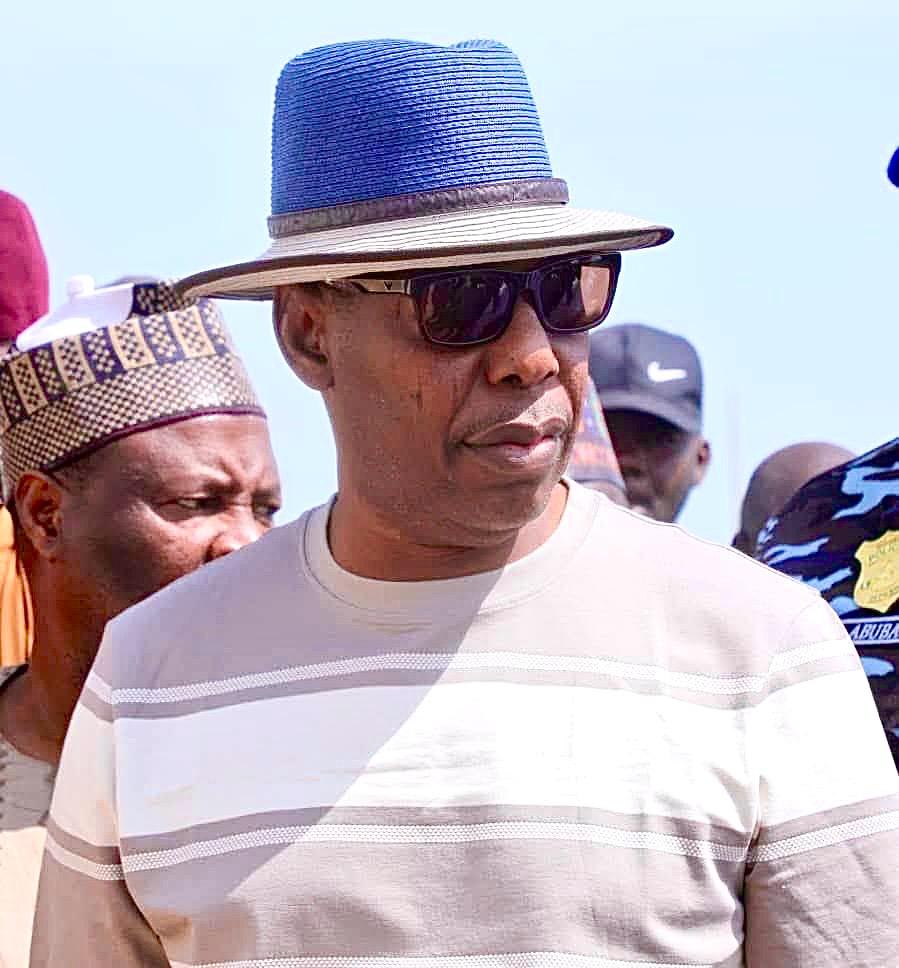
Gov. Zulum’s recent pronouncement has caused an exciting social media buzz and ruffled a lot of dead-haired feathers. Gov. Zulum said he has spent a staggering N100 billion in ensuring security in the state over the last year.

To many, that’s huge. And even those who tried to defend the amount only splashed the internet with images of vehicles the government had procured, giving them imaginary figures and numbers.

One of my friends once wrote in his curriculum vitae that he was ‘a very simplistic man’ in describing himself. By that, he probably meant to tell his potential employer that he was an easygoing man who would not cause any problems in the office—which is, may be, very important in today’s world where something called domestic violence exists. But given that one should not leave anything to chance, he may have been just quite honest, and therefore meant to, point blank, say he wasn’t one for complex problems.

Interestingly enough, I saw him on TV last year explaining the tax reform bill. Because everything economy is a bloody jargon, it is only those who do not understand it that can explain it, and it is actually when one does not understand it that it is truly understood. Seeing him, I understood the logic of his principal, who may have read his CV. Simplistic, and therefore, very likely not one to understand complex things, he was probably the best suited to explain it.

When you say you are simplistic, or your actions and commentaries prove you are one, it is not weakness. I think it is just an admission that you don’t want to critically analyze anything in your life. You don’t want the stress. Again, this reminds me of another of our acquaintances who asked everyone not to treat him seriously. He finds ambition, aspiration and serious life a huge burden; hence his choice. And when you are simplistic, which is by the way true of a majority of us today, one should not expect some kind of high output from your intellection, because you actually don’t intellectualize.

It is with this simplistic framework that most of us tried to analyze Gov. Zulum’s N100 billion claim. The most predictable thing for almost every mind to remember at first instance is normally the procurement of hardware—vehicles, gunboats, etc. Interestingly, this could be the least of them, most often than not. For example, in 2008 alone, embroiled in so many wars since 2000, the US government budgeted $300m for psychological operations, a euphemism for war propaganda. In 2024 recently, it spent $252.3 million in Military Information Support Operations, MISO, which is just one of the many budgetary allocations for war propaganda alone.

Beyond this, many countries buy sophisticated military equipment that they would never put to use. Sometimes the only purpose is to use it as a bargaining power. They only want to catch the headlines globally and across enemy quarters that they are now in possession of a particular hardware. Similarly, a lot others are purchased secretly, for other reasons. It is simply, even as we are in a democracy, not the business of everyone to know them.

Security spending may take the form of infrastructure, one or those that are entirely outside the woodworks of actual security. Let us take a housing project for an example. A housing project may seem unrelated to security from the surface, but it very much is. In short, the government would decide to say it is rebuilding houses and communities destroyed by terrorists; a very good argument for security spending. But there is even more.

First of all, the funds, when released to contractors, goes into the economy and keeps it vibrant. Money would exchange hands across a wide spectrum. The contractors would buy blocks, in which case some block factories would get some cash and hire / pay their laborers, instantly creating jobs and checkmating poverty for a number of families. It would be just as well for woods, iron, gravel, sharp sand and a lot more. Then artisans and laborers will be hired.

At the building sites, other economic activities also crop up. A food kiosk may spring up, then drinks, and even those things laborers normally can’t do without. I have been in construction, and I can tell its wide net. These would take a lot away from idling, and from being potential recruits for terrorists—well before the actual project is even delivered.

Similarly, knowing that these houses would be occupied by members of those communities, creates hope for some, solves housing challenge for others and ultimately supports urbanization processes. Now, this project could equally be a market, a school, a hospital or even a road, all of which have been going on in Borno.

Security spending may also take the form of providing relief to victims of attacks and vulnerable communities, as a way of guarding against potential recruitment by terror groups. If they are left in extreme situations, they may likely yield to the overtures of the terror network.

Beyond actual food handouts—which is largely now shouldered by the government—this spending can also come in the form of reopening farmlands and supporting communities with inputs. Many are privy to the several farmlands that have been cleared and reopened over the last two years, with massive solar powered irrigation facilities.

But security spending is beyond all of that. There are so many behind-the-scene activities that can never be known to the public. And it is better not, especially with our kind of mindset.

In wartime, the governor wouldn’t be wrong to technically describe every spending as a security expenditure. The entire state budget, in these periods, can be seen as a security budget because while some part of it goes into security directly to address existing problems, others ensure that we don’t compound or ignite new ones.

There is a deliberate misreading of the governor’s pronouncements. And in climes like ours, and times like this, everything one says—even one who is not a public office holder—is already a media disaster waiting to happen. It can only be considered safe when it ends up not being scrutinized—escaping the binoculars of our social media moon-sighters, mostly because there are other great click-harvesting subjects to discuss.

With terrible inflation, N100 billion is not what it used to be three years ago. Three years ago, that is N30 billion. This being said, citizens have their rights to scrutinize whatever they choose to scrutinize. If you consider this your citizenship duty, then go ahead and enjoy it.

BY MUSA GWARY, NOVEMBER 25, 2025 | 01:49 PM


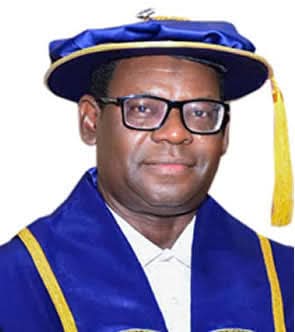
To stand in the presence of true greatness is a rare privilege. To be taught, guided, and shaped by it is a life-changing gift. This has been my fortune as a mentee of Dr. Sa’id Alkali Kori, a man whose life and work embody an unyielding pursuit of excellence and a profound love for Nigeria and Africa.

Dr. Kori is not merely a successful professional; he is a singular force of nature who operates at the powerful intersection of high finance, transformative policy, and tangible development. As his mentee, I have had a front-row seat to witness a mind that can simultaneously architect a $100 billion national financing strategy and meticulously engineer the revival of a single moribund agro-processing plant. He teaches us that nation-building requires both the grand vision and the gritty execution.

His professional accomplishments, as stellar as they are, are but a shadow of the man himself. Key accomplishment few to list is the mobilization of over $1 billion in development capital, but it cannot capture the relentless intellect that devises innovative Sukuk structures or the persuasive prowess that aligns multilateral institutions, sovereign governments, and private capital towards a common goal. It mentions his role in delivering 15,000 affordable homes, but it fails to convey his deep-seated belief that every family deserves dignity and shelter.

From him, I learned that "development finance" is not an abstract term; it is the capital that builds the hospital in a rural community, the road that connects farmers to markets, and the power plant that lights up a small factory, creating dozens of jobs. His leadership in the Lake Chad Basin is a masterclass in turning geopolitical complexity into a tapestry of regional cooperation, proving that economic integration is the most potent tool for peace and prosperity.

His most recent triumph—the acquisition and revival of the five agro-food assets into the Nigeria Food Corporation—is a case study in his unique genius. Where others saw only liabilities, Dr. Kori saw potential. He saw an opportunity to resuscitate industries, secure food for the nation, and restore pride to communities. He demonstrated that reviving a moribund company is an act of both economic and social justice.

Yet, beyond the boardrooms and high-level negotiations, Dr. Kori is a mentor in the truest sense. He invests the same rigor in developing people as he does in structuring a deal. He pushes for excellence not as a standard, but as a habit. He has taught me that integrity is the most valuable currency, that your word is your bond, and that true success is measured not just by personal gain, but by the number of lives you positively impact.

Dr. Kori, you are the embodiment of the belief that one individual, armed with vision, integrity, and relentless drive, can indeed alter the trajectory of a nation. You have not only built institutions and mobilized capital; you have built people. You have ignited in me, and in countless others, a fire to contribute meaningfully to our great country.

Thank you for your guidance, your unwavering standards, and for showing us, by example, what is possible. Your legacy is not just in the deals closed or the projects delivered, but in the generations of leaders you are molding to continue this critical work.

With the utmost respect and gratitude,

Musa Gwary Mentee & Protégé

BY DAUDA ILIYA, OCTOBER 20, 2025 | 09:22 AM


Leadership is indispensable: decisions must be made, trust earned, promises kept, a way forward proposed- Henry Kissinger.

The recent tour undertaken by the Borno state governor, Professor Babagana Umara Zulum to Diffa region in the Republic of Niger, as well as the border towns of Kirawa and Banki was not only strategic but a pragmatic decision.

The visit fulfils the Governor’s pledge to secure a sustainable peace for the state, with its central aim being the repatriation and resettlement of those displaced by the Boko Haram conflict, who have been seeking refuge beyond Nigeria's borders.

Governor Zulum and Boko Haram/ISWAP terror group seem engaged in a startling clash of strategies that launches a new phase in the 15-year Northeast terror war.

Troops have virtually squeezed the terrorists out of major sections of Borno State and tamed them along Nigeria's borders with the three neighbouring countries of Chad, Niger and Cameroon, and the Lake Chad Tumbus (islands); but the terrorists seem solid in their resolve to maintain a firm grip of the borders.

They seemingly do so for twin reasons: to maintain their frightening presence to the Nigerian nation, seemingly saying: "We are still very much around; we are only watching you from the borders"; and, therefore to carry out sporadic unsuspected attacks, especially on resettled communities in border local government areas.

Zulum, leveraging the success achieved in the war over the last six years he has governed Borno State, he, with the instrumentality of the UN-hailed 25-year Development Plan and Borno Model, launched a comprehensive and expansive recovery, reconstruction and resettlement phase that has facilitated the return and resettlement of hundreds of communities in their ancestral abodes to rebuild their lives and, consequently, facilitate the rapid restoration of prosperity for the state.

Zulum seems strategically resolved to ensure the terrorists, even if not completely exterminated, remain squeezed to, and tamed along, the borders where the four Chad Basin nations can easily crush them in what may seem a decisive phase in wiping out terror from their respective terrains and the entire Chad Basin.

Over the last one year, the terrorists have been marauding into the Borno terrain from their border enclaves, tormenting resettled communities, killing scores to, apparently, scare Zulum from going ahead with his UN-praised Borno Model of societal recovery.

Zulum, leveraging the fascinating successes of the security agencies - The North-East Operation Hadin Kai Theater Command in Maiduguri and the Multi National Joint Task Force headquartered in Ndjamena, Chad Republic, seem solidly determined to ensure that Borno recovers from the terror-inflicted humanitarian crisis and, as a competent representative of the Nigerian authorities, squeeze terror out of the shores of Nigeria.

Zulum and the terrorists seem in a fierce clash of strategies in a fresh phase of the Northeast terror war, which portrays the incontrovertibly uncommon determination of the governor to snatch his dear Borno from the calamitous fangs of terror.

Excitingly undeterred by the persisting resurgence of terror across the Northern, Central and parts of the Southern zones of the state, the Mr. Resilience called Governor Babagana Zulum, smouldering with an uncommon determination and daredevil stance on recovery, trots round resettling communities and injecting them with the required resilience to withstand the terror resurgence.

He is injecting in them with the determination to rebuild their lives and economic activities as a critical part of the non-kinetic approach to ending the conundrum.

The Zulum administration has so far repatriated over 30,000 families from Diffa in the neighbouring Niger Republic and resettled them in their ancestral homes in Malam Fatori, Abadam Local Government Area of Borno State.

Other communities resettled by the Zulum administration, where socioeconomic activities picked up include, Kekeno, Cross Kauwa, Doron Baga and Kukawa town, all in Kukawa local government area in Northern Borno.

Also resettled are: Ngom, Koshobe, Ajiri, Gajibo, Wulgo, Banki and Darajamal, while efforts have reached advanced stage for the resettlement of Mayanti, Bula Yobe, Tarmu’a in Bama local government.

Majority of these are either border communities or communities close to the borders. He now strategically shuttles among them, planting the seeds of resilience and determination to rebuild their lives amid what seems an unending terror.

While at the Nigeria-Cameroon border community of Kirawa in Gwoza Local Government Area, where the terrorists invaded, during a 5-day strategic shuttle to some border communities to strengthen security and plant the seeds of resilience recently, Zulum assured them that arrangement have been concluded to station a military formation to guard to the border town.

"I want to assure you that we will do everything possible to ensure that Kirawa does not fall to Boko Haram insurgency. We must not allow this town to be displaced again, because once affected, then other adjoining communities like Pulka, Ngoshe and even Gwoza would be vulnerable ," Zulum warned.

Sowing the seeds of resilience, he declared: "I promised to rehabilitate all the houses destroyed, I promise build a befitting General Hospital in the town because it will not only serve the people of this community but also the Cameroon Republic part of Kirawa, and also look into the possibility of compensating victims of community that lost their assets in the attack."

The governor continued: "I have discussed with the Theatre Commander, Force Commander Multinational Joint Task Force (MNJTF), and General Officer Commanding (GOC) 7 Division, we have agreed that within the shortest possible period, the military will deploy troops to Kirawa."

Another measure taken, he disclosed, is to provide additional support to members of Civilian JTF, hunters and vigilante to enable them secure the town.

The storming terrorists burnt down eight vehicles, including heavy equipment and about 50 houses at the border town.

“We are looking into the possibility of getting some technological equipment that will enhance the security operation in the general area. We are also building their resilience

To boost border security, Zulum recently trotted to Diffa in Niger Republic Community, where over a hundred thousand of Borno families are taking refuge from Boko Haram, to review and fine-tune Lake Chad shores and border security with authorities there.

The visit, which comprised a high-level security and economic delegations, focused on strengthening the existing collaboration between Nigerian and Nigerien forces in the ongoing fight against terror and insurgency, particularly around the shores of Lake Chad.

Zulum was received by the Governor of Diffa, Brigadier General Mahamaduo Ibrahim Bagadoma, and other senior officials. The leaders held closed-door meetings centered on joint patrols, intelligence sharing, and sustaining the recent gains that have pushed insurgents out of many of their former strongholds.

At the Nigeria-Cameroon border town of Banki in Bama Local Government Area, Zulum assured residents that robust security measures would be adopted to protect them from further attacks by Boko Haram terrorists.

He commended the people for their courage and resilience in the face of a recent attack, urging them not to be disheartened.

“I purposely came to Banki to salute your courage; your act of bravery is really encouraging,” Governor Zulum stated. “We should not allow a few bad elements to displace this town whose businesses and economic activities have been thriving.”

He continued: “I want to assure you that the insurgents will not succeed, Insha Allah. We will strengthen the security of this border town and will support our youth volunteers, hunters, and vigilantes to further fortify this area.”

Governor Zulum undertook a two-day tour to some frontline locations in the southern and central parts of the state to inspect key resettlement projects as critical ingredients of community resilience building.

The projects include 500 resettlement houses and over 3,000 temporary shelters in Mayinti and DaraJamal.

Zulum's resilience building initiative has been yielding gladdening socioeconomic results at Dikwa, Marte, Kala Balge, Gamboru-Ngala, Limankara and Gwoza, after his weeklong tours there some few months ago.

With the startling strategies of resilliance building adopted by Governor Zulum, now roaring and reverberating across the border areas, the path to enduring peace is just few a meters away.

Dauda Iliya is the Special Adviser on Media/ Spokesperson to Governor Babagana Umara Zulum.

BY AISHA YUSUF SABO, OCTOBER 18, 2025 | 06:06 AM


Now I want to ask, why have we, as a society quietly accepted public urination? While, most of those involved in the act are highly unlikely to read this, I hold on to the belief that those in the right positions to set laws and enforce public sanitation standards probably will.

I read somewhere that "A habit becomes a ritual, and a ritual becomes a lifestyle" and I couldn't agree more. What was once considered an indecent behavior has gradually been normalized. We see it by the roadsides, marketplace, along stagnant gutters, even around schools and at dumpsides. The sight no longer shocks us at best, it earns a shake of the head and at worst, ignored completely, as if it were simply part of our everyday environment. How did we get here?

One of the obvious reasons lies in the absence of accessible and clean public restrooms making the street corner the most immediate option for people on the move (drivers, traders, pedestrians). The few ones available are often poorly maintained, unsafe, or require a small fee that discourages regular use.

And, instead of doing and demanding better, we have adjusted our expectations downward, learning to live with the inconvenience. Public urination has thus shifted from a taboo to a tolerated response. Even the sign posts saying "DO NOT URINATE HERE" are not mounted any more.

Over time, what should have been addressed as a public health and dignity issue is now woven into our daily lives. Sadly, children growing up seeing adults urinating in public will come to view it as normal. And if care is not taken, what one generation tolerates may become the inherited culture of the next.

This quiet acceptance of public urination also yields health risk. Urine on streets and walls contributes to foul odors, attracts pests, and can serve as a breeding ground for bacteria. During the rainy season, contaminated runoff finds its way into drainage systems and water sources, worsening already fragile sanitation conditions.

This incessant act of public urination has to end. Aside being uncouth, it exposes the environment to health hazards that may result from the act. The first line of measure is the provision of restrooms. People need convenience spaces and they will only stop using the public spaces to relief themselves if an alternative is provided.

The message is simple: measures must go beyond lip service or mere announcements. People need to be educated to stop the act, and the government is encouraged to provide public facilities in strategic locations to help reduce the rampant issue of public urination." With these in place, laws can be implemented, and punishments imposed on offenders if caught.

BY ABUBAKAR MU’AZU, OCTOBER 09, 2025 | 01:02 PM


Another round of public outrage is playing out because of an alleged certificate falsification (or is it forgery?). It seems to me that all the requirements that are designed to ensure healthy politics and responsible governance do not really matter. At least that is part of the narrative since the return to civilian rule in 1999. The exit of the military, actively supported by Western countries, was regarded and valorised under the imagination that Nigeria stands to develop. Civil society organisations became the arrowheads of the struggle for the restoration of democracy, constitutionalism, rule of law and human rights. That imaginary had great seductive appeal.

One of the first scandals that emerged was the Salisu Buhari certificate scandal. With no certificate from the University of Toronto, Buhari was able to earn a party ticket for contesting an elective office. He was cleared by the electoral body, the Independent National Electoral Commission (INEC). Nigerians were made to believe, at that time, that each party candidate, without exception, was screened by the various relevant and responsible agencies. That screening, it seemed, covered the personal claims of the candidates: their official names, date and place of birth, schools attended, certificates obtained and national youth service, where applicable. The politics parties vetted the candidates' claims and endorsed the submission of same to INEC.

Then various appointees were made to go a screening process too. They had their CVs checked, verified and cleared by the responsible agencies of government. After the clearance, some of the appointed persons that were to be screened by the National or State Assembly had their details sent, cleared by the Office of the President or Governor, as the case may be. The legislature screened and cleared all candidates presented to them. There was one interesting exception. That was the case of the former Minister of the FCT and former two-time Governor of Kaduna State, Nasir El-Rufa'i.

After passing through all the party and relevant government agencies clearance processes, it is shocking that some individuals, as party candidates and appointees, could not be stopped. They successfully contested and won elections or were "screened" and appointed. This is the process endorsed in the Constitution and other relevant legal and administrative instruments. There is something that is peculiar about passing through the eye of the needle called the screening process. Why should such a problem arise with all the resources, instruments and agencies available to the government?

It seems that to serve in any government, it is not the papers presented as qualifications that matter. It seems what matters is the political value that an individual will add to the party that matters: party and community followership, having a ready war chest, loyalty to the party, closeness to the party apparatchik and acceptability in a constituency. These are the variables that politicians prioritise. These are very important factors in Nigerian politics. No politician will joke with this. These are what matter most; not paper qualification for blowing grammar. "We no go chop grammar!

"Wetin be certificate sef". This is the reason that no one was prosecuted, or where there was prosecution, there was also State pardon. Since your political value - followership, war chest, connection, popularity, etc can win votes, governance can go on without valid paper qualification. Exposure is good in showing Nigerians the compromises in the system. But it is no guarantee that anything, logically and reasonably necessary, will happen. We are going through the motions of governance. That is what matters. The other issues can be treated through sophistry and claims as suits the power wielders'. So why govern with a certificate?

What do you think?

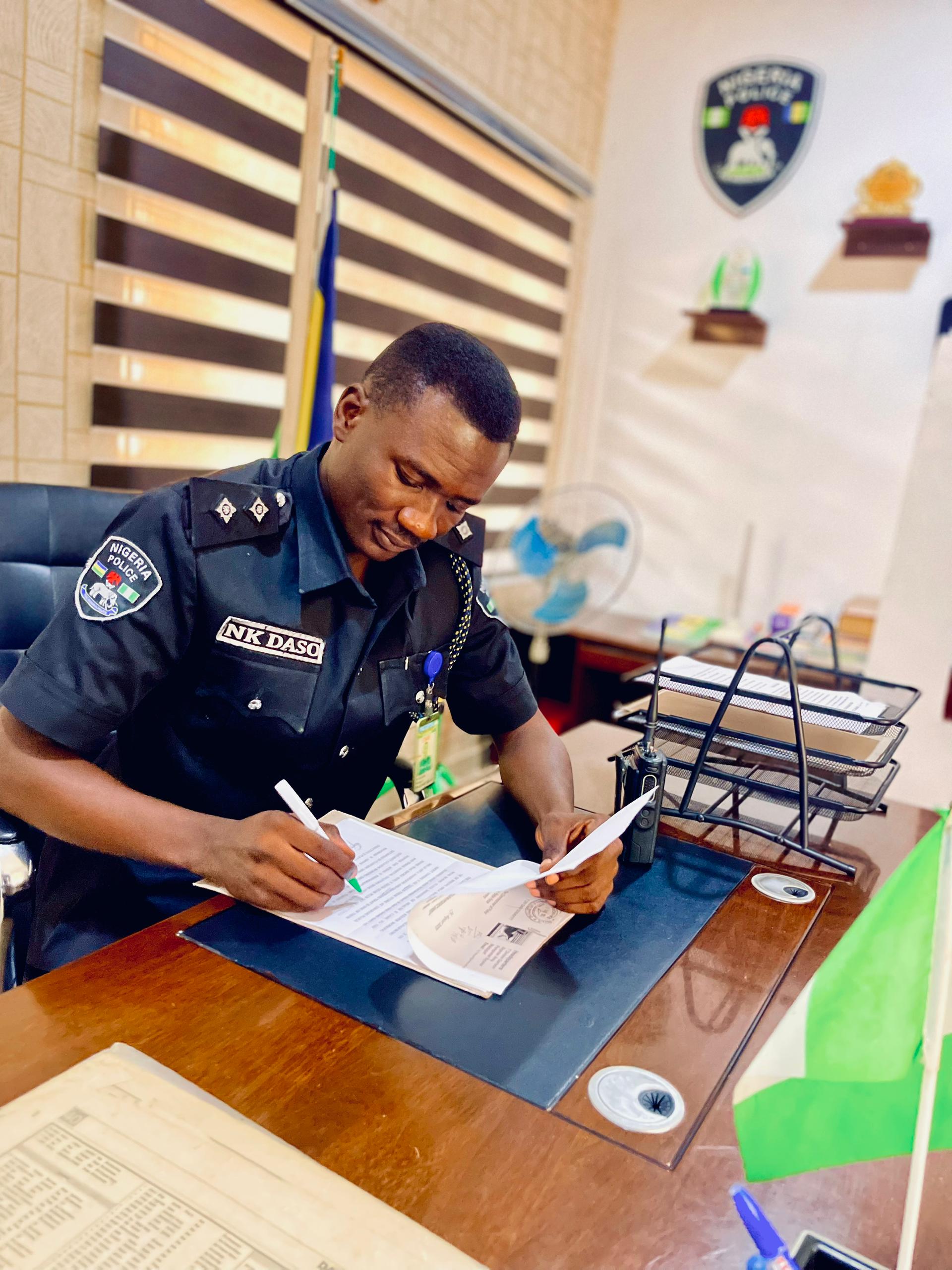
BY: ASP NAHUM KENNETH DASO, OCTOBER 4, 2025/ 02:39PM

The recent enforcement of tinted-glass regulations by the Nigeria Police Force has generated much public debate. Some have raised concerns about inconvenience, while others allege harassment. Yet the truth is often overlooked: “tinted glass regulation is not a new policy but a necessary security measure rooted in law and refined through technology, Status Quo remains” [CSP Benjamin Hundeyin, FPRO NPF]

The Motor Vehicles (Prohibition of Tinted Glass) Act, 1991 provides the legal basis for controlling the use of tinted windows that obscure visibility. What has changed is the modernization of the process through the Police Specialized Services Automation Project (POSSAP), a digital system that issues verifiable permits linked to the National Identification Number (NIN), biometric data, and detailed vehicle records. This initiative is designed to balance citizens’ needs with security imperatives in a nation where crimes increasingly exploit vehicles with darkened windows.

Through our Crime Frequency Data, evidence has shown that tinted vehicles have frequently been used to conceal or facilitate serious crimes. Armed robbers, kidnappers, drug traffickers, and terrorists have all taken advantage of translucent glass to hide their identities or illicit objects.

One stark example is the murder of a University of Maiduguri lecturer on April 2, 2024. After assailants whisked away his vehicle, investigators turned to CCTV footage. The car was visible, but the suspects’ faces were impossible to identify because the windows were heavily tinted, delaying justice at a critical stage [Guardian, April 2024].

Another tragedy struck on September 26, 2025, when three children died inside a dark-tinted vehicle in Borno State after accidentally locking themselves in. Passersby could not see them through the glass in time to intervene. [Punch, 26th September, 2025] “This heartbreaking case is how tinted glass can obscure not just criminals, but also victims in desperate need of rescue”.

Beyond these, countless cases link tinted vehicles to kidnappings, contraband movement, and armed robbery operations. Criminals exploit the anonymity that dark glass provides. Failing to regulate it leaves law enforcement handicapped and the public vulnerable.

The purpose of enforcement:

Contrary to misperceptions, the Police are not imposing a blanket ban on tinted vehicles. Legitimate exemptions exist. These include individuals with medical conditions such as photophobia, certain categories of VIPs, and vehicles with factory-fitted tinted glass.

The goal is accountability. Through POSSAP, owners of tinted vehicles are required to register and obtain permits. This digital process captures biometric information, NIN, and full vehicle details, creating a verifiable database that strengthens investigations. When a tinted vehicle is linked to a crime, authorities can trace its owner swiftly.

Why am i writing?

It is true that some citizens have expressed concerns about harassment or extortion during enforcement. The Nigeria Police Force has made its position clear: officers must act professionally, respect citizens’ rights, and avoid exploitation. Commands have been directed to enforce accountability mechanisms, and citizens are encouraged to report unprofessional conduct through the Complaint Response Unit (CRU) for prompt action.

Unfortunately, some critics dismiss the initiative outright, overlooking its security benefits. Negative publicity risks weakening a policy that directly enhances public safety. Regulation of tinted glass is not about restricting freedoms, it is about protecting communities.

The reality is simple, tinted vehicles without proper accountability undermine security. The tragic cases of Maiduguri, alongside countless other incidents nationwide, prove that failure to regulate tinted glass can cost lives. With POSSAP, the Nigeria Police Force is not reinventing the law but modernizing its enforcement with fairness and transparency.

As an African proverb reminds us, “Forewarned is forearmed.” By knowing who legitimately uses tinted glass and why, we remove the cover of darkness from criminals and shine light on safety for all.

ASP Nahum Kenneth DASO, ANIPR Police Public Relations Officer Borno State Command.

BY MARYAM ABDULLAHI UMAR, OCTOBER 01, 2025 | 04:29 PM


Mufti Ismail Menk, a renowned Islamic scholar and motivational speaker, has been making waves globally with his profound teachings and inspirational lectures. Born on June 27, 1975, in Harare, Zimbabwe, Menk has become one of the most influential Muslim scholars in the world, known for his down-to-earth approach to Islam and his ability to connect with people from diverse backgrounds.

Menk's journey to becoming a global Islamic scholar began with his early education in Islamic studies under the guidance of his father, Sheikh Maulana Musa Menk, a respected Islamic scholar in Zimbabwe. He memorized the Quran at a young age and later pursued higher education in Shariah Law at the Islamic University of Madinah, Saudi Arabia. Menk further deepened his knowledge in Islamic jurisprudence at Darul Uloom Kantharia in Gujarat, India.

As the Grand Mufti of Zimbabwe, Menk has been instrumental in providing spiritual guidance and issuing fatwas to the Muslim community in his country. He has also been recognized globally for his influential lectures and speeches on Islam, which have been widely followed on YouTube and social media platforms.

Some of his notable achievements include Featured in "The Top 500 Most Influential Muslims in the World" Menk has been consistently featured in this prestigious list since 2010, highlighting his impact on the global Muslim community. Author and Lecturer He has written books, including "Motivational Moments" and delivers lectures on various topics related to Islam, including faith, spirituality, marriage, and self-improvement, Humanitarian Efforts Menk has been involved in various charitable initiatives, including providing aid to flood-stricken areas in Pakistan and supporting underprivileged communities.

Menk is not only a scholar but also a philanthropist who has worked tirelessly to promote interfaith dialogue and understanding. He has participated in numerous interfaith events and initiatives, emphasizing the importance of cooperation and respect between people of different faiths.

Menk's impact extends beyond the Muslim community, as his teachings and lectures have inspired millions of people worldwide. His ability to relate Islamic teachings to everyday life has made him a beloved figure globally. Through his work, Menk continues to promote peace, kindness, and self-improvement, inspiring people to become better versions of themselves.

BY MARYAM ABDULLAHI UMAR, OCTOBER 01, 2025 | 04:21 PM


The ubiquitous nature of social media has led to a significant shift in how young adults interact, communicate, and perceive the world around them. Platforms like Instagram, Facebook, Twitter, and TikTok have become an integral part of daily life, offering numerous benefits, including connectivity and community building. However, a growing body of research suggests that excessive use of these platforms can have a profound impact on mental health in young adults.

Studies have shown that young adults who spend more than two hours a day on social media platforms like Instagram and Facebook are at a higher risk of developing mental health issues, including anxiety, depression, and low self-esteem. A recent study found that teenagers who spend more than three hours a day on social media are twice as likely to experience depression and anxiety. Specifically, research has linked excessive use of Instagram to increased feelings of loneliness, and depression, particularly among young women,Facebook to decreased self-esteem and sleep deprivation,Twitter to increased stress, anxiety, and feelings of overwhelm,TikTok to decreased attention span and increased pressure to conform to societal beauty standards.

Social media platforms are designed to be engaging and addictive, using algorithms that exploit human psychology to keep users hooked. The constant stream of curated and manipulated content can create unrealistic expectations and promote consumerism, materialism, and narcissism. Young adults, in particular, are vulnerable to these effects, as they are still developing their sense of identity and self-worth.

Social media platforms showcase the highlight reels of other people's lives, making it easy to compare and feel inferior. This can lead to decreased self-esteem, as young adults feel like they don't measure up to their peers. Cyberbullying, online harassment, and the pressure to present a perfect online image can further exacerbate these feelings.

While social media is unlikely to disappear anytime soon, there are steps that young adults can take to mitigate its negative effects. These include: Setting boundaries Limiting social media use to specific times of the day or week can help reduce exposure and minimize negative effects.Practicing self-care pin activities that promote relaxation and stress reduction, such as exercise, meditation, or reading, can help counterbalance the negative effects of social media,Fostering real-life connections Prioritizing face-to-face interactions and building meaningful relationships with others can help young adults develop a stronger sense of self-worth and identity.

The impact of social media on mental health in young adults is a complex issue that requires a multifaceted approach. By understanding the potential risks and taking steps to mitigate them, young adults can harness the benefits of social media while protecting their mental health. As we move forward in this digital age, it's essential to prioritize mental health and well-being, both online and offline.