oppinion

oppinion

BY DAUDA ILIYA, MAY 27, 2025 | 09:23 AM


Dr. Dele Sobowale has been every reader’s delight for decades now. His Sunday columns fill up our weekends.

Dr. Sobowale writes in his own style: persuasive, lucid and witty. He has carved his own niche with his style of reaching out and pulling along, his readers to whichever directions he desires, well-intentioned or otherwise.

Sometimes he can be reckless and controversial. For some, this is what draws them to his weekly offerings.

He freely dabbles into issues he doesn’t fully understand. This was the case in his last column. He ventured into an unknown terrain, and lost all control.

To everyone possessing passion for, and genuinely committed to, justice and fairness with regard to issues affecting our dear country, most especially the seemingly intractable insecurity incinerating majority of its sections, the column vividly portrayed Sobowale as having sight, but lacking vision.

He has sight to see the things that inspire him to write, but completely lacks the vision to see beyond what have often turned to be his faulty sights about those things, and fathom them well enough to guarantee credibility for his writings, for the sustenance of the tradition of justice and fairness on issues affecting humanity.

It is a pity. Dr. Sobowale started mixing up things from his first sentence. He said Borno—perhaps he meant Nigeria—was under the PDP between 2011 and 2015.

This glaringly portrayed him as laughably very hasty to castigate Governor Babagana Zulum incontrovertibly unjustly on the resurgence of insecurity.

We wish to proudly report to Sobowale that not only the majority of the Nigerian public, but even the entire globe, represented by the United Nations, have hailed the governor over the non-kinetic-approach projects and programmes to solve the massive humanitarian crisis concomitant to the Boko Haram/ISWAP terror.

Sobowale the columnist continued on his free-fall until he was lost in the debris. He tried to turn the whole Boko Haram crisis on its head. It is weird. He was looking for who to blame. In his obviously now failing judgment, he visited it on Gov. Zulum. It is time for some education.

It is inconceivable how Sobowale failed to get the details of the ongoing reintegration program. First of all, it is not a program of the state government. It was initiated by the Federal Government. The state government is only a partner because most of the rehabilitation centers are located in the state.

In fact, until recently, the program was run in Gombe State. As such, Gov. Zulum has never claimed to have singlehandedly run the program, let alone order the reintegration of surrendered fighters. We do not seriously know where he got his facts, but the official position which the governor has mentioned several times is the receipt of over 300, 000 surrendered members of the group. It is often mistaken. Of this number, a lot were captives or conscripts who fled and turned themselves over to authorities when they saw an opportunity.

Without any labor, Sobowale should have known that no governor in Nigeria can unilaterally receive terrorists, run a de-radicalization program and reintegrate them. That act is itself terrorism. In this case, these surrendered fighters surrender to the Nigerian military under the Operation Safe Corridor.

OSC was launched in 2016 by the federal government. It was also one of the recommendations of the 2013 Boko Haram dialogue committee set up by President Jonathan. It was a platform for repented terrorists or those who wanted to give up arms to turn themselves over.

They go through preliminary investigations in military facilities before they are finally handed over to the state government, on behalf of the FG. Again, they go through another round of profiling before their exact de-radicalization and rehabilitation programs are prescribed.

A lot of these people were only associated to the terrorist groups. As such, they require different rehabilitation programs and approaches. There is a case of forcefully recruited young men and women; who, even when armed and deployed to fight, did it more under duress than ideology. Others were recruited as cooks, errand boys and menial laborers. They also share neither ideology nor creed.

Some of them were seized from their communities and herded into forced marriages. From these forced marriages, a lot have given birth. These boys and girls are now aged between five and fourteen—growing up to join the ranks of their fathers, if not rescued. These unsuspecting children need to be rescued—for their good and the country. They are victims.

The profiling process separates between combatant and noncombatant. Most of the latter do not require de-radicalization, they are only traumatized.

They need psychological therapy and support. Somewhere in his piece, Sobowale alluded that the governor carried out the reintegration unilaterally; and even worse, without any knowledge or research on security. Unfortunately, he failed his own test. Apart from mixing up basic facts, he also failed to carry out any research or inquiry about the subject he wrote about.

For, if he had done that, he would have come across the Borno Model, the elaborate manual used for the de-radicalization, rehabilitation and reintegration program.

Let's serve Sobowale a little of the education he has failed to acquire justly and fairly to sustain whatever he sees as as his reputation among his blinded readers: The Borno Model template, developed by experts from various sectors, government institutions, communities, CSOs and development partners, is a product of months of rigorous research and exhaustive case studies of several instances worldwide.

It is disturbing that Sobowale is still, despite decades of exposure, at a point where he thinks a government is simply a one man’s enterprise.

To assume that, as a professor of Engineering, Gov. Zulum is not qualified to take policy decisions on security is truly shallow. This being the logic, why should he be allowed to make one on health, as he is not a medical doctor?

Beyond being an alumnus of the country’s leading institute of policy and strategic studies—the National Institute of Policy and Strategic Studies, NIPSS—Gov. Zulum, as every other governor, has in his services seasoned civil servants, aides and consultants. He has the state executive council.

In fact, even in dictatorships, leaders always have a body of advisors who advise them. Let me also remind Mr. Sobowale that the federal government has also outlined the surrender of Boko Haram insurgents as gains recorded under President Tinubu’s Renewed Hope Agenda.

The National Security Adviser, Malam Nuhu Ribado at the recently held APC summit in Abuja said "In the North East, 13,543 terrorists were neutralised, 124,408 Boko Haram/ISWAP fighters surrendered, and 11,118 weapons were recovered".

This is a most-authoritative testament to the excellent stewardships of Zulum and his other governors of the subregion on the concrete accomplishments, not abstract statistics, with regard to the management of the terror- orchestrated humanitarian crisis that has rubbled the North-East economy.

It is, therefore, devastating that Mr. Dele Sobowale would, on the basis of inaccurate premises, visit such heavy allegations—of being responsible for the resurgence of terrorist attacks—on the governor.

One has to visit and sufficiently traverse an entity before one can credibly understand it's complexities. However, Sobowale simply thinks he can understand the complexities of Boko Haram from the pages of newspapers or search engine results.

People who truly understand it are raining encomiums on the governor and marveling at how he is midwifing massive infrastructural projects, rebuilding of damaged communities, resettling of displaced persons and refugees, with provision of basic amenities to his people, including those in remote settlements.

He must have seen the hero’s welcome Prof. Zulum received from his people upon return from a one-week tour of several remote villages. It was a bravery that ends every bravery.

Sobowale's utter ignorance of the true nature of things extends beyond Boko Haram. He doesn’t have even an elementary understanding of the demography he was talking about. For him, it was ludicrous that the governor called for prayers and a one day fasting.

He said, given the level of hunger in the country, the call was an attempt to cause massive deaths in the state. In this case, it is a wonder that Dr. Sobowale hasn’t yet launched a campaign or protest against the 30-day Ramadan fasting and 40 days of lent every year.

Across faith, people heeded the governor’s call. Some of these demographic nuances are obviously beyond the understanding of Dr. Sobowale. And it is a pity that this undermines his judgment of basic things.

So, last Sunday's Vanguard column should have analysed 'holding Sobowale responsible' for worsening the misunderstanding of his readers on the true state of insecurity in Borno, which tantamount to misleading them on the complexities of their dear country, instead of 'holding Zulum responsible' for the resurgence of insecurity in Borno, which is in complete contrast to his exemplary accomplishments in the management of the terror crisis, accomplishments hailed by the entire globe, represented by the United Nations.

Dauda Iliya is the Special Adviser to Borno State Governor on Media/Spokesperson
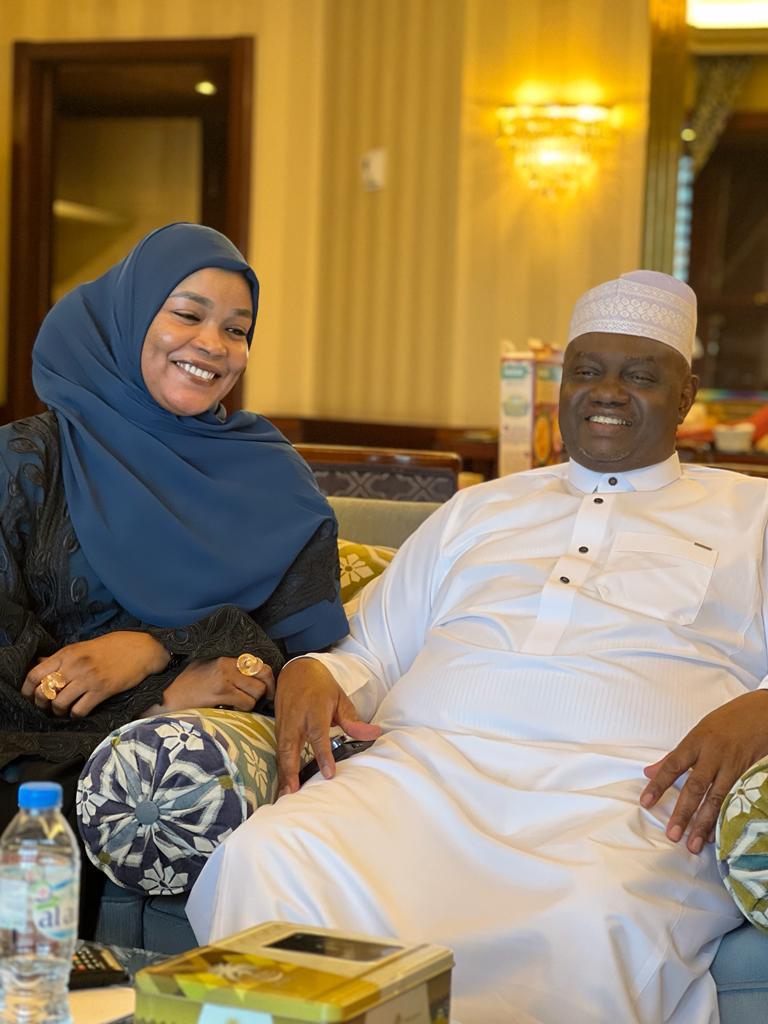
BY MARYAM TIJJANI HABIB, MAY 26, 2025 | 05:35 AM


My beloved husband, my confidant, my playmate and my rock. Your passing has left an unfillable void in my life. One year has passed, yet I still yearn for your presence, hoping to see a missed call or message from you.

Your demise felt like the world crashing down on me. I couldn't believe it was you who had left us. We spoke just hours before, at a time I couldn't imagine a life without you. La ilaha illallah, you were my everything - my partner, my guide, and my world.

DIG Ibrahim Lamorde was the most caring and loving husband I could ever ask for. From the moment we met, our lives intertwined in a tapestry of love, laughter, and shared dreams. My chairman, even as a retired DIG of police and ex-EFCC boss, you embodied both strength and gentleness in equal measure. Your playful spirit brought light to every room, and your caring nature touched the lives of everyone around you.

Our days were filled with endless calls, messages, and travels across the globe, from bustling cities to the serene sands of Madina and Mecca. My favourite memory, though, remains our very first night—when you joined me in Paris just hours after our wedding. Then, our subsequent tawaf in Mecca, as you intertwined your arms with mine, will forever hold a special place in my heart. No one admired my outfits like you did, always matching your elegance from cap to shoe. You never addressed me by my name. Typical of a Fulani man, in public, you called me Your Excellency or Hajiya, while in private or messages, you called me my sweetheart.

It is only occurring to me after your sad demise, which leaves us with tears streaming endlessly from our eyes, that I realize you knew our last call was a parting one. You kept on thanking me, saying, "Allah ya miki albarka, Nagode, Nagode Miki," and I took it so lightly without giving it a special thought.

Your messages still resonate differently as I read them over and over again: Salam SH. To my special wife. My love for you is never-ending; my prayers were answered when I met you. I can't think of any better way to spend my life than with you at my side. You are what my heart has always needed. Thank you, love. Others are, My dear wife, thank you for bringing so much love and joy into my life. You are my closest companion and the most important person in my life. You are everything I wished for, more than I could have imagined, and my dream come true. I love you from the bottom of my heart.

"Salam. Sweetheart, it's morning and time to wake up because my morning is incomplete without hearing from you. l really hope you had a good sleep. Good morning, my love. My one and only. I will ever remain grateful to the Almighty for bringing you into my life."

Your generosity knew no bounds, giving freely without expecting anything in return. Last Ramadan, even though you like going to Umrah in the holy month, you chose to give in charity to the less privileged the whole cost instead of spending on us, including your beloved children. Your good-will reached your entire family and community in far away Mubi and beyond. Some of your good deeds only become known to us after your demise as it is expected of a good practising Muslim.

Your devotion to Allah was unwavering, your prayers a testament to your deep faith and humility. I often teased you about your emotional prayers, especially when you wept during sujud at night in sincere devotion to Allah (SWA).

You were our spiritual anchor, establishing the Monday and Thursday fasting as a cherished tradition in our home and hosting friends and associates for Iftar, whether you were present or not. In a poignant turn of events, Musa Gidado, your loyal friend and regular companion at our Iftar gatherings, has also departed, now laid to rest mere meters from your grave; joining you in the great beyond.

You were also the first to wake us up for morning prayers. I don't know for how long I will keep hanging my hands after subhi prayers in expectation of your handshake saying 'Assalama Alaikum Your Excellency'. That post-prayer handshake is something I will miss forever.

Chairman had a magnetic personality; his friends were deeply attached to him, drawn by his contagious spirit and accommodating nature. He was empathetic and couldn't be at peace knowing others were in distress.

You were the pillar of discipline and professionalism in your duties, always deeply affected by the challenges our country faced. Yet, amidst your strength and dedication, you were my caring husband, my confidant who knew my heart better than anyone else.

Your love and care for us, your family, were beyond description. On the day of Arafah, our darling daughter, Farhana, whom you fondly called PA, prayed for your return. Her innocent wish mirrored my deepest longing, but I had to tell her that some prayers remain unanswered, for Allah's promise is unchangeable. The ache of your absence remains excruciating. Yet, what comforts my heart are the countless accolades and tales of goodness we have discovered about you since your passing. You were not just my husband; you were my world, my guide, and my beloved companion.

Even though the world feels empty without you, I find solace in the countless memories we created together. Your voice still resonates in every corner of our home, and your laughter lingers in the echoes of our conversations. We never imagined you would leave us so soon, answering the call of Allah, the Almighty, the Ever-Living. Eid-ul-Fitr 2025 brought back memories of 2024—how you complemented my dress and showered us with Goron Sallah (sallah gifts.) Those memories continue to flood my heart—how you celebrated with us, filling our lives with love, warmth, and your signature laughter. It feels like only yesterday. About a month before your final trip to Cairo, where you took your last breath, you spoke of your imminent death and prepared your will. I dismissed your words, unable to fathom life without you. How could I have ever imagined a life without you, my king?

May may be shattering for taking you away, but October... I can never forget. I was born in October, met you in October, married you in October, and with a heavy heart, I concluded my obligatory 'Iddah' in October. Hasbunallahu wa nimal wakil! Though my heart is heavy with your loss, I am eternally grateful for the blessings you brought into my life.

In submission to Allah's will, I thank Him for the gift of you and for taking you at His appointed time. May He grant you eternal peace and unite us once again in the highest ranks of paradise (Aljanna Firdausi).

Until then, my beloved Chairman, continue to rest in peace knowing that you are deeply loved and missed today and always.

Your beloved wife,
Maryam Tijjani Habib May 26, 2025

BY: NAHUM KENNETH DASO, MAY 11, 2025/ 11:20PM

While many often attribute the root causes of today’s societal challenges to the spillover effects of insurgency, I strongly believe that an equal pressing issue lies in the sense of our mutual responsibilities towards social problems.

Recently, a disturbing case came to light: a video surfaced showing a minor, clearly under the age of 10, an orphan from Bama Local Government Area, now living on the streets in Bulabulin area of Maiduguri. This child was found in possession of a substance popularly known as “solution”, a dangerous and widely abused drug. When questioned in Hausa, he said “Muna sha don mu dumu” meaning “we-take-it-just-to-get-high”

To some, this may evoke sympathy. But beyond the emotion lies a deeper issue, these seemingly isolated incidents are fragments of a much larger and deeply woven fabric of societal neglect. They represent the breakdown in the value systems meant to protect and nurture our younger generation just like we benefited when we were growing up.

The abuse of drugs and illicit substances, despite their well-documented health risks, continues to serve as a major trigger for crime and antisocial behavior, especially among vulnerable youth.

We must begin to ask the difficult but necessary questions: • Who sold this to a minor? • Where did they learn this from?

Special appreciation goes to the Borno State Government for revitalizing and rebranding the Anti-Social Vices Joint Operations. This initiative integrates judicial, religious, community, and security actors in a holistic approach to tackling the root causes and consequences of social vices in our society.

It is equally imperative for community members to embrace mutual accountability. Every stakeholder from parents to educators and community leaders must understand the importance of playing an active role in addressing the growing challenge of drug abuse and other social vices among our youth.

WAY FORWARD 1. Community watch groups should identify and report illegal drug vendors or suspicious activity within their neighborhoods. 2. Community leaders should collaborate with relevant security agencies to keep drug traffickers and dealers out of neighborhoods. 3. Parents and guardians to monitor their children’s behavior, friends, and daily activities. 4. ⁠Parents and guardians should actively regulate the content their children are exposed to on television and social media, especially materials that may glamorize drug use or promote harmful behaviors. 5. Caution street children who are found with this substances. 6. ⁠Break the conspiracy of silence by exposing the evildoers in the society.

Through shared responsibility and committed action, we can begin to reverse this dangerous trend and rebuild a society where our children are safe, protected, and given the opportunity to thrive.

Mr. Nahum Kenneth Daso, ANIPR Nahumdaso@gmail.com 10/05/2025

BY: ABDULKADIR M LAWAN, APRIL 28, 2025/ 02:20PM

In the heart of Borno State, there exists a true hero who has dedicated his life to nurturing young football talents and providing opportunities for them to excel.

Alhaji Babagana Kalli Kachalla, affectionately known as Ozogla, is a name that resonates with football enthusiasts across the state and beyond. As the Chairman of the Borno State Football Association and a member of the Nigerian Football Federation Executive Committee representing the North East, Ozogla has been a game-changer in the lives of many young footballers.

Personally, I had heard of Ozogla's remarkable contributions to Borno's football development, but I never had the chance to meet him in person until recently.

During the opening ceremony of the North East Development Commission (NEDC) competition, I spent less than 10 minutes with him, and despite the brief encounter, I was struck by his sportsmanship, humility, confidence, and simplicity.

What sets Ozogla apart is not just his impressive football background, which includes being a captain of Borno State's under-13 and under-16 teams, but his unwavering commitment to giving back to the community.

Having benefited from the support of individuals and government during his playing days, Ozogla has made it his mission to provide similar opportunities to the next generation of footballers.

Ozogla's passion for football development is evident in his words: 'I want to support the young ones coming so that they will also follow suit of what we have done.' His dedication to empowering young talents is a testament to his character and commitment to the growth of football in Borno State.

Ozogla's impact on the lives of young footballers cannot be overstated. By providing job opportunities and sponsoring talented individuals, he has given them a chance to chase their dreams without financial burdens. His efforts have undoubtedly transformed the lives of many families, putting smiles on their faces and inspiring hope for a brighter future.

As we reflect on Ozogla's remarkable journey, we are reminded that true greatness lies not in personal achievements, but in the positive impact we have on others. Ozogla's story serves as a powerful inspiration to us all, showing that with dedication, passion, and a willingness to give back, we can make a real difference in the lives of others. May his example motivate us to strive for excellence, to support one another, and to use our talents and resources to uplift our communities.

Ozogla's contributions to football development have not gone unnoticed. He has received international recognition for his outstanding work, further solidifying his reputation as a champion of youth football development. His selflessness and generosity have earned him respect and admiration from the global football community.

As a hero in the truest sense, Ozogla's dedication and service to the state's football community deserve further recognition. A heroic award would be a fitting tribute to his efforts.

In conclusion, Alhaji Babagana Kalli Kachalla (Ozogla) is a shining example of what it means to give back to the community. His legacy will undoubtedly inspire future generations of footballers and administrators in Borno State. I pray that Allah continues to protect and reward him for his efforts, and we look forward to seeing more young talents flourish under his guidance and mentorship.

BY: DAUDA ILIYA, MARCH 24, 2025/ 11:38AM

Borno State Governor Babagana Umara Zulum's recent working trip to the Southern Borno Senatorial Zone opened more vistas into his passion for inclusivity in the conduct of governance; and his commitment to justice and fairness in the equitable distribution of infrastructural development and services across the state.

A public or political office holder's passion and commitment to serving an entity are normally weighed on the scale of what, in principle and practice, is the social contract binding him and the entity he serves, on the sacred ideals of justice and fairness to all sections of the entity.

Given the monumental destruction of development infrastructures and services by insecurity over the last fifteen years, reconstructing Borno State from the rubbles that littered its vast physical and economic landscapes has always required inclusivity in the distribution of development infrastructures and services for the speedy and sustainable reconstruction of the state in all facets.

Over the last five years since his ascension to the governorship saddle, Zulum was lavishly reported to have executed over one thousand meaningful and durable reconstruction and economic revitalization projects equitably distributed across the three Senatorial zones of the state.

He was apparently spurred to do so by his passion for inclusivity in the conduct of governance on the ideals of administrative and political justice and fairness to all.

Always on his heels, trotting around the state, performing the groundbreaking for development projects, supervising or commissioning completed and equipped such projects across the three senatorial zones of the state, Prof Zulum seeks to equitably satisfy and earn the reverence of every zone as a just and fair governor.

It was, therefore, in sustenance of this tradition that he undertook his latest round of such working trips to the Southern Borno Senatorial Zone.

Governor Zulum commissioned the state-of-the-art eye and dental hospitals and a mega secondary school in Biu Local Government Area of the Southern Borno Senatorial Zone.

The 40-bed capacity eye hospital, equipped with advanced diagnostic and surgical facilities, is to address the growing need for ophthalmological care in the zone.

To ensure the hospital achieves its purpose, Zulum instantly approved the appointment of a team of highly trained medical doctors and specialists who will offer treatments for cataracts, glaucoma and other vision-related ailments.

The 30-bed capacity dental hospital is to provide comprehensive oral health services, including preventive care, orthodontics and restorative treatments, ensuring that residents no longer have to travel long distances for dental care.

While commissioning the two health facilities, Zulum underscored his administration’s commitment to improving the quality healthcare for Borno’s citizens.

His words: “Healthcare is one of the cardinal pillars of the Borno State's 25-Year Development Plan and the 10-Year Strategic Transformation Initiative. Reflecting on this commitment, we allocated 15 percent of the state's budget to health sector in the 2024 and 2025 fiscal year in line with the Abuja declaration recommendation for healthcare financing to prioritize health and well-being of our people.”

Governor Zulum, while inaugurating the two healthcare facilities, announced the release of funds for the construction of 5 general hospitals across the state, one each in Askira Uba, Magumeri, Gubio, Mafa and Dikwa local government areas.

He reiterated his commitment to addressing the manpower needs in the healthcare centres in order to provide optimal healthcare to the people of Borno.

He said: “We recognize that the development of a resilient healthcare system necessitates more than just physical infrastructure. The availability of skilled healthcare professionals is equally crucial.

"To address this shortage of manpower, we are launching a multidimensional initiative, incorporating a range of measures to attract, train, retain, develop skilled healthcare professionals and talents and collaboration with educational institutions among others.”

The governor also commissioned a mega secondary school at Miringa, in Biu local government area designed to accommodate over 1,300 students. The school consists of 60 classrooms, an ICT centre and four laboratories among other facilities that enhance teaching and learning activities.

He distributed text and exercise books, uniforms, school sandals and a bicycle for each of the enrolled students to ease movement from the nearby villages.

Over decades, Southern Borno has been reputed for its monumental quantum of agriculture production.

Governor Zulum, therefore, explored the possibility of enabling the zone to maintain and elevate that enviable status, in keeping with Nigeria's unfolding economic diversification policies and programmes from the oil to the agricultural sectors.

He, consequently, with what sounded like a loud bang, announced his administration's resolve to resuscitate the 40 years old Biu Dam to Boost irrigation farming in the zone and tackle the perennial water scarcity bedeviling Biu and the neighbouring local governments.

Zulum announced the resolve during his traditional homage to the Emir of Biu, Mai Mustapha Umar Mustapha II, at his palace in Biu, as part of his two-day working trip to the zone.

He underscored the critical importance his administration places on irrigation farming as part of its efforts to enhance food security and provide sustainable livelihoods for victims of Boko Haram insurgency.

He told the royal farher: "Your Highness, I want to assure you that we will revitalize the Biu Dam to bolster irrigation farming in your emirate. Agriculture is one of the cardinal pillars of my administration and we will continue to invest in the sector to ensure food security in the state."

In a dramatic move to bolster the local economy and upscale small, mini, and micro enterprises, the governor disbursed N1 billion to 9,403 MSMEs in Biu and Hawul LGAs. Over the past five years, Zulum has launched similar initiatives aimed at tackling poverty head-on and revitalising the battered economy of Borno.

The breakdown revealed that N560.3 million was distributed to 5,603 entrepreneurs, with each receiving N100,000. Additionally, N439.7 million was allocated to 1,800 youths and vulnerable households in Biu, along with a further 2,000 entrepreneurs from Hawul.

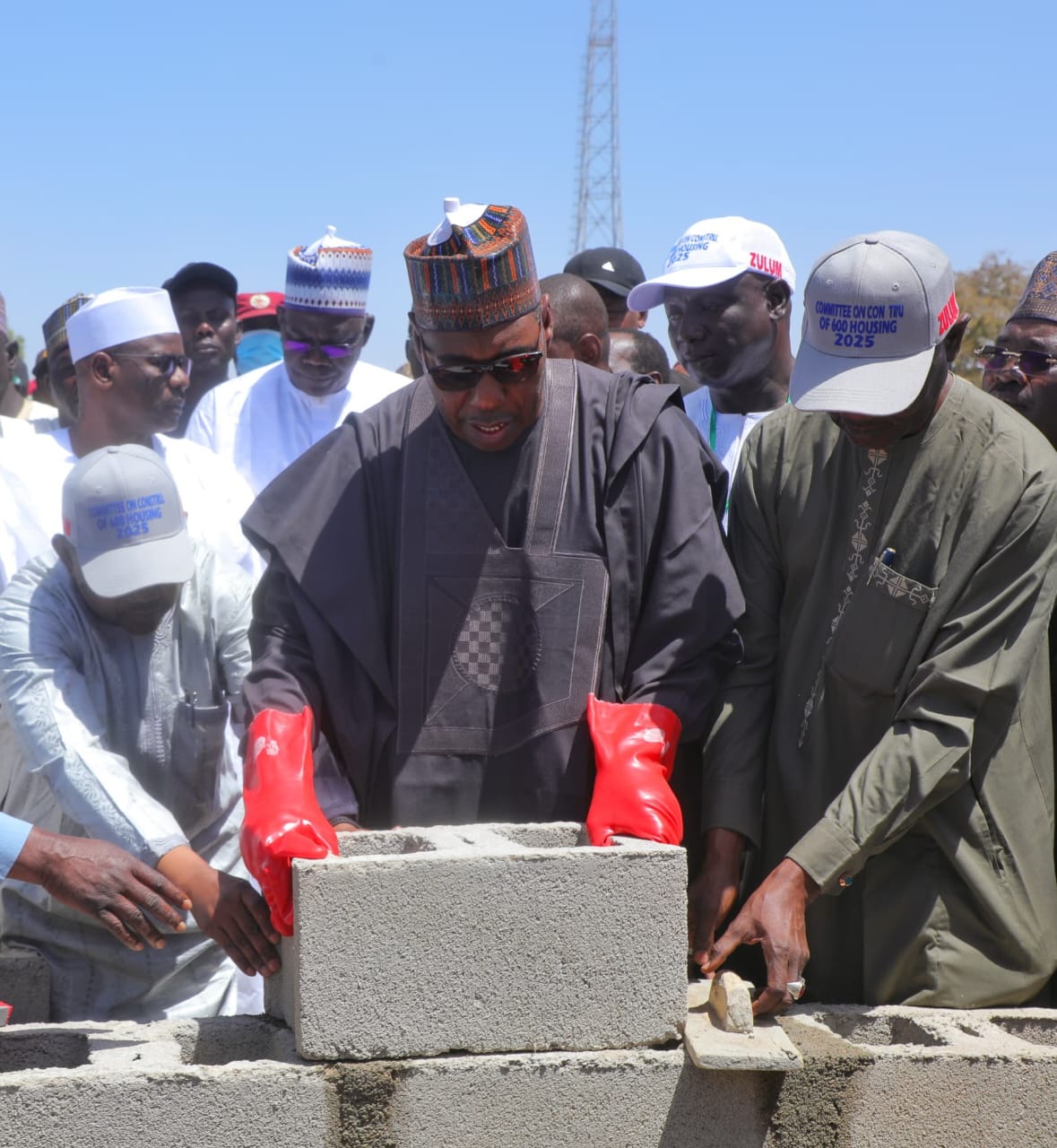
Consequently, Zulum during the visit also laid the foundation for the construction of 600 two-bedroom semi-detached houses for teachers and health professionals in five different locations. They are 100 houses each in Biu, Magumeri, Hawul, Gubio and 200 at Borno State Teaching Hospital.

In the spirit of inclusivity, administrative and political justice and fairness in spreading equitable development across the three senatorial zones of the state, Governor Zulum promised to roll out many more development projects in Southern Borno before the end of his tenure in 2027.

Professor Babagana Umara Zulum's recent working trip to Southern Borno Senatorial Zone was an enviable showcase of a governor's passion for the principle and practice of Inclusivity in equitable service delivery to the three zones of the state.

It was a showcase of Inclusivity Galore.

Dauda Iliya is the Special Adviser Media/Spokesperson to the Executive Governor of Borno State.

BY: AISHA YUSUF SABO, MARCH 16, 2025/ 08:57 AM

It still feels surreal that Ramadan has arrived again. We can all remember counting the days until Ramadan, and now here we are, already half way into Ramadan 1447AH. Many had planned for this blessed month but did not live long enough to witness it. Others started with us but are no longer here today. This is a moment we should not take for granted, as some of us may not live to see Eid. How humbling!

The word "Ramadan" is derived from the Arabic root R-M-Ḍ (ر-م-ض), which translates to "scorching heat." The Classical Arabic verb "ramiḍa" (رَمِضَ) means to become intensely hot, to blaze, or to glow .

In recent years, Ramadan coincides with Maiduguri's intense temperature, often exceeding 40°C, the very meaning of Ramadan aligning with the weather we experience as it reflects a scorching heat both in the atmosphere and within ourselves during the thirteen long hours of fasting. No doubt, fasting in such heat encourages patience, perseverance, and gratitude as we endure dehydration and hunger while also focusing on our spiritual growth.

Like in all aspects of life, the resilience of the people of Maiduguri is unmatched. Despite the extreme weather condition, life continues as usual with people maintaining their daily routines, engaging in all acts of worship, and upholding social obligations.

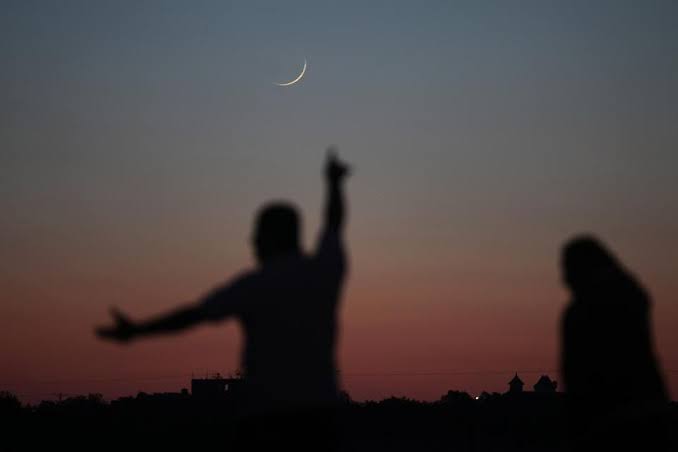
From the moment the crescent moon is sighted, there is a certain energy that fills the air in a way one can tell it's Ramadan season by the excitement all over. The most notable indications are the call to prayer (Adhan) at dawn, signaling the time for suhoor, and the call in the evening, marking the moment to break the fast (Iftar). There are also charitable activities like distribution of food stuffs such as rice, sugar, millet, dates and others to the less privileged in the community. In the evenings, most households are filled with the sound of Evening Tafsir, broadcast by one sheikh or the other either on the radio or TV, and also the recitation of the Qur’an.

Ramadan, being a time not only for personal reflection but also for communal unity, families come together for Iftar, while in other cases, men converge in the masjid for Iftar meals, often composed of traditional foods such as kosai, sinasir, maasa, moimoi, mordam, kunun gyada, zobo drink, ginger drink, among others.

There is also Taraweeh prayer, a voluntary prayer performed after the obligatory Isha (night) prayer, often in congregation where men, women, young and old walk to various masjid to pray.

May the blessings of this month find us all. I pray that we all find relief, restoration, and deep fulfillment in this blessed month. Aamin.

BY: LAKE CHAD TIMES, MARCH 10, 2025/ 12:40PM

We at Lake Chad Times Newspaper are delighted to celebrate with Abdulhamid Al-Gazali, Editor-in-Chief of Yerwa Express News and a distinguished member of our Board of Trustees, as he marks another year of life. We wish him many more years of good health, wisdom, and success.

Sir, your exceptional leadership, guidance, and commitment to excellence have inspired countless individuals, including our team. Your selflessness, integrity, empathy, and kindness have created a lasting impact on our community.

As you celebrate this special day, we pray that Allah grants you increased strength, courage, and vision to continue leading us toward greatness. May your remarkable contributions be recognized and celebrated by posterity.

Here's to many more years of inspiring others, breaking barriers, and achieving remarkable feats! Happy birthday, sir!

As we celebrate this milestone, our hearts are filled with gratitude and admiration for the incredible person you are. Your influence has touched our lives in ways that go beyond words. We're honored to have you as a leader, mentor, and inspiration. On this special day, we want you to know that we cherish, appreciate, and celebrate you, not just for who you are but for the profound impact you've had on our lives.

Signed Abdulkadir M Lawan Editor-in-Chief Lake Chad Times Newspaper

BY IBRAHIM MUHAMMAD


In an age where public discourse often devolves into contentious debates and personal attacks, the enduring message of Maulana Sheikh Shariff Ibrahim Saleh Al-Hussaini, a call for peace, unity, and peaceful coexistence, stands as a beacon of hope.

For decades, Sheikh Shariff has exemplified the qualities of restraint, wisdom, and a commitment to fostering harmony within the Muslim Ummah, a legacy that has withstood the test of time.

This timeless character was once again on full display during a recent world press conference held at Sheikh’s residence. As journalists gathered eager to listen to Sheikh’s signature call for peace and unity.

Recognizing the potential for the ongoing debate surrounding the controversial Qur’anic festival which has attracted waves of yet another divisive exchange, his aides, sought to shield Sheikh from being drawn into the controversy, as one journalist seem determined to ask questions about it.

The sides subtle disapproval of the question did not escape his notice. With his characteristic composure, Sheikh asked, “What is it?” One of us explained, “We have agreed with the press that Your Eminence should be spared from joining the ongoing debate about the Qur’anic Festival, and he is trying to ask you a question about it.”

Sheikh Shariff responded with the simplicity and wisdom that have become his hallmark: “What is the Qur’anic Festival about and where is it taking place?” Following a brief explanation, Sheikh smiled and offered a concise yet profound reminder: “Intentions matter in whatever we do, and in whatever we do, let us know that Allah is a witness to our intentions and actions.” He then seamlessly pivoted back to his usual message of calm, peace, and unity, sidestepping the contentious nature of the debate altogether.

This moment encapsulated the essence of Sheikh Shariff’s leadership. His innocence, focus, and ability to steer clear of avoidable debates struck a chord with everyone present.

After the conference, one journalist remarked on Sheikh’s remarkable ability to remain untainted by the divisive tendencies that often plague religious leaders and public figures.

The stark contrast between Sheikh’s approach and the conduct of many contemporary clerics could not be more evident. Across the Muslim world, the sanctity of the mosque as a place of worship and reflection is increasingly undermined by divisive rhetoric. Sermons that should inspire hope and guidance are too often filled with personal attacks, the vilification of public figures, and the sowing of discord within the community.

In this context, Sheikh Shariff’s leadership offers a much-needed reminder of what the role of a religious scholar should be. His refusal to engage in petty squabbles or to weaponize the pulpit for mundane, insult-provoking discussions is a testament to his understanding of the sacredness of his mission. Mosques are not battlegrounds for ideological supremacy; they are sanctuaries for the soul, spaces where worshippers come to seek solace, unity, and connection with the Divine.

Sheikh Shariff’s message is particularly urgent in today’s world, where divisions, political, social, and ideological, threaten to tear apart the fabric of our communities. By focusing on what unites rather than what divides, he reminds us of the Qur’anic principle that “the believers are but brothers”.

His leadership calls for a return to this foundational truth, urging clerics and laypeople alike to rise above the petty debates that distract us from our collective mission of worshiping Allah and building a just society.

As we approach the controversial Qur’anic Festival, we would do well to heed Sheikh Shariff’s reminder about intentions. Are our actions driven by a genuine desire to honor the Qur’an and strengthen the Ummah, or are they motivated by personal gain, political agendas, or the pursuit of fleeting fame? Allah is indeed a witness to our intentions, and it is this awareness that should guide our actions, both in public and private.

In Sheikh Shariff Ibrahim Saleh, we see a model of restraint, wisdom, and unwavering focus on the greater good. His ability to rise above divisive debates and maintain his commitment to unity is a lesson for all of us, leaders, clerics, and ordinary believers alike. At a time when the world seems intent on tearing itself apart, his call for peace, unity, and coexistence offers a path forward, one that is as timeless as it is urgently needed.

May we have the wisdom to follow his example.

BY: ABDURRAHMAN AHMED BUNDI

The last time I wrote it was “Zulum: with gratitude from London.” That was when His Excellency Professor Zulum sponsored my master's degree at one of the prestigious Universities in London, UK.

Precisely after a year and 4 months while in London for the graduation ceremony after successfully completing my master's degree, Zulum graciously approved my appointment and elevated me from SA to SSA on New Media.

As if all these favours were not enough, yesterday, when I was in Monguno, Zulum elevated me with added responsibilities from Senior Special Assistant on New Media to Senior Technical Assistant on Print and Digital Communications. How do I then begin to thank you, your Excellency?

First, I must express my gratitude to the Almighty Allah for the bounties and favours throughout my life.

Your Excellency, I must confess that your generosity and the privilege you have accorded me have humbled me. I do not have a word that can truly express how grateful I am to you.

To everyone who supported me directly or indirectly, I thank you all. May Allah reward you.

Lastly, my associates and well wishes, either on the social media platform, those who sent a text message, or those who made a phone call. I deeply appreciate you, and thank you for your well wishes and prayers.

BY ABDULHAMID AL-GAZALI


In 2024, something dramatic happened to me. It made me understand how one’s life can change in an expected way. And in a blink of an eye.

I love snacks. I have a specific like for a Lebanese bread, with its hummus. This like for snacks takes me to bakeries often. One night in May of 2024, I drove into a particular restaurant in Maiduguri where I have been buying Lebanese bread and hummus from time to time. Before I could disembark from my car, I got a call. As I spoke, I saw a woman standing by my car. She wanted to speak to me.

I reluctantly hang up the call. "Hey, Sayyadi Abdulhamid..." she shockingly called out my name as soon as I opened the car door. Yes, I was called Malam Abdulhamid or Sayyadi Abdulhamid when I was very young. But nobody mentioned that Sayyadi in over three decades. In fact, many of my friends have wondered why I recently added it to my name on Facebook. This was the story.

This must be someone who knew me several years ago, probably a close family member, I had thought. But she was already gasping for breath. Before I could make sense of what was up, she was already flat on the floor.

I could not remember ever seeing this woman before. But she had mentioned my name, then seized just seconds afterwards. And now she was lying down flat before me.

Suddenly, I was surrounded by a crowd. "Wait, is that a setup or something? What is happening?" I asked myself. "No, don't let him drive the car. He may not be in the state of mind to do that," someone suggested from the crowd that built in just a matter of seconds. "But why," I asked myself. Even if everyone panics, I normally don't. Everyone who knows me can tell. Lo!, she was already slotted into the backseat of my car. How did all that happen, I kept wondering. To date, there is a part that surprises me.

I didn't know how I handed over my key to a total stranger to drive the car. Not only that. I also didn’t know who got me in the backseat of the car, with this strange woman’s head resting on my laps. I took my hand and swiped it over my eyes, but I wasn't dreaming.

"Has she been sick? Is she asthmatic?" the stranger was asking me. Before I could answer him, another stranger, seated in the front passenger seat, advised me not to panic. "Just be praying. And maybe you should call her mom to be on her way to the hospital," he suggested. Until he spoke, I didn't know he was in the car. "No, call her father. Her mom may panic," the driver said. I still didn't realise they were both talking to me. Naturally, I would think they were talking to each other. No, they also didn't know each other!

I didn't utter a word, but it didn't stop them from suggesting various things. It didn't bother them that I wasn't talking. In those few minutes' drive until we were at Nursing Home Hospital, they said so much that I was shocked when I later realised they didn't know each other. They gave each other stories of how they were in similar situations and so on, probably as a way to calm me down and prove to me their humanitarian credentials. Just this night, she asked me who it was among the three of us, at the all of us strangers to one another, suggested the hospital she was taken to. I know I was not the one but it was certainly suggested and decided on by the two of them.

Many years ago, one of wives, seeing how I easily blend with shopkeepers, mechanics and so on, told me that she gets so fascinated at how men easily connect and start gisting within seconds of their first meeting. I thought I was familiar with that; but even I was fascinated at the case of those two guys.

The exchange of stories didn't stop, even as we stretchered her to the emergency ward. By every minute, their conversation kept straying away from the incident, until they got deep in to football. Can you imagine?

While they conversed, my mind was racing. "Who is this woman? How are we going to get her admitted? What do we tell the doctors if they ask about her medical history and so on? In fact, what is her name, age and other basics?" I asked myself, all in seconds. But these strangers were already talking about politics and the Nigerien coup!

At the ward, two nurses approached us for something called triage, a word I never heard of before. I don't go to hospitals. I am allergic to the smell of detol, Izal and so on.

Before they would start firing questions at me, they were busy with their stethoscope, thermometer, and other devices, while the guys sat a few meters away monitoring what was happening. It was already past 10 o'clock in the night, but they weren't even worried.

As the nurses worked on her, she slowly opened her eyes. She struggled to open it, after several blinks. "Oh, glory. Thank God, I will finally be out of this trouble and go home," I already told myself. But she kept staring at me. "If you have some questions, you can please ask her," I told the nurses, both of them looking unfriendly but were obviously just so tired or something.

"How do you expect her to speak in this condition? Why are men so insensitive?" the older of them immediately retorted, as if she was already waiting to explode. The other one also took it from her. She was softer, but more offending. "These are what you have to deal with as husbands nowadays," she fired her own, even though I am over 15 years older than her. But why everyone was associating me with this strange lady, was what worried me.

Before I could tell them I didn't even know her, she surprisingly broke in, which was a huge relief for me. "Don't mind them, please," she said, with a very faint smile, as her hand made its way, also slowly, to grab my righthand palm. After a few seconds, I strategically disengaged from her grip, because I couldn't even yet reconcile with the thought of her head resting on my laps.

"I collapsed, right?" she asked, a question which suggested to me that it wasn't her first experience. "Where are we now?" she asked again, in short successions.

I almost didn't know, too, because how can I tell all that happened. I am a very deliberate person. I don't do things impulsively. But all at once, the control I used to (erroneously think I) exert on running my affairs, was shedded off me. So I could not immediately remember where we were. All I knew was that we were in a hospital, which I also thought she should know since she was now conscious.

While they wheeled her into the admission room, they asked me to go to the registry to open a file and obtain a hospital number. I didn’t know why the nurses were very mean, but they refused to answer me when I asked for the direction. They didn't let me have any talk with her too, neither were they willing to listen to me. They were treating me as some kind of an irresponsible 'husband' who didn't yet appreciate the urgency of the situation.

The two strangers were already treating themselves to beautiful cuts of watermelon. Where they got it, only God knows. As I made my way to locate the registry, they stood up as though they would join me. They didn’t.

"Thank God she is up now, I knew from seeing her that the situation was not that bad," one of them said. "Yes, you are right. I could feel it too," the other also added, leaving me to wonder who was more talkative and weird. They were trying to console me, anyway.

The security men helped me locate the registry. It was a small cubicle, which would leave everyone, even if in distress, to wonder how the attendant, his table and laptop, pile in there. Because, if my memories are still correct, it is about the size of my deep freezer at home, if not smaller. That was not really my problem, I only thought that it was too small given how big the ward looked.

"What is the name?" the broad-shouldered attendant blew out in between his six front teeth, with his eyes stuck to the screen of an obviously old, yet rugged Hewlett-Packard desktop. He must be a terrific kola nut addict and obviously didn’t have a mustache comb.

People’s lips are usually darker than their complexion, but his was darker than the average. Before Maiduguri’s sun turned me darker, people would say I must have been puffing cigarettes to have had such a dark lip. Now, sun has leveled the colours of my face and lips, thank God.

As I stood by the glass screen, his questions reminded me that this was not even my job. "Let me go and ask for her husband's, parent's or whosoever's telephone number to call. They should be doing this," I advised myself. I went back to the admission room, an a 100m floor walk.

She was sleeping! And where was her phone, I could not tell. There was already a long list of drugs and tests written by a doctor, with a very bad handwriting, too, waiting for me. "You need the hospital number to be able to get the drugs and tests at the pharmacy and lab," the nurse told me, since, she thought I was already her husband. I ignored her and took another 100m walk back to the registry.

"Abdulhamid, who is sick?" the attendant now asked. I took a second look at him, and realised I knew him. I didn't recognise him the first time because my mind was in a race. I see him as the guy who was almost entirely responsible for plunging many young men in our neighbourhood into smoking cigarettes and weed, which at the time we were growing was one of the only few known addictions. He used to sell cigarettes, kola nuts and a drink called Don Simon. My friend's father saw one of his sons sipping a sachet of the drink, and even though it wasn’t alcoholic, made sure he mobilised the community to close the man's kiosk. I didn't see him ever since. His name, may be a nickname, is Hayaki.

Even though Hayaki was Hayaki, it was a relief because this was the first time I met someone I knew in this crisis. So I explained the situation to him, and he really helped to open the file, and generated the hospital number. He asked me to make sure it was updated when I figure out what was going on.

I got back with the number. I went to the doctor's office, so I could explain the situation to him. He asked me, before I could explain anything, to go get the drugs and have the test samples dropped in the lab. I actually was not worried about how much I spent, but my phone's fitness app the next morning said I had taken 6, 000 more steps than my daily average.

The doctor kept me waiting for too long. He was gisting with a patient relative, but each time I made attempts to get into the small office, he would pretend he was scribbling something on a prescription sheet. I didn't understand his trick, until I saw the young lady's face. I wouldn't blame him, I only prayed she could put up with his egg-shell bald head and whatever that was there that he would call a side box.

My phone rang several times as I wandered about the hospital. I didn't have time for any call. When I finally checked, it was 1:05 am! I needed to be back home, I had to. I missed a lot of calls already. I left my phone number with the nurses, with a promise to be back shortly. I also told them to call me immediately she was up.

I went out of the admission room, and those two strangers were still standing on their feet, still talking about football. Men don’t really take the world seriously. As weird as it was, I had to salute their endurance. I told them everything needed was done, I would take them back to the restaurant to pick their cars. Don’t ask me what happened, I ended up reaching home 3:00 am, after I had taken each one of them to those places they called their homes!

At 5:30 am, I had a call from one of the nurses. The nurse, who I later learnt was named Grace, said ‘your “wife” is up, and no one is here,’ as soon as I answered the call. Since she was up, it was an opportunity to go back and sign myself out of this matter, by getting her family informed. But deep inside of me, I really was looking forward to seeing her do better and out of hospital. I was already having conversations with myself as to what this whole thing would lead to. About who she could be and where she may have known me and so on.

I was at the hospital by 6:30 am, which was the biggest of my sacrifices in all of the incident, since this is normally my sleep time. By the time I was in the admission room, this smile-wearing man walked up to me and held my hands very tightly. Do you know who?

(c) Sayyadi Abdulhamid Al-Gazali