oppinion

oppinion

BY AISHA YUSUF SABO, SEPTEMBER 10, 2025 | 08:20 PM


We read about floods from a safe distance, forgetting that survival itself is a privilege. If you are a resident of Maiduguri reading this, then give your thanks to the Almighty. You have survived the 10th September flood that claimed 150 lives.

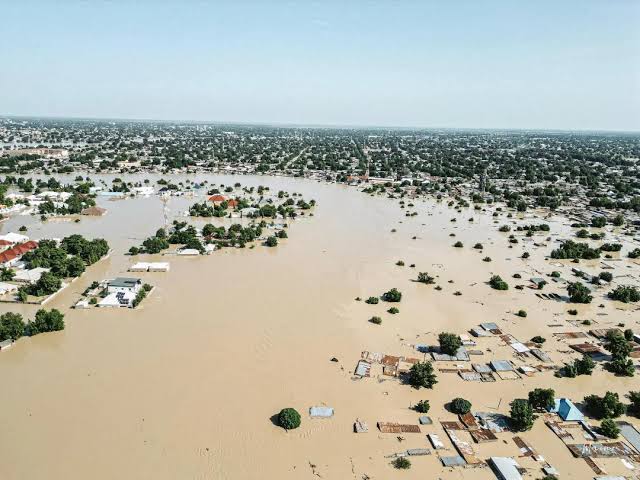
On Tuesday, September 10, 2024, Maiduguri woke to the sound of rushing water invading homes, shops, and streets. The city, already vulnerable and scarred by over a decade of humanitarian crisis from the Boko Haram insurgency, was brought to its knees by a deluge, the worst since 1994.

In no time, parts of the city were submerged. Roads turned into rivers, traders lost goods worth millions, and homes were reduced to ruins, displacing over 400,000 residents.

The disaster, caused by the collapse of the Alau Dam, resulted in unprecedented devastation. Critical infrastructure, including bridges, roads, electricity systems, healthcare facilities, and schools, was severely damaged. Floods are not just natural disasters but are also acts of neglect by governments that fail to plan and by communities that refuse to change harmful habits. The collapse occurred largely because prior alarms from environmentalists were ignored. The culture of dumping refuse into drainage channels and disregarding building regulations had also worsened the situation.

Now if all we do is mourn and move on, it will become just another line in the long list of unfortunate incidents. True honour lies in ensuring it never happens again. September 10, 2024, should be remembered not only for its grief but as the day we chose accountability over complacency. We cannot afford the reoccurrence of such tragedy.

BY FATIMA MUSTAPHA GUBIO, SEPTEMBER 09, 2025 | 06:59 PM


Kaduna State University (KASU) is more than just a place of learning; it's a hub of innovation and creativity that drives human development.

At its core, inventing is about pushing boundaries and redefining what's possible.

The university's role in fostering this spirit of creativity is vital.

The history of human progress is filled with examples of innovative thinking and problem-solving.

Every groundbreaking invention, from the printing press to modern medicine, is the result of human curiosity and ingenuity. This same curiosity drives students and researchers at KASU to seek solutions to real-world problems.

The university's commitment to innovation is evident in the various projects and research initiatives underway. Whether through engineering projects or advanced social science research, the university's creative energy is shaping the future.

Students and researchers are working together to develop innovative solutions to pressing problems, and their work is having a lasting impact on the community.

Inventions may not always be flashy or visible, but the creativity of the human mind is alive and well at KASU.

It's quietly making a lasting impact on the university and society as a whole.

As the university continues to foster a culture of innovation and creativity, it's likely that we'll see even more groundbreaking inventions and discoveries in the years to come.

The impact of KASU's innovative spirit extends beyond the university walls, contributing to the development of the local community and beyond.

By fostering a culture of creativity and problem-solving, KASU is helping to shape the next generation of leaders and innovators who will drive progress and development in various fields.

BY AISHA YUSUF SABO, SEPTEMBER 08, 2025 | 09:41 PM


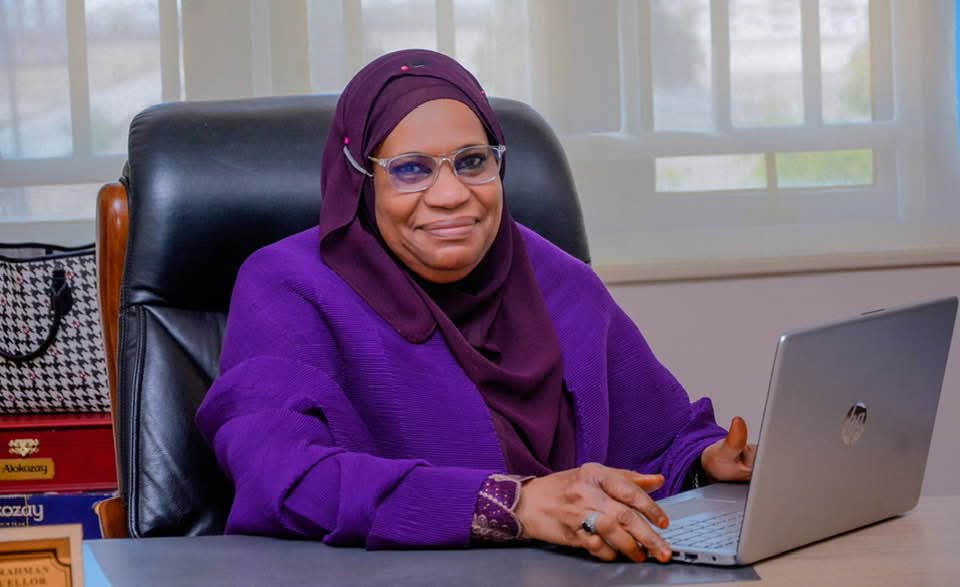
My memory of Prof. Fanna Inna Abdulrahman is vague, but significant. I first met her as a 17-year-old fresher at the University of Maiduguri, full of dreams, and just starting out there as a student.

Accompanied by my father, I went to the Faculty of Science (now Faculty of Life Sciences) to collect my admission letter. She was the Dean at the time, and even as a teenager, I was moved by her warm and welcoming spirit.

I later learned that she was a professor in the Department of Chemistry. The recent news of her appointment as Acting Vice-Chancellor of Al-Ansar University, Maiduguri, got me overjoyed. I was reminded once again of what women are capable of.

From her early days as a Graduate Assistant in the late 1980s to becoming a Professor of Medicinal Chemistry in 2011, Prof. Abdulrahman has published over 150 papers, mentored a number of undergraduates, postgraduates, and seen five of her former doctoral students secure professorships. She has served as Head of Department, Department of Pure and Applied Chemistry, Dean, Faculty of Science, University of Maiduguri, Deputy Vice-Chancellor, Kashim Ibrahim University, and now steps into the role of Acting Vice-Chancellor at Al-Ansar University, Maiduguri.

As the door swings wide for her, this leadership is not just a career milestone, it’s a door opening for other young women to walk through and reiterate to themselves that their dreams, no matter how big, are not out of reach.

BY: DAUDA ILIYA, AUGUST 25, 2025/ 07:41AM

What matters in the life of a man is not the number of years in his life but the quality of life in those years. This should even be more applicable to leaders than to the led in all aspects of human affairs.

Every person entrusted with the responsibility of political cum public office should be rich in the capacity to uphold the trust reposed in him by his people, and discharge the concomitant duties and responsibilities to them according to their needs and aspirations.

As he ages on in life, counting the number of years he has lived on Earth, should savour satisfaction from, and build his inner peace with, his accomplishments that purposefully and qualitatively impact the life of the people whose affairs he, by sheer divine providence, has been entrusted with the management of.

How rich is he in the capacity required for the discharge of his political cum public office duties and responsibilities to the people? How much has he accomplished in the discharge of those duties and responsibilities on the scale of the resources made available for the purpose, surmounting all towering challenges, and how has he converted challenges to opportunities, obstacles to stepping stones, in the course of service to the people?

How has he towered above board in the conduct of public service? How much enviable value has he added to the service of the society according to the needs and aspirations of its people? How well has he performed in building and sustaining his personality as a compass in the search for guidance towards purposeful and qualitative public service?

How high and remarkably does he stand out among all other leaders, in person and personae, before and after him in the history of purposeful and prosperous service to the humanity?

All these considerations factor vitally in determining the quality of life in the years he has lived on Earth, not merely the number of years he has lived in life.

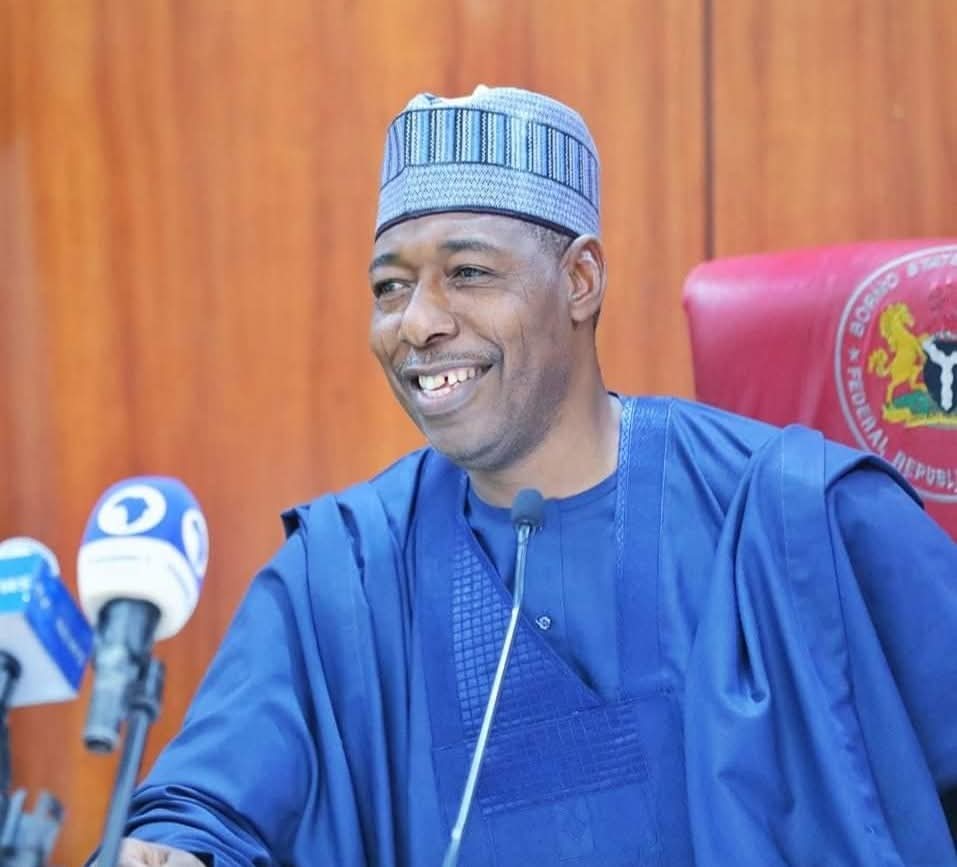
It is pertinent to weigh the present Governor of Borno State, Professor Babagana Umara Zulum, on the scale of these vital factors in determining the quality of leadership and public service to his beleaguered Borno State and its peoples, as he attains the age of 56 in life on Earth, Monday, August 25.

As a pacesetter, Zulum is the first Professor to govern the state in its history. To some, this historic educational attainment may not be striking enough to warrant any spectacular recognition that should enviably stand him out of all other personalities that governed the state before him.

However, to others, this educational attainment is remarkably striking, because it serves as the most-desired foundation for him to conceive, craft and efficiently coordinate the deployment of the most-relevant, most-potent and, indeed, cutting age programmes and projects desired for the rescue of an entity out of its epochal humanitarian crisis which, hitherto threatened to crush it out of existence.

Gifted with rare foresight and proactivity, Zulum has governed a Borno ravaged in all sectors by a global-scale terror and its attendant humanitarian crisis over the last fifteen years, steering it out of the global-scale turbulence it has been floundering in, and repositioning it for comprehensive rehabilitation and reconstruction for a prosperity that fast restores its pre-Boko Haram/ISWAP terror glory.

The pathfinding Zulum has purposefully and efficiently deployed his intellectual prowess to craft and drive sustainable reforms for the rapid resuscitation of Borno. The Borno Model of societal recovery he crafted earned him dazzling praises from the United Nations Secretary-General, Antonio Guterres.

Most-spectacular of such reforms are the 25-year Development Plan, Borno State Strategy for Durable Solutions to Internal Displacement, the Borno Model for Peace, Reconciliation and Development, Transitional Justice Framework, under which he has closed all IDP camps that has littered Maiduguri over the last fifteen years, and returning the IDPs to their ancestral lands to rebuild their lives, with the prime purpose of fast-tracking the reconstruction and rapid growth of the state economy.

Faced with the stark reality that there is certainly no shortcut to the desired comprehensive restoration of the state in all sectors from the crisis, and such restoration cannot be achieved with hundreds of thousands of IDPs surviving on handouts from international donors and food palliatives by government, the Professor of Agricultural Engineering carefully coordinated the relocation of the entire IDP population to their ancestral communities to resume their farming, fishing and trading activities that built and sustained an enviable economy for Borno over the ages.

His foresight and vision led him to invest in the health sector, building quality healthcare delivery institutions, most notably the Borno State University Teaching Hospital, Orthopaedic Hospital, Dental and Eye Hospitals, and scholarship for hundreds of the state indigenes to train as medical doctors and other health related personnel.

Zulum's six years as Borno State Governor are six years of purposeful leadership that reshaped state's economic, social, and infrastructural landscape from the epicentre of insurgency to a hub for viable economic investments. Consequently, Presidential Enabling Business Environment Council (PEBEC) ranks Borno among the top 10 ranking states in the federation on ease of doing business.

This remark is contained in a presentation on " Sub national ease of doing business report" by the project manager SABER secretariat Abuja Ms Aimeya Okpebholo.

His humility, generosity, perseverance, simplicity, resilience and, uncommon commitment to justice and fairness in the distribution of development across Borno State and, above all, his impeccable passion for good governance to rescue the state from the sticky humanitarian crisis breathe bubbling life to the years he has lived on Earth.

His exemplary passion for service to humanity has enabled him to write his name in gold in the pages of history with regard to leadership and good governance in Nigeria.

At 56, Governor Babagana Umara Zulum of Borno State proudly exhibits that what should matter in one's age is the quality of life he has lived on Earth in his given capacity, rather than the mere number of years he has lived.

Happy birthday, Your Excellency

BY USMAN BASHIR ABUBAKAR, JULY 31, 2025 | 7:28PM


“He who has witnessed the calamity that has driven us from our homes will not agree to forgive or live in the same community with the perpetrators,” said Bulama Hussaini, a conflict survivor and community leader in Gongolon, Borno state.

To an average Nigerian like Bulama Hussaini, transitional justice means amnesty for the former Boko Haram associates. These perceptions can be traced to the lack of clear communication and genuine consultation by government and development actors and in some instances, to a perpetrator-focused interpretation of the amnesty granted to militants during the Niger Delta Crisis.

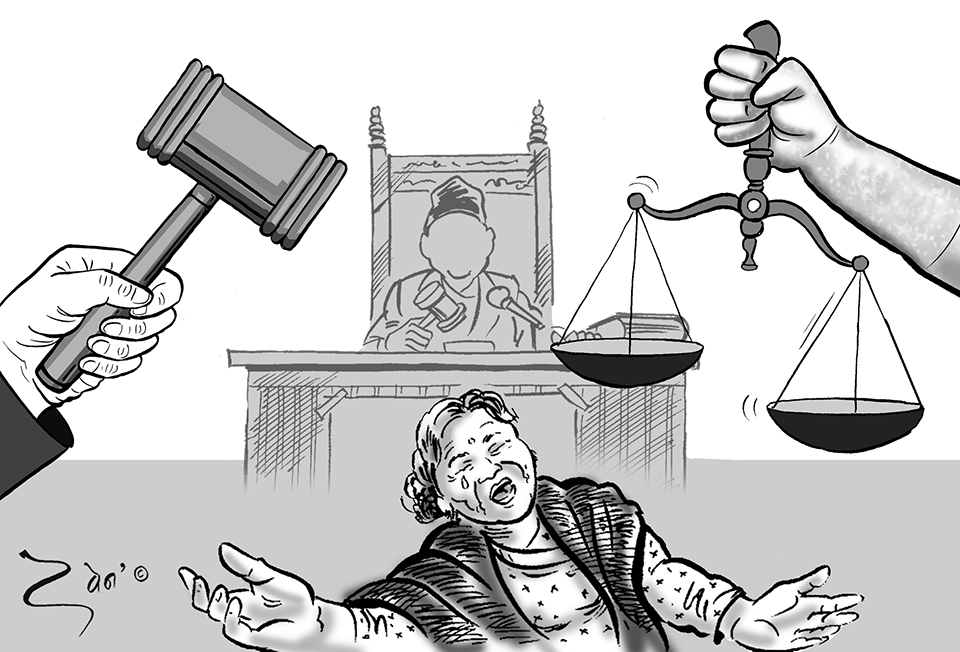
Transitional justice goes beyond granting perpetrators amnesty to promoting redress and accountability to the victims and survivors of conflict. The African Union Transitional Justice Policy defines transitional justice as policy measures and institutional mechanisms aimed to address violations that have occurred as a result of violent conflict, authoritarian rule, legacies of political crisis, as well as governance and development deficits, while promoting redress and accountability for victims and survivors.

The Borno state government justified its reliance on the Borno Model, a non-kinetic, DDR-styled approach, due to the continued loss of territory to the Boko Haram group despite increased military spending.

The Borno Model and other models of transitional justice are becoming increasingly relevant for reconciliation, healing, and national cohesion across Africa. Despite the progress attained, victims and survivors of the Boko Haram conflict still felt that their needs had not been prioritised.

“The repentants are given special treatment while we are abandoned,” said Ajide Jiddum, “my husband was killed and I was left with orphans to take care of, no one has asked our opinion or how we feel,” she added. This criticism can be related to the publicized privileged treatment received by the repentants, who are provided with livelihood skills and monetary assistance.

Transitional Justice processes and what they are expected to achieve.

The implementation of transitional justice processes requires a certain degree of buy-in and political action from leaders as well as the wider society. Peace agreements or negotiated political settlements can be used to frame the design and implementation of transitional justice processes.

The African Union Transitional Justice Policy provides that, AU member states shall have the primary responsibility with respect to pursuing transitional justice processes, emphasizing that national and local actors lead in planning, implementing, monitoring, evaluation, and reporting on lessons learned during the implementation of transitional justice interventions.

Essential stages in the implementation of transitional justice include: developing a transitional justice strategy by drawing from the provisions of the African Union Transitional Justice Policy (AUTJP) or other relevant policies. This national strategy will then be transformed into a policy that can be used to guide the adoption of an enabling legislation. From this national policies and legislations, transitional justice programs are designed. Finally, monitoring, evaluation will be conducted to see the effectiveness of the programs and draw lessons that will be used to improve future programs and interventions.

Transitional justice is aimed at addressing the violations that have occurred as a result of violent conflict, authoritarian rule, or political crisis, and promoting redress and accountability for victims and survivors while ensuring peace and reconciliation and preventing the recurrence of violence.

Where did we got it wrong?

The dissatisfaction of survivors and victims of the Boko Haram Insurgency with the reintegration of the former Boko Haram associates in Borno state is mainly due to the alleged preferential treatment of the former Boko Haram associates. This is exacerbated by the government’s lack of genuine consultation and clear communication, which has resulted in transitional justice intervention being misconceived as mere amnesty.

The way Forward

To restore public trust and ensure inclusion in the transitional justice process, there is need for for genuine public consultation, clear communication, and strategic programming. Genuine consultation and clear communication are very critical in restoring public trust in the transitional justice process in Borno state. The relevant actors need to create awareness, and engage the stakeholders and community members in a genuine consultation process to mainstream their voices in to the transitional justice process.

Transitional justice programs and interventions need to be holistic, strategic, and balanced, this because timing and sequencing of interventions is very important. The choice of combination of transitional justice measures should mutually reinforce, and ensure peace and reconciliation, on the one hand, and justice and accountability as well as inclusive development on the other.

BY: ABDULKADIR M LAWAN, JULY 18, 2025/ 12:06AM

The recent decision to rename the University of Maiduguri (UNIMAID) to Muhammadu Buhari University has sparked a heated debate on social media, with many taking to Twitter and Facebook to share their thoughts. As a proud Northeasterner, I believe that this renaming is a well-deserved tribute to a leader who has left an indelible mark on our region.

President Buhari's contributions to Borno State and the North East region cannot be overstated. His administration's efforts to combat insurgency, including the relocation of the Theatre Command to Borno, have significantly reduced the threat of terrorism in the state. The establishment of the North East Development Commission (NEDC) headquarters in Borno and the emergency gas power plant in Maiduguri are testaments to his commitment to the region's development.

Notably, during his tenure, Borno sons held key positions, including Chief of Staff (CoS) to the President, National Security Adviser (NSA), Chief of Army Staff (COAS), and Economic and Financial Crimes Commission (EFCC) boss, b among others. This demonstrates the trust and confidence he had in the region's leadership and capabilities.

Some have argued that the renaming is unnecessary, but I disagree. Changing the name of the university to Muhammadu Buhari University is a gesture of respect and appreciation for the late President's service to the nation. The quality of education, discipline, and prestige that UNIMAID is known for will remain unchanged. The name "UNIMAID" will still be synonymous with excellence in the region, and the addition of "Muhammadu Buhari University" will simply serve as a formal recognition of the President's legacy.

Moreover, the renaming is not an erasure of the university's identity. The institution will still be located in Maiduguri, and its history and traditions will remain intact. The addition of Muhammadu Buhari's name will serve as a reminder of the President's contributions to the region and the nation.

I urge my fellow Bornoans to remain calm and see this renaming as a fitting tribute to a leader who has done so much for our region. We should celebrate this gesture and continue to strive for excellence in all areas of our lives. The legacy of Muhammadu Buhari will undoubtedly inspire future generations of students and scholars at the university.

BY ABDULHAMID AL-GAZALI, JUNE 17, 2025 | 04:33 PM


Over the last 48 hours, many households across the North East must have resorted to Robb and hot water as therapies to heal the big man of the house from blow and beating pains. It is a very good thing that it coincided with the World Father’s Day—a day that pretends to ‘celebrate’ a father’s love, ‘cakelessly’ (unfortunately a word you cannot find in any dictionary).

Since children and wives don’t normally contribute money to buy cakes, as cakes are usually made to look expensive when you are not the celebrant, they can at least ‘gather’ money to buy Robb or any form of ointment this time around to heal their fathers who attended the North East APC stakeholders ‘meetsling’ in Gombe. Lie him flat, tummy to the ground, massage and press the back with hot water well well; he was out for your family's political beliefs and ideology: bread and butter. There can’t be a better way to commemorate your father's father’s day.

For us, who are just spectators, we should send the victims, both of physical and mental beating, our sympathies, because when they start reaping the return of their in-beat-ment (investment), they may invite us to feed on the booty. Normally, in politics, these kinds of beatings are your resume and investments. You use it to seek compensation and buy bread. I remember a politician--or something like that because he never held any office--who got a terrible beating a few years ago when he organized a ‘self-beating’ investment for himself. It was supposed to be a light one, that was to be magnified by plasters, bandages and crutches. No, it went awry! The other guy contracted to video the beating for social media posting could not stand it. He fled!

Unfortunately, he didn’t properly put the message clearly to the middlemen that the target to receive the beating was himself. His aim was to use the beating to prove to a certain politician how his support to him mattered, even putting his life in danger. But the people contracted to do the beating, unfortunately, gave him a severe beating without knowing he was their paymaster. It was all blood, a mistake he had never repeated.

Some people would thrive on the back of the beatings they had received, or given, over the weekend in Gombe. All the best, and may the wait not be the normal Tinubu-sque.

The Gombe incident meant one thing. And I don’t really know if anyone in the gathering saw the meaning they were plastering. First of all, the North East ground standing that it has to be Tinubu and Shettima or nothing, is a huge revelation. The region does not like Tinubu. They are only in the party because of their son, which is by the way normal in politics. With him, they can compromise; and support the president even if they are not okay with his performance. The logic here is that, they do not entirely care if their son is allowed to play any relevant role or not, whether he is performing—I mean, allowed to perform—or not. Others may ask why, especially as they could have invested that same support in Atiku and possibly have president for a son. But then, politics is not always logical; and everyone wants an easy win. Tinubu and Shettima looked more promising.

The only concern for me is whether the stake-wrestlers (stakeholders rather) have done a proper reality check. When you make such a redline declaration, it is normally assumed that you are in a position of strength. Does the region have the political muscle to issue such threats? One hopes that it doesn't turn out to be a political harakiri ala Japanese Samurai!

The meeting has misread a number of other things, too. For the president, everything is only about political expediency and realpolitik, not loyalty, emotions, or your organized tantrums. With these being his guide, what the meeting actually did was an acknowledgment of the president’s genuine cul de sac, which is how to win the next election given his dismal performance. By insisting on their son, they also admitted that, that way, the ticket may suffer come 2027 but want the president to risk it anyway on account of emotions. He won't. He is obviously between the devil and the deep blue sea.

The third thing is, what in his kind of thought, we should admit as a genuine concern; but also an open indictment before the eyes of the public. It is the fact that the he wants to win the next election by force of his so-called master strategy rather than on the premise of his performance. It is an admission that he did little to court the genuine love of the people and did everything to further tear them apart. By the way, he never hid that from anyone. He said it is a tough love, but not the kind that allows Seyi to join FEC meetings and travel with national assets. With how he, by action or inaction, rendered the vice president ineffective and clipped his wings, Tinubu also felt that Shettima's political worth in terms of arithmetic is no longer potent. Hence, it was a gamble he wouldn’t want to take on. The handwriting is already on the wall, he doesn't have to state. Tinubu is obviously afraid that if he chooses to go with Shettima, he may lose the game-changing support of the North West and North Central. The last election being a proof, Tinubu argues in his head that the North East is not a reliable stronghold anymore.

The only thing he may not have thought about is the cost of sacrificing Shettima. Besides the potential backlash from the North East, which he probably doesn’t care about and may not matter if it were just about numbers, he may not have yet seen the implications of this on his credentials. He is already widely seen as a self-centered man who can betray anyone if the friendship no longer serves his interest, a case of political pragmatism. True or not, sacrificing Shettima will be read as one more betrayal, and it would only help to confirm the view, as well as stock up the number of those who feel severely betrayed by him.

This would strengthen the narratives of the now scampering opposition. Despite big-men alliances the president is forming in the North West, it doesn't discountenance the fact that a large chunk of the voters would rather make decisions based on their living conditions. For this, the president will have a hard run for his money even in the strategic zones he is now wooing.

With optimized performance of the opposition in the abandoned North East, and an obvious challenge from the average voter North West, North Central and South West, who has been crippled or impoverished by the government, the outcomes of the next election may turn out a huge shocker.

BY DAUDA ILIYA, JUNE 11, 2025 | 10:23 AM


The recent resurgence of Boko Haram/ISWAP terror in Borno State and Governor Babagana Umara Zulum's prompt response to it recreates the story of little, sling-swinging David tackling the mighty Goliath of Gath.

Young David, powered by his faith in God and the divine course for which he existed; and smouldering with the passion to defeat the dreaded terrorist and the terror he had been unleashing on the people of Israel, squared up to the towering Goliath.

David felled Goliath with the little weapon extraordinarily powered by the formidable forces of faith, determination and commitment to secure his people against the terror of Goliath.

Ditto, Zulum, who felt most-rudely startled by the resurgence of terror that is growing fast to a dreadful stature, reminiscent of its 2014-2018 peak, creating a concomitant global-scale humanitarian crisis.

He promptly resolved to tackle the resurgence with the sheer passion and determination to, at least, protect the victory he has achieved in assuaging the humanitarian crisis over the last six years, to the marvel and applause of the global community.

Leaning on the huge successes achieved by the military in the restoration of security across the state and around the Lake Chad basin, which resulted in the marvelous liberation of all but three - Marte, Abadam and Guzamala - local government areas from the control of the terrorists, Zulum returned majority of all hitherto displaced communities to ancestral climes under a comprehensive programme of reconstruction, rehabilitation and resettlement to facilitate the rapid rebooting and growth of economic activities.

He was determined never to let any terror resurgence drag bag the state and the resetting returnee communities to the dreadful depth of global-scale hopelessness and haplessness that characterized the 2013-2019 period.

Security is the duty and responsibility of the federal government; but his state and people are the ones suffering and dying for the lack of it. Therefore, while pleading passionately, almost tearfully, with the federal government and the military to please not allow the terrorists retake his state from him, he promptly swung to action, frontally tackling the gargantuan humanitarian crisis threats ignited by the resurgence before they actualize in an appalling state and rage that might take decades to subdue.

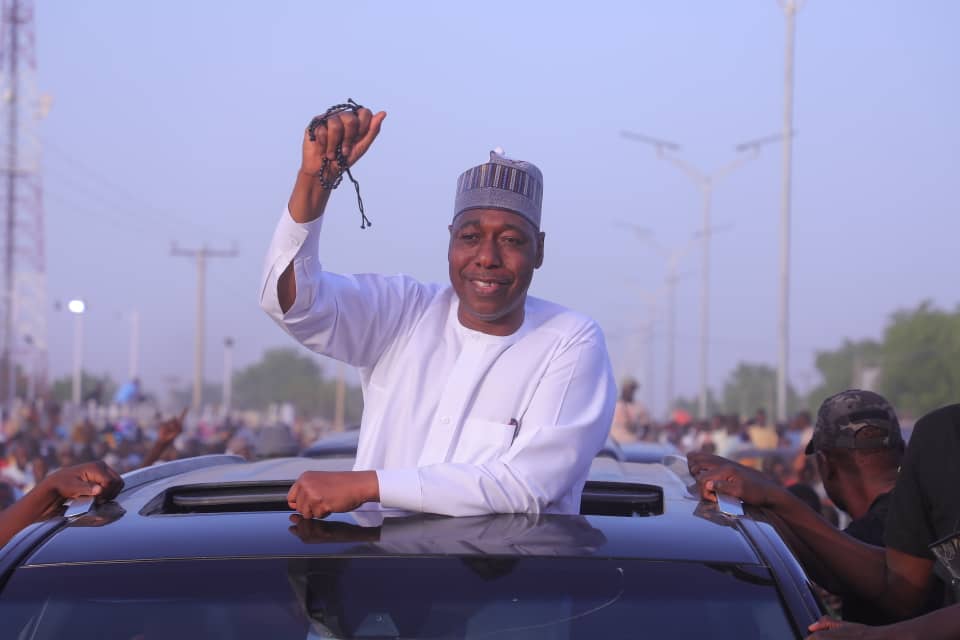
The Governor embarked on a daring, resilient and confidence building visit to nine different locations from 17th-23rd of May 2025.

For Zulum and every stakeholder in the security of Nigeria, it would be most-scary to witness any mass exodus of displaced communities, sacked once again by the resurgence, back to the already closed Maiduguri metropolis IDP camps, which were the most-nauseating features of the 2014-2024 terror-orchestrated humanitarian crisis.

In response to the series of resurging attacks, most-scarily between the end of April and the middle of May, most-especially around Marte, Damboa, Gajiram, Chibok and the Mandara Hills of Gwoza, Zulum hastened to Marte Local Government Area to assess the situation and provide support to the affected communities while deepening his pleas to the federal government and the military to hasten to his rescue before the terrorists retake Marte.

Before Marte, Governor Zulum stopped over in Dikwa town to meet with residents of Marte who fled the attacks to seek refuge. He sympathized with the affected population and assured them of his administration’s commitment to restoring peace and stability in the state. He urged the people to remain vigilant and prayerful during these trying times.

Upon arrival in Marte town, the Governor inspected areas recently attacked and destroyed by insurgents.

The governor spent two nights in Marte for further assessments of the situation and to engage directly with the military. The Governor's visit included strategic meetings with the military and other stakeholders aimed at enhancing security operations in the area.

Professor Zulum subsequently undertook a bold and courageous tour of areas in the central and northern regions of the state to bolster the resilience of communities affected by recent Boko Haram attacks.

Zulum, who was actively involved in coordinating security logistics till late in the night of the day he went to Marte, undertook a tour to assess the challenges faced in the returnee community, while also exploring sustainable solutions to foster stability.

Before Zulum's arrival, Marte was completely deserted following a Boko Haram attack the previous week with thousands taking refuge in Dikwa town.

Speaking to journalists a day after his arrival in Marte, the governor emphasised that his visit to the deserted town was to foster community cooperation, resilience and continuous support to the security agencies, stating “Marte was resettled about four years ago, but unfortunately, over the last three days, it was ransacked and was displaced again.

“About 20,000 people left Marte for Dikwa; this huge number is a threat as allowing them to stay in the camp may make most of the younger ones become vulnerable to recruitment by the insurgents.”

“Hitherto, Marte Local Government comprises over 300 towns and villages, now we have only one standing, if we cannot maintain this one, then we will lose the whole Local Government to the insurgents, which will be very obnoxious, and I think we will not allow this to happen.

The governor reiterated his commitment to supporting security agencies in attaining lasting peace in Borno State, stating “on my part as the Governor of Borno State, I would do everything within my power to support our gallant military in their efforts towards lasting peace in our beloved state.”

After Marte, Zulum's next port of call was Kala-Balge, another terrain troubled by the terror resurgence, where he spent a night, observing a fast and prayer for divine intervention in the resurgence.

At Kala-Balge, he approved 10 patrol vehicles and other logistics to military and local volunteers to help them tackle the terrorists.

Arriving Rann, headquarters of Kala-Balge Local Government Area, before sunset on Sunday, Zulum spent the night coordinating support for security agencies and volunteer forces.

Zulum said his visit to Kala-Balge was part of his commitment to fostering unity, spiritual resilience and hope among the people amidst the ongoing security challenges.

The Governor expressed appreciation to the people of Borno and those outside the state for heeding his call to observe fasting and prayers for the restoration of peace in Borno.

He said “let me express my appreciation to thousands of people in Borno that have observed today's fasting and praying for peace to reign in our state. People from other states and even beyond Nigeria joined in seeking divine intervention for the security challenges we are facing. We thank everyone for the solidarity.”

The governor rounded off the visit in Kala-Balge by distributing food items to over 10,000 families, mostly women and their vulnerable family members.

Zulum's high-risk visits to the terror-troubled communities signal a bold push to stabilise the region and prevent further territorial losses.

Residents have welcomed the governor’s presence, describing it as a morale boost and a rare gesture of leadership under fire.

Leaving Kala-Balge, Zulum returned to Marte to assess the militar's response to his pleas. The visit was part of the ongoing efforts to restore peace, rebuild trust and foster sustainable development in the Lake Chad region.

“I am here to monitor the efficacy of our 're-resettlement' of the residents we conducted a few days ago. I am very happy to note that the community is fully back, and soldiers are on ground. Normal economic activities have resumed in Marte,” Zulum said.

Governor Zulum has commended the federal government and the military for their prompt response to his call for the protection of Marte from falling to the insurgents.

“The federal government and the Nigerian Armed Forces have responded positively to our request to enhance security in the affected communities. We have seen many troops deployed and many pieces of equipment deployed.

“I want to commend the Nigerian Armed Forces for the cooperation they have been giving us; without their support, we couldn't have done much. I want, once again, to commend all stakeholders that have contributed to our search for peace and the restoration of normalcy.”

Zulum has for the past one month been coordinating security logistics and building resilience among residents affected by the recent surge in Boko Haram attacks.

During his week-long tour, Zulum visited nine communities - Marte, Kala-Balge, Wulgo, Ngala, Lugumani, Gajibo, Koibe, Dikwa and Ajiri.

By ensuring that the military protect the frequently attacked communities from being retaken by the Boko Haram/ISWAP terrorists, and his enviable response to the terror-orchestrated humanitarian crisis, Zulum is felling terror, in the fashion of David felling Goliath.

BY MUHAMMAD ZARMA, MAY 29, 2025 | 11:30 AM


When Governor zulum alerted the federal government of the impending regrouping of these insurgencies earlier on, he knows exactly what he is talking about, for governor zulum, rethorics aren't part of his character he says things as they are but somehow people began to slander remarks unbecoming of statesmen, and today just like he alerted and because he was sincere he was vindicated, in less than one month sporadic attacks were metered across army formation and settlement in the areas he cautioned the government earlier on to take measures on, I wonder where the minister of information Is and how he feels right now.

He has forgotten that when the lives of the people are on the line and in a hazardous situation every piece of information is vital and critical especially when it comes from the person who superintendent the affairs of the state. Lest for the divine intervention of God and the bravery of governor zulum who despite the precarious situation in marte moved to spend over 6 days in the area, he calmed the people gave them hope and assurance, commiserate with the fallen hero's of our armed forces and our gallant CJTF, this single act of courage stopped marte from being wiped off the map of Nigeria, one might not understand the gravity of the carnage until you see the video, not a single federal government official from the min of information dared even to come to maiduguri let alone the ravaged area of marte, the mayhem continue and moved to other areas whilst the governor was in the battle zone. Buy he never faulted he stood firm by his people, that's courage

He arrived maiduguri having settled marte , kala badge and the fringes of dikwa and received by the people as a hero of the people. Hate him all you like but governor Zulum is truly one of his kind and because he has the faith and conviction that what he is doing is for the people. Allaah always stands with him and protects him. Damboa was attacked within the same period but the zeal of the governor ignited the spirit of our troops and with high morale decimated all the terrorist that dared attack damboa.

Whether we believe it or not agree or disagree you cannot take away the courage and bravery In governor zulum, he is fearless and resilient not because he is sanctified but because he has faith and he is sincere. The years he has put as a governor In Borno allows the state to chart a new course of history and peace was what we enjoyed until recently and by Allaah who is mighty that everything and everybody the same peace will continue to thrive and evil never prevails over good.

In the words of the former governor of the state who is now the Vice president he was said to have mentioned in a function spoken in hausa " mutanen Borno baza ku San amfanin wannan goman Prof Zulum ba sai ya tafi, zaku nemeshi" literally transalted as the people of Borno might not know the value of governor Zulum until he is gone, then you will yearn to want him back. That's the true reflection of what's happening. However people with contempt to what he is doing might not understand the fragility and burden of leadership and will say as they please but, all rational and sincere thinking person knows that zulum is a blessing to Borno. I'm not saying he is perfect, for from that, he too admitted that he is not perfect and even asked those that felt offended by his style of leadership to forgive him, indeed only a true and sincere leader will say such things. We In Borno are proud of him and everything he has achieved so far and we pray Allaah to continue guiding his decision in ending this repulsive and repugnant attitude of misguided people.

Surely in a state of finding lasting peace, the sums of all fears expressed by the chief security officer of the state needs to be heard and proactive action taken to address such menace. Long live Borno state and the people of Borno and Nigeria at large,free from insurgency.

Muhammad zarma writes from maiduguri.

BY MAHMUD MUHAMMAD, MAY 27, 2025 | 09:34 AM


As someone privileged to serve closely alongside Vice President Kashim Shettima, I find it both a duty and an honour to reflect on a relationship shaped by humility, loyalty, and leadership that transcends titles. Mine is not a story written in grandeur but one forged in the quiet strength of a man who dignifies the smallest voices and uplifts those around him, often without even trying.

My first real encounter with the Vice President—then Governor of Borno State—remains etched in my memory. I was the youngest special assistant in his cabinet. Most would assume someone in my position might be overlooked in such an environment, but not with him. He never once called any of his aides by their names alone. Instead, he added a courtesy and a good humor “Honourable” or “Sir” before every name. To him, it wasn’t just a formality—it was a sign of respect, of inclusion.

To this day, I still hear his warm voice echoing in my mind: “Honourable Comrade Mahmud Muhammad” “Small but Mighty”, “Sir” or “I am mightily proud of you.” That nickname, “Small but Mighty,” stuck. It was coined by him, and it eventually became the name others called me by, too. What does that tell us? That humility is not an act. For VP Shettima, it is his way of life. He is a man who wears greatness with modesty, who reminds us that even in power, one must remain grounded in humility.

Throughout his journey in public service from Commissioner, Governor, Senator, and now Vice President, Senator Shettima has never wavered in his commitment to serving the greatest good. His loyalty is not merely upward, it flows laterally to his team and downward to the people he serves. Working alongside him has been nothing short of a daily dose of lessons in integrity, humility, and purposeful leadership.

His open-door policy isn’t a cliché; it’s a living reality. Whether it’s a cabinet member, a special adviser, or a rank and file, the Vice President listens intently and respectfully. He believes in learning from every voice, regardless of rank or background. That’s not just humility. That’s wisdom. That’s compassion. That’s leadership in its purest form.

Beyond his personal warmth and accessibility, the Vice President possesses an unparalleled ability to unite people across divides—political, religious, and ethnic. He is, in the truest sense, a bridge-builder, and a Pan— Nigerian. His inclusive nature has earned him admiration not only from within our party but across the political spectrum. I have seen him work late into the night, engaged in finding solutions to what happens in poor villages, to empower the girl-child, women and youths, and to drive economic development. His optimism in the face of adversity is infectious. He doesn’t just lead with plans; he leads with purpose.

Equally remarkable is his unwavering loyalty to President Bola Ahmed Tinubu. In private and public, he has repeatedly attested to the President’s integrity, calling him a man who genuinely means well for Nigeria. “I have seen the heart of the President,” he often says, “and I know he means well for this nation. In the fullness of time, posterity will be kind to him.” That bond between them, that conviction and confidence —it is characterised by mutual respect, a shared vision, and Renewed Hope for a better Nigeria, which are the cornerstone of this administration’s strength.

When we assumed office, Nigeria’s economic situation was sobering. The debt service-to-revenue ratio was above 100 per cent—a precarious path that, left unchecked, would spell disaster. But President Tinubu did not flinch. From the moment of inauguration, he began making courageous decisions to reset the course of our economy. He dismantled the fuel subsidy regime and unified multiple exchange rate systems. These were not easy choices. They were painful, even controversial. But they were necessary. And they revealed a truth we all needed to see: true leadership is not about popularity. It’s about responsibility.

Some may ask: What has my role been in all of this? As the Personal Assistant on Domestic Affairs (Northeast), my task has been to ensure that the Vice President’s vision, and by extension, the President’s vision, is executed efficiently and faithfully in my constituency. In the last two years, I have been directly involved in administering the Vice President’s educational initiatives, free healthcare programmes, community outreaches, emergency relief interventions, sustainable agricultural practices, and youth empowerment schemes. I have contributed to shaping and implementing policies that directly affect our people. Our engagements are not ceremonial—they are strategic. And they are producing real results.

What makes our work meaningful is not only the outcomes but also the values that drive them: transparency, accountability, and unshakable faith in the Nigerian people. The President and Vice President have dared to make the hard calls—reforms that may bite today but will build a stronger, more resilient Nigeria tomorrow. While some may wail about the passing of an old order, history will remember this government as one that had the courage to do what was right, not what was easy.

As we step into the third year of this administration, I want to appeal directly to my fellow Nigerians: let us remain steadfast. The pain we feel today is not in vain. It is the price of nation-building. It is the cost of transformation. But beyond that pain lies a promise—a new Nigeria where potential is not stifled by corruption, where ideas flourish, and where every citizen, no matter their background, has a shot at success.

In Vice President Shettima, I have found not just a mentor, but a role model. In President Tinubu, I see a visionary willing to walk the talk. And in this administration, I see a rare combination of courage and conviction—qualities that will shape the Nigeria of our dreams.

So, let us press on, not in despair but in hope. Let us honour the sacrifices being made today by holding onto the promise of a better tomorrow. And let us never forget that in the hands of humble, loyal, and visionary leaders like Vice President Kashim Shettima, Nigeria is not just in good hands—it is on the path to greatness.

Comrade Mahmud Muhammad, FDMSS, MNES, CNY is the Personal Assistant to the President on Domestic Affairs (Northeast), Office of the Vice President