oppinion

oppinion

BY FAIZA JIBRIN


The Nigerian Air Force (NAF) in Maiduguri, Borno State, has played host to a celebration of cultural heritage and camaraderie during its annual socio-cultural activities.

The event which held on Saturday under the theme 'Cultural Diversity: A Tool for Social Integration and Unity,' showcased the rich cultural tapestry of Nigeria while recognizing the contributions of the NAF personnel to national security.

The program, held at the 105 Composite Group Sports Complex in NAF Base, Maiduguri, Borno State, featured cultural displays by Kanuri, Igbo, and Tiv tribes, sports, and other activities that celebrated unity amidst diversity.

Performers and volunteers demonstrated the importance of collaboration and mutual respect in a multicultural environment.

Dignitaries, including the Governor of Borno State, Prof. Babagana Umara Zulum, represented by commissioner of information and internal security, Prof. Usman Tar, attended the event.

Air Commodore UU Idris, the Air Component Commander (ACC), expressed gratitude for the steadfast commitment of officers and airmen.

'As we proceed with today's activities, let us reflect on the unity and strength that have brought us this far, and let this event serve as a reminder of the great things we can accomplish when we work together,' he said.

He emphasized the successes against insurgency, including dismantling strongholds and safeguarding civilian lives, attributing these to the professionalism and sacrifice of the personnel.

While speaking, Prof. Tar, commended the NAF's operational excellence and its role in fostering community engagement.

'I would like to commend all personnel for their dedication and hard work. You represent the strength of our nation,' he said.

He added that the socio-cultural activities offer a platform to strengthen bonds of friendship and teamwork while celebrating the vibrant spirit of our nation.

'Your displays of culture, talent, and creativity have beautifully highlighted the theme of Cultural Diversity... Despite our individual differences, we are stronger together as one community,' Group Captain KO Nwachukwu, the Commanding Officer of the 105 Composite Group, said.

Acknowledging the contributions of local and military leadership, the vote of thanks praised the Chief of the Air Staff, Air Marshal Hassan Bala Abubakar, for his unwavering commitment to peace and stability.

Special recognition was also given to Gov. Zulum and other dignitaries for their continuous support.

As the day concluded, the ACC urged all attendees to carry forward the event's message.

'Enjoy the festivities and may the event be a source of inspiration as we continue our mission,' he said emphasizing the collective mission of peace and prosperity for Nigeria.

BY MUSTAPHA BUKAR


How did I come about this year's #BOBAFEST? It was first announced to me by my mentor and boss, the founder of BOBAFEST and its first organizer, Sa’id Sa’ad. This is terribly important to me because the last one persuaded me to change many of my life choices.

It was also great to hear that my school, Future Prowess Islamic Foundation School, a school for the orphans and less privileged, was among the schools selected to participate in the event in the State. It was truly inspiring to me.

As a student, I was so excited to see so many different people sharing their thoughts and experiences during the event. It was at this event that I heard some amazing advice from a mentor late Professor Abubakar Othman, which changed my life. His words about the beauty of art inspired me so much that I decided to switch from science to arts, which is something I would never regret and I am now an arts student for that.

This year, my experience began when my mentor and teacher, Feama Usman Mshelia, the founder of Future Progress Book Club called my attention as the leader of the students in the club to the fact that our book club has been selected to participate in the event again. The excitement didn’t stop there, he added that this year, we would also explore a workshop along the BOBAFEST event. I was excited to choose journalism as my focus, given that I am already participating in a radio program called Da Rarrafe Yaro Kan Tashi.

Having the opportunity to attend a journalism workshop felt like a step closer to achieving my dream of becoming a journalist.

However, my experience did not stop there. Passionate, I was eager to make it to the two-day workshop. Something interesting happened on the morning of the event.

I made my way from Jiddari to YERWA EXPRESS NEWS office where the workshop was holding. You would laugh really. I left home and got into a Keke Napep at our junction. I told the rider to drop me at the post office roundabout. After he dropped me, I crossed the road and found another Keke Napep. I confidently told him I wanted to go to Leventis, opposite First Bank, even though I didn’t know the location. Unfortunately, I didn’t admit this to him. Instead, I sat in the Keke, acting like I knew exactly where I was going.

Once inside, I got busy chatting on my phone. After a while, I looked up and realized we were at Bolori Stores, a place I recognized but knew wasn’t my destination. I pretended it was where I wanted to go, I paid the driver, and took my change. Confused, I said, Oga, how far? Why is the fare this high? He explained it was the correct fare and he drove off, leaving me there. At that moment, I had only myself to blame.

I asked a man selling something by the roadside for directions. He told me, “That Keke Napep driver is wicked, he already passed Leventis with you.” He then advised me to cross the road, get into another Keke, and ensure the driver dropped me exactly at Leventis.

I followed his advice, crossed the road, and found another Keke Napep. This time, I clearly told the driver: Take me to Leventis and let me know when we get there, please. He agreed, and this time I finally arrived at Leventis opposite UBA Bank. As I looked around, I couldn’t do anything but laugh at myself. From the post office to Leventis, I could have just walked!

I then called Asma’u, the person who directed me to the office, and finally made my way there.

Attending the workshop was a life-changing experience. I gained valuable knowledge from an experienced journalist, Abdulhamid Al-Gazali, the Editor in Chief of YEN News. The knowledge I received were remarkable and will stay with me forever.

BY AISHA YUSUF SABO


I attended a two-day journalism workshop on the 18th and 19th, that piqued my curiosity, and now, I look forward to attending more of such sessions. As part of the Borno Book and Arts Festival scheduled for December 20th-22nd, 2024, this workshop was organized to guide those interested in either of journalism, creative writing, mobile videography, and prompt engineering. The goal was to help participants master new skills and tell compelling stories both within Borno State and beyond. The journalism workshop, facilitated by Abdulhamid Al-Gazali, the Editor-in-Chief of Yerwa Express News, along with his colleagues Mr. Abdulkadir and Mr. Sadiq, was interactive, insightful, and highly inspirational. Personally, Mr. Abdulhamid's words of encouragement seem to be the push I needed to write stories. I have always believed that stories are a part of us and they all need to be told. What better way is there to tell stories than through writing? And, if not now, when? Like He mentioned, " There are so many stories around us and if we do not write those stories they'll be buried forever." The workshop, which I like to call a turning point, went well. I also had the opportunity to meet others with similar interests. Mr. Abdulhamid's good sense of humor added to the experience, and by the end of the workshop, we engaged in a lively banter about gender matters. We bid each other goodbye, with hopes of meeting again during the festival. The Borno Book and Arts Festival, which begins today, December 20th, 2024, is focused on "building resilience, enhancing access to quality education and protection for children, healing, cultural revitalization, and shaping a brighter future for Borno State through all aspects of development." The people of Borno, along with those from other parts of the Northeast and Nigeria at large, are excited for what the festival has to offer. With panel discussions, art exhibitions, book chats, and much more, we remain optimistic that the festival will truly capture its theme: "Reimagining Tomorrow."

BY ZAINAB MUSA BWALA


Many like me who grew up in multi-cultural families most often don't know how much of a gift that is and most of us cannot even tell how this shapes their lives and ways of doing things.

Mine is an enriching experience. My parents, who come from different backgrounds, but brought together by love, have taught me invaluable lessons. My father, a Pabir-Bura man from Hawul Local Government of Borno State, and my mother, a Fulani woman from Fofore Local Government of Adamawa State, have exposed me to two distinct worlds.

But before that, let me tell what inspired this piece. Yesterday, I joined a two-day journalism workshop facilitated by Abdulhamid Al-Gazali at YERWA EXPRESS NEWS office as part of #Bobafest2024. After I introduced myself, he asked me if I was Fulani. It was probably his random way of getting to know us. I told him I am both Fulani and Pabur. He didn't forget that, at the end of the day one session, he told me to write about how being both Fulani and Pabur may have influenced me. It was a perfect topic, even though I suspect it was his trick to know if I had understood the things he taught us.

Growing up in this household has been a blessing, albeit sometimes challenging. As a homemaker, my mother has instilled certain behaviors and values in me, serving as a role model. Her Fulani heritage, known for its conservative and reserved nature, has taught me the importance of humility and calmness.

In contrast, my father's tradition emphasizes the significance of Western education. This dichotomy has broadened my perspective, allowing me to appreciate both conservative traditions and the value of modern education.

Moreover, our traditional meals have been a fascinating aspect of our multicultural household. As a child, I have learned to appreciate and prepare various dishes from both cultures.

Growing up, I've had the privilege of experiencing various traditional meals from both my parents' cultures. The Babur people are known for their delicious garden egg dishes, while the Fulanis are famous for their Fura da Nono. I've learned to appreciate and enjoy these traditional meals, and they've become an integral part of my cultural heritage.

Similarly, when it comes to traditional attire, I've made a conscious effort to embrace and appreciate both cultures. I believe it's essential to respect and celebrate our cultural differences, rather than letting discrimination or prejudice get in the way.

My experiences have taught me invaluable lessons about the importance of cultural tolerance, understanding, and appreciation. I hope that young people from different ethnic backgrounds will continue to come together, learn from each other, and celebrate their unique cultural heritages.

Bobafest ##Bobafest2024 #YEN #communityjournamism #journalism

BY AISHA YUSUF SABO


I grew up reading Daily Trust newspaper, where I read news with my father. I later discovered a column, Albint Diary, which I looked forward to each week. Tambari Magazine of Sunday Trust was also my favorite. Reading about various women prospering in different aspects of their careers gave me the zeal to keep going, reassuring me that I, too, am capable of achieving whatever I dream of.

Despite being passionate about journalism, I didn't study the field in school. However, that did nothing to restrict me. Whenever I got the chance to learn about journalism and writing, I made sure to get involved. In school, I was a member of the Union of Campus Journalists. I also applied and was accepted into the Daily Trust Student Membership Program sometime in 2021, but unfortunately, the program came to a halt without any explanation. Regardless, I continued reading newspapers, especially the opinion and column pages.

Columns like Line of Sight, Pretty Much Everything, and A Physician's Diary inspired me and fueled my dream of becoming a columnist someday.

When I came across a post on Bobafest's Instagram page advertising workshops in various areas, I clicked the link to the website in no time and applied for journalism. Although I was optimistic about the outcome, I tried not to raise my hopes. I had almost lost hope of getting selected until I received a call from Mr. Joseph Umana on Monday morning.

While in Kaduna, I had visited the Daily Trust Kaduna branch to inquire about internship roles to help me grow, nurture my passion, and begin my journey to becoming a columnist. Unfortunately, the editor explained that all IT students and Corp members are usually sent from the head office in Abuja, so the Kaduna branch does not have the authority to accept anyone. However, I was given the opportunity to publish opinion articles whenever I had written one. Since receiving this message, I haven’t sent anything, and it’s been two weeks. There are topics I intend to write about, but every time I begin to write, I end up fumbling. So, I feel the call to the workshop came at the right time, as I would learn more creative ways of storytelling, improve my writing skills and above all, connect with fellow aspiring journalists.

The first day was promising, with the facilitator providing journalism hacks while also lightening up the session with stories and jokes. I strongly hope this workshop will push me to work toward achieving my lifelong dream and open several doors of opportunities, both for me and my colleagues.

Why I got late to the Workshop

As a fresh graduate looking to build a career in academia, I have been actively seeking opportunities to create a niche in the field. When Prof. Sodipo, my undergraduate supervisor, mentioned the possibility of publishing my final year project, I was overjoyed. What better document to attach to postgraduate school applications than a publication, especially one with an international journal? It was a huge opportunity for me. Unfortunately, despite submitting the manuscript four months ago, it has yet to be reviewed, let alone published. Prof. Sodipo, the Chairman of the Senate Committee on Course System at the University of Maiduguri, happens to be a very busy man. The workload from the Course System and the Biochemistry Department seems to take up most of his time, leaving him with little time for himself. However, I do not relent. The hope of getting my work published drove me to frequently reach out to him while I was in Kaduna. He asked that I meet him as soon as I got to Maiduguri when I called the last time.

When I met him, I found out that the manuscript had gotten lost in one of his numerous files, so I had to resubmit it. Due to his tight schedule, he asked that I check in every day with either a call or a message, so he could remember to review it and have it sent to the journal for publication.

On Tuesday, I sent him a reminder but didn’t get a reply until Wednesday morning. I was all prepared for the first day of the journalism workshop, since I had received a call the previous morning informing me that I had been selected for the workshop after a screening. My curious mind was filled with excitement for the workshop, eager to learn and meet like minded individuals until Prof. Sodipo’s message came in: "Let us see this morning at 10 am." I was dumbfounded. Several thoughts whirled through my mind. Prof. Sodipo would soon be leaving for Christmas at his hometown, and I would also be leaving for Kaduna to complete my national service. So, meeting him and getting the work done seemed like the only option.

However, I did not want to miss the journalism workshop. After much deliberation, I decided to attend the workshop first, introduce myself, and then take permission to leave for an hour or two, hoping I would finish with Prof. Sodipo and return to the workshop venue.

Unfortunately, I was 30 minutes late and couldn’t find the venue. After a couple of phone calls and some help from one of the team members, who walked down the street to guide me, I finally located the venue. Luckily, the workshop hadn’t started yet, and the facilitator wasn’t there. I spoke to the two team members, promised to return in an hour, and headed out to the University of Maiduguri.

Lo and behold, Prof. Sodipo’s office was locked. I called him, and his response made me trip on the floor. He said, "Aisha, sorry, I shouldn't have asked you to come this morning. I have a tight schedule today. Go back home." I muttered, "Okay," and made my way out.

After dealing with traffic, it took me another 30 minutes to return to the workshop venue, which was just a few minutes before noon. The workshop was ongoing when I arrived, so I quietly and tiredly found a seat.

BY: COMRADE MAHMUD MUHAMMAD, FDMSS, CNY mahmood7070@gmail.com


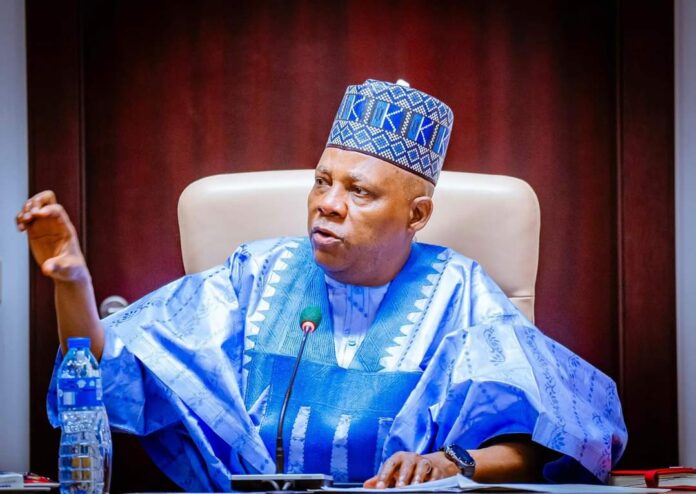
It is hard for me to put into words just how much Vice President Kashim Shettima's mentorship has meant to me. When I reflect on the journey that has brought me to where I am today, his guiding presence and unwavering support loom large.

The truth is that greatness is not necessarily the same as goodness, but VP Shettima has combined the two. He speaks into my life in many meaningful and powerful ways. From the moment we first met in 2010, I was struck by His Excellency, Shettima's keen intellect, his unwavering commitment to public service, and his genuine passion for uplifting the next generation of leaders.

Even as a young person, I could sense the depth of his wisdom and experience—qualities that he has so generously shared with me over the years. What has made our mentorship so impactful, though, is the mutual respect and trust that has blossomed between us. I hold Vice President Shettima in the highest regard, not just for his achievements but for the profound impact he has had on shaping my own character and decision-making abilities.

In turn, his investment in my growth and development has spoken volumes through assurances that my own potential is seen and nurtured. One of the things I admire most about VP Shettima as a mentor is his ability to strike the perfect balance—guiding me with a steady hand while also empowering me to find my own path. Rather than simply imparting his own knowledge, he has encouraged me to discover and nurture my unique strengths, always there to offer counsel and support when I needed it most.

My boss has inculcated in me a deep sense of self-assurance and independent thinking—qualities that have been invaluable in my work and personal life. The true testament to Vice President Shettima's impact, however, lies not just in my own growth and achievements but in the lasting legacy he is leaving behind. By investing in the development of young, passionate leaders like myself, he is not only shaping the course of individual careers but also laying the groundwork for a brighter future for our beloved country.

As I continue to go through the ups and downs of my career journey, I know that I will forever carry the wisdom and guidance that Vice President Shettima has imparted to me. His mentorship has been a true gift, one that has indelibly shaped who I am and what I aspire to achieve. I can only hope that, one day, I will be able to pay that gift forward by mentoring others in the same selfless, transformative way.

To Vice President Kashim Shettima, I offer my deepest gratitude and admiration. Your commitment to nurturing the next generation of leaders is truly inspiring, and I am honoured to have been the recipient of your wisdom and support.

As the late American author, Pat Conroy, so eloquently expressed in his 1986 novel, The Prince of Tides: "Teach them the quiet words of kindness, to live beyond themselves. Urge them toward excellence, drive them toward gentleness, pull them deep into yourself, pull them upward toward manhood, but softly like an angel arranging clouds.

Let your spirit move through them softly." These words speak volumes to the mentorship you have so graciously bequeathed to me and the guidance and leadership you have provided. I will strive to make you proud, both through my own accomplishments and by continuing to be an example to other younger ones in the years to come.

BY: FATIMA CHIROMA ABBA, DEPARTMENT OF MASS COMMUNICATION BORNO STATE UNIVERSITY.


Nigeria, like many other countries, has experienced a significant increase in social media usage in recent years. While social media has many benefits, such as connecting people and providing a platform for self-expression, it also has a darker side. The constant stream of curated and manipulated content can lead to unrealistic comparisons, decreased self-esteem, and a sense of inadequacy.

The Nigerian youth are among the most active social media users in Africa, with over 90% of internet users in the country having a social media account. While social media can provide a sense of community and connection, it can also perpetuate harmful ideals and reinforce negative stereotypes. The constant bombardment of images and videos showcasing seemingly perfect lives, bodies, and relationships can lead to feelings of inadequacy and low self-esteem. "In a recent interview with students from the University of Maiduguri, some revealed that they feel their phones are rendered useless without social media, while others admitted that they cannot spend a single day without their phones or access to social media." This is to show how addicted people are to social media.

social media platforms like Instagram and Facebook have been designed to be addictive, using algorithms that keep users engaged for as long as possible. This can lead to a decrease in face-to-face interactions, deep conversations, and meaningful connections, all of which are essential for good mental health.

BY FATIMA MOHAMMED USMAN, DEPARTMENT MASS COMMUNICATION, BORNO STATE UNIVERSITY, MAIDUGURI BORNO STATE.


Monguno Local Government Area, a strategic hub in Borno State, stands as a testament to resilience in the face of adversity.

Over the years, the people of Monguno have endured the devastating impact of insurgency, economic hardships, and infrastructural neglect. Despite these challenges, the community remains steadfast in its hope for a better future.

However, one glaring deficiency threatens to undermine this hope—a lack of a functional hospital to cater to the health needs of its growing population. Governor Babagana Umara Zulum, renowned for his unwavering commitment to the welfare of the people of Borno State, has been a beacon of progress in the region. His leadership has brought significant transformations in education, housing, agriculture, and security. Yet, the cries of the people of Monguno, yearning for a fully equipped and operational hospital, demand urgent attention.

Monguno serves as a refuge for thousands of internally displaced persons (IDPs) who fled their homes due to insurgent attacks. The local population has swelled significantly, stretching the already meager health facilities to their limits.

At present, residents rely on a few ill-equipped clinics and private dispensaries that lack the capacity to handle severe medical cases. Expectant mothers face alarming risks during childbirth, children suffer from preventable diseases, and emergency cases often result in fatalities due to delays in accessing better-equipped hospitals in Maiduguri.

Health workers in Monguno are doing their best under dire circumstances, but they are overwhelmed. The absence of critical medical equipment, sufficient medications, and specialized care exacerbates the suffering of the residents. For a community with such a large and vulnerable population, this is an injustice that should not persist.

A well-equipped hospital in Monguno would not only provide timely healthcare services but also restore a sense of dignity to the people. It would reduce the maternal and infant mortality rates, ensure effective management of disease outbreaks, and cater to the health needs of the elderly and chronically ill. Moreover, it would serve as a critical infrastructure for addressing the health challenges of the IDP camps in the area.

Governor Zulum’s administration has demonstrated an understanding of the importance of healthcare by upgrading several hospitals and building new ones in various parts of the state. Expanding this vision to Monguno would align with his commitment to inclusivity and equitable development.

The Borno State government has proven adept at leveraging partnerships with international agencies and NGOs.

Organizations such as the World Health Organization (WHO), the International Red Cross, and UNICEF have played key roles in supporting healthcare initiatives in conflict-affected areas. Mobilizing these partnerships to establish and sustain a hospital in Monguno is a viable strategy.

Additionally, the government can allocate resources from its ongoing development programs and explore Public-Private Partnerships (PPP) to ensure the project’s sustainability. Engaging local leaders and stakeholders in Monguno would also foster community ownership of the facility, ensuring its proper maintenance and functionality.

Your Excellency, the people of Monguno trust in your vision and commitment to transforming Borno State. Your administration has been a symbol of hope for Countless communities, and Monguno seeks to be part of this progress. Addressing this urgent healthcare need will not only save lives but also reaffirm the trust and loyalty of the people in your leadership.

As the state continues to recover from the scars of insurgency, investing in Monguno’s health sector will serve as a reminder that no part of Borno is left behind. It is time to turn the hope of the people into a reality, a functional hospital in Monguno is not just a necessity; it is a promise of a healthier and more prosperous future for all. The people of Monguno are watching, praying, and waiting. The time to act is now.

BY MARTHA LALAI, DEPARTMENT OF MASS COMMUNICATION, BORNO STATE UNIVERSITY, MAIDUGURI.


Gender-based violence (GBV) is a pervasive and insidious issue that affects millions of people around the world, particularly women and girls.

It is a human rights violation that perpetuates inequality, discrimination, and social injustice.

Despite efforts to address GBV, it remains a persistent problem, and it is imperative that we break the cycle of violence and work towards creating a society that values and respects the rights and dignity of all individuals.

The statistics on GBV are alarming. According to the World Health Organization (WHO), one in three women worldwide has experienced physical or sexual violence in their lifetime.

In Nigeria, where I am based, the National Demographic and Health Survey (NDHS) 2018 reported that 31% of women aged 15-49 have experienced physical violence, while 14% have experienced sexual violence.

GBV is not only a personal issue but also a societal problem that requires a collective response.

It is perpetuated by social norms, cultural practices, and power imbalances that reinforce patriarchal systems and attitudes.

GBV is also linked to poverty, lack of education, and unemployment, which can exacerbate the vulnerability of women and girls.

To break the cycle of GBV, we need to adopt a multifaceted approach that addresses the root causes of violence. This includes:

  1. Changing social norms and attitudes: We need to challenge and change the social norms and attitudes that perpetuate GBV. This requires engaging with communities, traditional leaders, and influencers to promote positive messages about women's rights and dignity.
  2. Strengthening laws and policies: Laws and policies that protect women's rights and prevent GBV must be strengthened and enforced. This includes laws on domestic violence, rape, and other forms of GBV.
  3. Providing support services: Survivors of GBV need access to support services, including counseling, medical care, and legal assistance. These services must be accessible, affordable, and sensitive to the needs of survivors.
  4. Promoting education and economic empowerment: Education and economic empowerment are critical in preventing GBV. Women and girls who are educated and economically empowered are less likely to experience GBV.
  5. Engaging men and boys: Men and boys have a critical role to play in preventing GBV. They must be engaged in efforts to promote positive masculinity and challenge patriarchal attitudes and behaviors.

In conclusion, breaking the cycle of GBV requires a collective effort from governments, civil society organizations, communities, and individuals. We must work together to challenge social norms and attitudes, strengthen laws and policies, provide support services, promote education and economic empowerment, and engage men and boys in efforts to prevent GBV.

Only then can we create a society that values and respects the rights and dignity of all individuals.

BY ABDULWAJUD RAJI OLAYEMI DEPARTMENT OF MASS COMMUNICATION, BORNO STATE UNIVERSITY.


Deforestation is cutting down a large number of trees and clearing out forest areas.

The various reasons behind these human activities are increasing the space for human usage like logging or wood extraction, agricultural expansion, infrastructure expansion etc.

Deforestation is harmful to the environment because it causes a lot of carbon emissions and alters the natural ecosystem. It also contributes to global warming and climate change because plants release the stored carbon into the atmosphere as carbon dioxide when they are cutting down.

Deforestation is one of the major problem affecting the people of Misau local government area of Bauchi state, it was on 21st June, 2024 the residents of Misau local government area witness a heavy rainfall and hurricane that demolished at at least 700 houses.

The incident is related in deforestation in one area called Balewal or Bande or Kogi known by the residents of Misau local government area.

The environmental activists and community leaders alerted the government on the dangerous trend which is capable of plunging the area into serious security and environmental disaster.

It’s obvious that politicians Misau local government area see our forests as political bounties. Whenever an election is held, the target of the members of the winning party is to take control of forests and reserves in their communities.

This twist of politics started more than a decade ago but worsened from 2020 to date.

In 2020 the government suspended the emir of Misau, caretaker chairman in Misau and some traditional rulers because of this, among other charges. But it seems the government is still not aware that this ugly act is still ongoing across Misau.

This deforestation is putting the residents of Misau in fear over the rainy season. We nearly witnessed climate change, a sandstorm that clouded us for hours. Everyone knows that trees release much-needed oxygen and cutting them down indiscriminately is equal to denying ourselves the precious life gift. Lack of trees cover will also result in trapping of greenhouse gases which will adversely affect the ozone layer and could cause diseases like leukemia and cancer.

We are calling on the state government to please address this matter urgently and save our environment from all sorts of erosions and climate change.