oppinion

oppinion

BY FATIMA BARMA, DEPARTMENT MASS COMMUNICATION
BORNO STATE UNIVERSITY, MAIDUGURI.


In a groundbreaking move that underscores his unwavering commitment to the development of Borno State, Governor Babagana Umar Zulum has unveiled plans for an intra-city railway network.

This visionary project is poised to revolutionize urban transportation in the state, marking a historic step forward for Maiduguri and its environs.

Transportation infrastructure is a cornerstone of urban development, and Governor Zulum's proposal for an intra-city railway network is a testament to his forward-thinking governance. By addressing the mobility challenges faced by Maiduguri's growing population, the project promises to enhance the quality of life for residents, stimulate economic activities, and significantly reduce traffic congestion.

This bold initiative is not only a response to the immediate needs of the state but also a strategic investment in its future.

The railway network will provide an affordable, efficient, and environmentally friendly mode of transportation for thousands of commuters daily.

Borno State has endured years of insurgency that have left its infrastructure in dire need of rehabilitation. Yet, under Governor Zulum’s leadership, the state has witnessed remarkable strides in rebuilding critical infrastructure. The proposed railway network is another feather in his cap, demonstrating his determination to restore Maiduguri's status as a hub of economic and social activities in the Northeast.

The governor's track record of delivering impactful projects speaks volumes. From rebuilding schools and hospitals to creating employment opportunities and fostering agricultural development, Zulum has shown that even in the face of adversity, progress is achievable.

The economic implications of the intra-city railway network are immense. By easing the movement of goods and people, the project will attract investments and boost local businesses. It will also create numerous job opportunities, from construction to operation and maintenance, providing a lifeline for many families.

Socially, the railway network will connect communities, making it easier for residents to access essential services such as healthcare and education. It will also reduce the environmental impact of vehicular traffic, contributing to a cleaner and healthier Maiduguri. While the governor’s vision is commendable, its success will depend on collective support from stakeholders.

The federal government, private sector investors, and international development partners must rally behind this transformative initiative.

Borno State residents, too, have a role to play in safeguarding the project and ensuring its sustainability.

Governor Babagana Umar Zulum’s plan for an intra-city railway network is more than just a transportation project; it is a symbol of hope and resilience. It reflects his dedication to the welfare of his people and his resolve to lay a solid foundation for Borno State's future.

As this ambitious project takes shape, it is a reminder that visionary leadership can pave the way for a brighter tomorrow. Governor Zulum deserves commendation for dreaming big and acting boldly, proving once again that Borno’s best days are still ahead.

BY MOSES YUSUF DEPARTMENT OF MASS COMMUNICATION, BORNO STATE UNIVERSITY, MAIDUGURI.


The recent appreciation of the Naira to N1,550 against the US Dollar in the parallel market is welcome news for many Nigerians. This improvement offers hope for our economy, which has faced tough times due to unstable exchange rates.

The rise in the Naira's value is due to several reasons. These include lower demand for dollars, increased confidence in government policies, and the fact that many importers have finished their festive season purchases.

This development may lead to cheaper goods and services, especially imported items. It could also help reduce inflation, easing the strain on household budgets.

However, maintaining a stronger Naira needs consistent effort. The Central Bank of Nigeria (CBN) should continue policies that promote transparency in the foreign exchange market. Tools like the Bloomberg BMatch system have already helped by improving trading and narrowing the gap between official and parallel rates.

The government should also support local production to reduce reliance on imports. By giving loans, subsidies, and better infrastructure to local industries, more jobs will be created, and demand for dollars will fall.

Nigerians must avoid practices like dollar hoarding and speculation, which can weaken the Naira. A united effort to support the currency will bring more stability.

As the Naira strengthens, businesses should pass on the benefits by reducing prices, especially for essential goods like food and medicine.

The government needs to communicate clearly, apply policies effectively, and work with international partners. Public education campaigns can also help people understand how their actions affect the economy.

While this progress is promising, it is just the beginning. With effort from everyone, we can build a stable economy that works for all Nigerians.

PAUL ALIMU MAUNTA DEPARTMENT OF MASS COMMUNICATION, BORNO STATE UNIVERSITY, MAIDUGURI.


Corruption remains one of Nigeria’s biggest challenges. From misuse of public funds to bribery and favoritism, it touches almost every part of our society. If we do not address this issue seriously, our country’s growth will remain slow, and its potential will be wasted.

Corruption steals resources meant for improving lives. Money for building schools, hospitals, and roads often ends up in private pockets. This leaves children learning on bare floors, patients without proper care, and roads in terrible condition.

It also drives away investors. When businesses face bribes and shady deals, they suffer. This reduces job opportunities and increases poverty, making life harder for ordinary Nigerians.

Leadership is key in fighting corruption. Our leaders must set an example by being honest and managing public funds responsibly. Sadly, many focus on personal gain instead of the public good.

Anti-corruption agencies like the EFCC and ICPC must be independent and well-funded to catch and punish those who steal from the people. Our courts should also resolve corruption cases quickly. Delayed justice allows the guilty to escape punishment.

Transparency is vital. Government officials should declare their assets publicly, and citizens should know how public money is spent. This will promote accountability.

Educating the public on the harm of corruption is crucial. When people understand how corruption affects their lives, they are more likely to reject it and demand honest leadership. Schools should teach children the value of integrity.

We all have a role to play. Refusing to pay bribes and reporting corruption are steps we can take. Technology can also help by reducing human contact in processes like paying taxes, making bribery harder.

Punishing corrupt acts is essential. No one should be above the law, no matter their position. The media must also expose corruption and be protected while doing so.

We can learn from other countries that have reduced corruption. Working with international organizations to recover stolen funds will strengthen our efforts. Religious and cultural leaders can also use their influence to promote honesty.

Corruption affects every Nigerian and widens inequality. If not stopped, it can create more division and frustration. We need consistent efforts from the government and active participation from all Nigerians.

Nigeria has the talent and resources to succeed. By fighting corruption together, we can build a country where everyone thrives. The journey is tough, but the reward is worth it.

BY ABDULHAMID AL-GAZALI


There was a time we had a very heated discussion about japa, leaving comfort zone, seeking greener pasture and so on. As one who has no plans for that, even though not opposed to it, I had nothing to say.


But something really intriguing happened to someone I know recently that persuaded me to plaster these pieces of thoughts on your walls. My friend who was gifted with exceptional talent for repairing everything machine, relocated from Maiduguri to a town (I shouldn’t mention) about 15 years or so ago because of Boko Haram.


The terrorist activities forced many businesses out of the state, particularly trailer and truck services. Most of the traffic moved to border towns outside Borno, and as a mechanic, he needed to move with that too.


My friend is such a slim, calm, and cool looking folk. Save for those who already knew, you would never tell he could loosen some of these big truck bolts, from merely seeing him. But underestimate him at your own risk. He once told me that he was even used to being underrated at first sight, such that over time, he has learned to use it as a motivation.


I remember asking him too how he manages to deal with loosening and tightening these heavy trucks. A terrific Sufi, he told me that it was always simple when you use your heart. He said it wasn't just physical strength that does that, but a strong mental clarity and commitment. As far as I am concerned, that's a terrible French. For instance, he said the knots have certain patterns. When they are four on a rectangular object, you know that their strength are evenly distributed, and you immediately choose which one to start loosening. 'Your biggest tool is your hands and all of your body, working in sync with your heart. The spanners follow your instructions.' Terrific.


Before you would utter Jack Robinson, he became a household name in the town. His customers were built from people who had even given up hope on ever getting their trucks back on tarred roads. This means that his workshop always dealt with trucks that were believed to be hardly ever repairable. If it isn't so complex, it wouldn't be ever brought to him.


He specialized in handling the American Mack brand, built by a 124-year-old truck manufacturer. Founded in 1900 in Brooklyn, its TC-15 transmission, exceptional engine power take-off, and general body quality made it a universal darling for truck operators. My friend mastered its principles, structure and operations to its very last detail. He would tell me that, for his workshop, there's no such situations as irreparable; it is either the owner doesn't want it fixed or can't afford to foot the bills.


Over time, truck operators shifted from it because of the brand's high cost of spare parts and maintenance. They switched to a Chinese brand, Howo. Not as strong as Mack, they say, but definitely cheaper to maintain, and so most people gradually moved to it.


Unfortunately, like it happens even to very big conglomerates, he didn't immediately discern that Mack was going out of fashion for his clients; and understandably, he didn't therefore make the initiative to consider switching over on time too. This was not because of the inability to repair the new brand.


When Howo was new in Maiduguri some 15 years ago or so, he was among the earliest to demystify it. He unbuckled it from top to ground and fixed it. It was for that that his master's workshop where he apprenticed started accepting offers to repair the brand. Now, because he didn't make the transition at the right time, he now came to find out that he actually has very few clients left.


By the time he considered switching over to the new brand, it was already terribly saturated because it is not as complex as Mack used to be. As usual, when there are too many people in a sector, the first victim becomes cost. It would be terribly lowered that, for him and his kind of situation, it could no longer pay his bills. Now, that's the important story I want to tell.


He decided then to venture into transportation. He managed to assemble a grounded truck to start transporting goods, especially petrol, from the South to the North. It is so sad that this transition wasn't very smooth for him. After less than a year, he was thrown out of the business in a way that was very grounding.


An anti-bunkering squad operatives stormed Warri one day and launched a midnight operation. In our military's scorched earth operations, which I am very familiar with as someone who had covered Boko Haram since its start, they most often than not, go after everything that looks like their target. His truck, which got stuck after a heavy rainfall, as a result of the poor roads in some parts of the region, was set ablaze and burnt entirely. He could not say a word in protest, for it could have cost him his dear life. He went there with a truck worth over N40 million but returned with nothing, not even its key.


As if that's not enough, that was only merely the beginning of so many other tribulations. The tank attached to the truck was hired, and so, if nothing, he would have to pay for it. Interestingly, immediately the news was out, his associate who fronted for him to hire the tank was arrested and locked up. I mean, what kind of society does that? There was no any talk about how he was hoping to repay it or how it happened. I am not a lawyer, but this was even as there was no any written agreement between the two parties addressing cases of loss or something. He had to pay through the nose and write an outrageous undertaking under duress to bail himself out of police cell.


When all these happened, I asked my friend to take time off everything for a few days to recover, de-clutter and make sense of all that had happened. I mean, he was brought aground overnight. He could not afford to do anything. Then, the trauma of losing his first child in the midst of this, coupled with an even more spirit dampening lack, threw him into an obvious catch-22. In between that, the time his friend had given to repay the tank, indeed under what could involve a pinch of duress and/or blackmail, elapsed and police launched a manhunt to re-arrest him (the friend).


Since he didn't want his friend to face the music of his own iniquities, he told me he would go and face whatever that was waiting for him. What was waiting for him was an arrest! He went to the police station, where the case was lodged, as a responsible citizen would, to take responsibility for what had happened and to seek some clemency and respite that would allow him to plan how to settle the owner. The owner wouldn’t listen, insisting that he wants his tank or Naira equivalent of it instantly back. And since he could not understandably do that at that moment, he was thrown into the cell!


Now, here is my hair-splitting dilemma about japa. We got lawyers to intervene and at least get him on bail and take the matter to court since the police could not do anything further. Interestingly, it was hard to persuade the police to grant the bail; but what, to my dismay, was more difficult was getting a surety to step in. I mean, this was a town he has stayed for a decade and half. He was never known for any crime. He would, in fact, help his apprentices to own houses, get married and what have you. But in this same town, there was no one who could stand for him! The downside of leaving your comfort zone?


Almost everyone we spoke to, even those who knew him as neighbors, were requesting to be paid before they would undertake to be his surety. As far as I know, the case wasn't criminal, to assume that there would have some moral implications. Similarly, this was a man who reported to the police state all by himself. If he had chosen to be irresponsible, he wouldn't have even returned to the town. This left me wondering, you know. What if he fell helplessly sick in this town? Like, would he find blood donors? Or anyone to rush him to a nearby clinic?


I mean, there are extremely great and kind people all over the world; but my friend was not really lucky to have met them in that, at least on this matter. It was a terrible shocker to me!

BY BILKISU SHEHU HABIBA DEPARTMENT OF MASS COMMUNICATION BORNO STATE UNIVERSITY


In the 21st century, technology and innovation are no longer optional skills but essential tools shaping the future of education and careers. From virtual classrooms to AI-driven research, students today are at the forefront of a technological revolution that is redefining how they learn, interact, and prepare for their future.

The Role of Technology in Modern Education

Technology has transformed traditional education into a more interactive and engaging experience. Online learning platforms like Coursera, Khan Academy, and Google Classroom have expanded access to quality education beyond the confines of a physical classroom. This democratization of knowledge has allowed students from all walks of life to pursue learning at their own pace, fostering a culture of lifelong education.

Moreover, the integration of digital tools like tablets, interactive whiteboards, and learning management systems (LMS) has revolutionized teaching methods. Instead of being passive recipients of information, students now engage in collaborative, hands-on learning, making education more personalized and effective.

Innovation in Problem Solving

Innovation encourages students to think critically and solve real-world problems. Hackathons, robotics competitions, and innovation labs have become common in schools and universities, providing platforms for students to develop creative solutions. For instance, students are now developing apps to address social issues, such as mental health awareness and environmental conservation.

Furthermore, exposure to cutting-edge technologies like artificial intelligence (AI), machine learning (ML), and blockchain equips students with skills that are highly valued in the job market. Coding, once considered a niche skill, is now a foundational element of education, fostering a generation of problem-solvers and innovators.

Challenges and Opportunities

Despite its benefits, the rapid integration of technology presents challenges. Digital literacy, cybersecurity, and equitable access are critical issues that need addressing. Many students in underprivileged areas lack access to reliable internet or devices, creating a digital divide that limits opportunities for some.

However, initiatives like One Laptop per Child and community-driven tech hubs are working to bridge this gap, ensuring that all students can participate in the digital economy. The rise of open-source software and free online courses further levels the playing field, offering resources to anyone with an internet connection.

Preparing for a Tech-Driven Future

As technology continues to evolve, students must be adaptable and resilient. Soft skills like creativity, teamwork, and communication remain crucial alongside technical proficiency. Institutions are now emphasizing interdisciplinary education, blending fields like technology with humanities, to create well-rounded individuals ready to tackle complex global challenges.

The future belongs to those who can harness the power of technology and innovation. By embracing these tools, students are not only enhancing their education but also positioning themselves as leaders in tomorrow’s world.

Conclusion

Technology and innovation are reshaping the landscape of education, offering students unprecedented opportunities to learn, create, and lead. By leveraging these advancements, today’s students are poised to drive future progress, making the world a more connected, efficient, and innovative place. The challenge lies in ensuring that this future is inclusive, equitable, and driven by a commitment to using technology for the greater good.

Oladimeji Odubanjo, Department of Mass Communication, Borno State University.


Dear Mr. President, I am writing to bring to your attention the deplorable condition of the Gombe-Dukku-Kano Road, which has been a source of concern for commuters, traders, and residents of the affected areas.

The Gombe-Dukku-Kano Road is a critical artery that connects the northeastern states to the rest of the country. However, the road has been in a state of disrepair for several years, causing untold hardship to road users. The road is characterized by potholes, craters, and erosion, making it impassable during the rainy season.

The poor condition of the road has led to increased travel times, vehicle maintenance costs, and accidents. It has also affected the economy of the region, as traders and commuters are forced to take longer routes, resulting in increased costs and reduced productivity.

Furthermore, the road's poor condition has also affected the security of the region, as it provides a conduit for criminal elements to operate. The road's rehabilitation would not only improve the economic fortunes of the region but also enhance security.

In view of the above, I respectfully urge your administration to give special attention to the rehabilitation of the Gombe-Dukku-Kano Road. The road's rehabilitation would be a significant boost to the economy and security of the region.

I would appreciate it if your administration could expedite action on this matter.

Thank you for your attention to this matter.

BY JEMIMAH MUSA SULE, DEPARTMENT OF MASS COMMUNICATION, UNIVERSITY OF MAIDUGURI


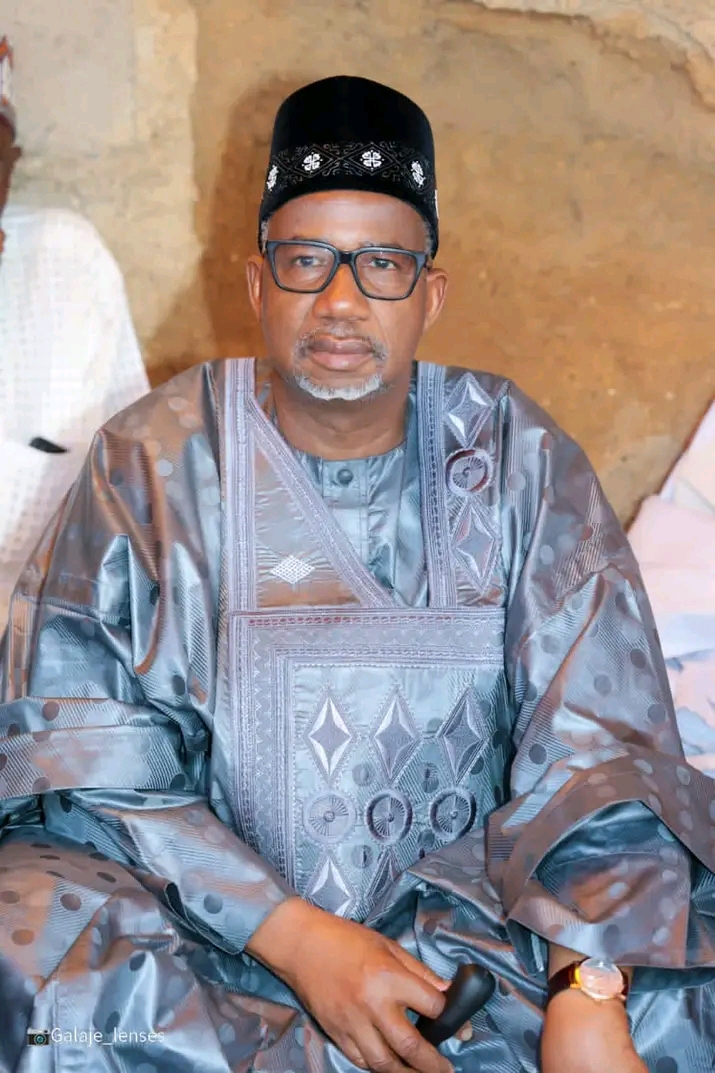
Dear Governor Bala Mohammed, With regard and salutation, I may use this means to write this letter to you, openly in order to draw your attention and drop a message to your notification bar. This pen of mine is writing on behalf of the good people of our dear Bauchi state.

In this tough time of Nigeria's economic crises, inflation as well as economic hardship and insecurity it’s the exact time that the good people of Bauchi state need a special sympathy and compassion.

Your developmental ideas and achievements as Bauchi state governor are monumental and worth celebrating, your administration revived our hope for better Bauchi of our dream. Your Excellency, you kill the show!

My message is just to voice the complaints of our dear people of Bauchi state on the reconstruction of some emir's palace in Bauchi state. Sir, there are some areas in Bauchi that needs your special attention and intervention because the people of Bauchi state are in dire need of your assistance.

Sir, the reconstruction of these emir's palaces will not help the poor masses of Bauchi state in one way or the other. Sir, instead of reconstruction why will you use the money in areas like; healthcare system, schools, water supply, road networks and giving scholarship to less privilege students.

In the midst of this undeirabke condition, the some students of Bauchi state are dropping out from Universities, Polytechnics and Colleges of Education because of they got their part of sadness through the new registration bill that increased their registration fees by 37.5 percent.

Similarly, students are crying for your refusal to approval the payment of their stipend scholarship which they applied through remitting N1000 via RRR to the state government two years ago.

Sir, with all the high expectations that we had of you, we wish these complaints are expeditiously addressed by you.

BY: ABDULHAMID AL-GAZALI

One thing I don’t get with Nigerian public offices nowadays is how appointments into them plunged from being the highest tests of one's character content and career accomplishments to now need no merit and any moral requirement. Ordinarily, the appointment of unqualified people into public offices is, first of all, immoral, worse than even accepting it. This is not also foreclosing the fact that accepting an appointment you know you are not qualified for is also criminal and immoral.

But these days, the case has reached a new record. The appointments are not just really immorally done, they’re done for immoral reasons, or as a reward for some immoral conduct. That’s not all. There are people who are typically criminals and entirely immoral, with these being their only selling points. Over time, they have managed to make a career out of it and many times use it as a passport to playing at the highest levels of our political playing field.

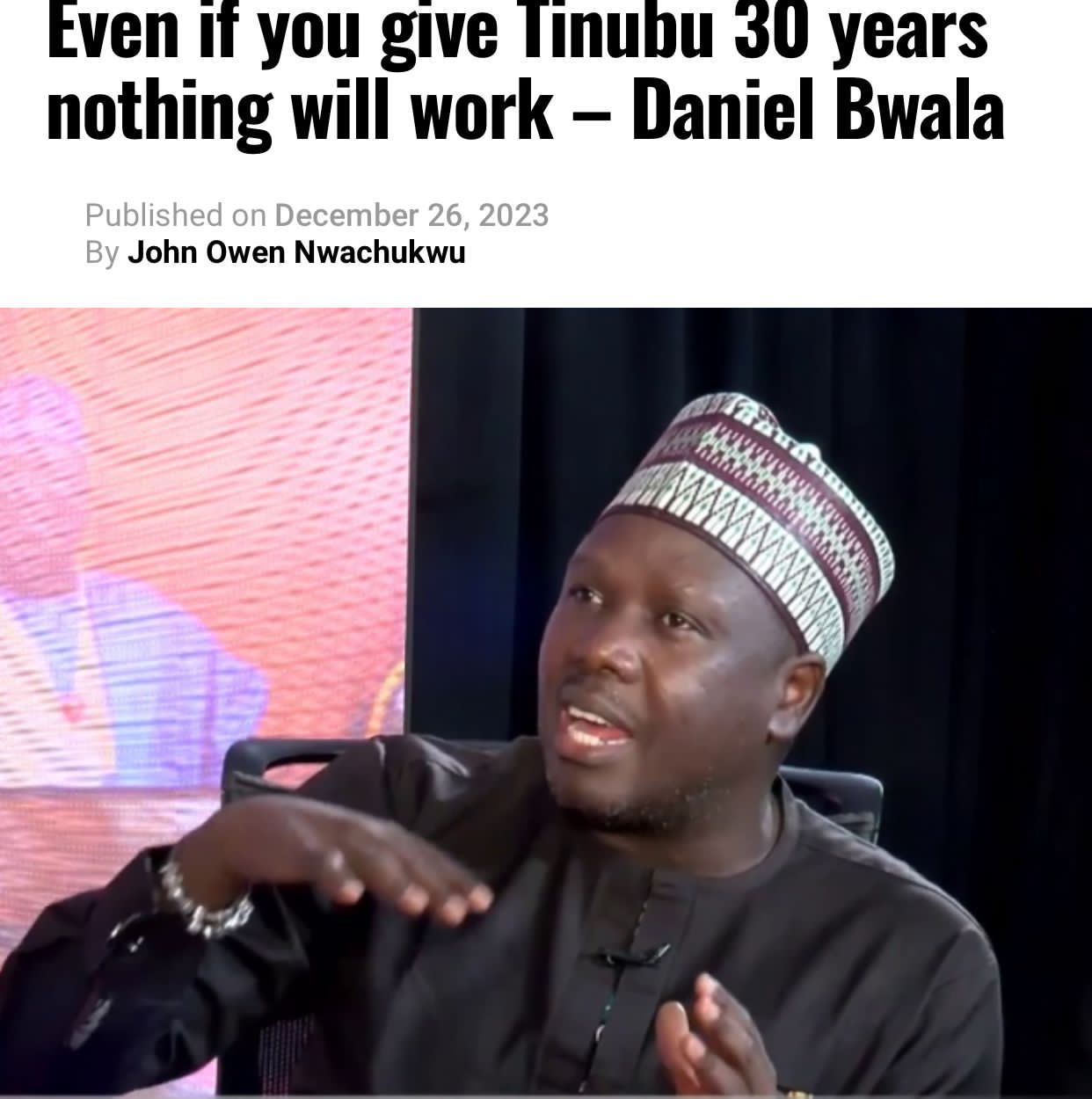
Daniel Bwala is one of these people, and his recent appointment meets all this template. By the standards this government is claiming to set, a man who stood up against a Muslim-Muslim ticket, a ticket which, if genuine, would ordinarily mean that we have attained some level in our journey towards national cohesion, is not one to slap back on the faces of those who believed and toiled to uphold it. Ordinarily, this government, for what it said it believes, is supposed to treat his case as an example of how to deal with a religious bigot.

But because they have already reduced governance to mere optics, it is thus understandable why the presidency would descend deep into the mud to shop for one who has long sacrificed shame at the altar of crumbs. The job of defending the indefensible cannot be done by one with any shred of honor.

Ajuri Ngalele was an exceptional publicist and he did tremendously well under Buhari because there were actually some good arguments for the things the government was doing, unlike he had found under this administration. He suddenly lost his charm and realized he could not hold anything strongly again.

But this man never did anything honorably or even wisely. He was always petty, truant and shameless. If he was not planted as a puppet, in which case he was being teleguided to behave in the way he did, his unintelligent arguments in the last election were the things that gave his principal away. First of all, one has already removed himself from any decent national conversation the moment he reduces it to religious or regional terms.

His immature rants against the Muslim - Muslim ticket of the APC, which was his only argument anyway, actually inspired a huge rejection of his own brand and an almost religious commitment to the (Muslim-Muslim) ticket. As simplistic as such a job is, Bwala was very bad at it. Even if he was planted in there to do a hatchet job, it was not his initiative: he was just a tool, the only thing he can ever be well at.

In the long run, it became clear that he had no any commitment to the cause of supporting a balanced ticket for an inclusive Nigera. It was rather a branding opportunity for him to display his hypocrisy, sidebyside with his price tag. His antics isn't new to us, there are a lot like him, who have gotten into many important public offices through political truancy and shameless pettiness.

Bwala only speaks, but he has never said anything meaningful, because he cannot even if he wants to. He is naturally programmed for barefaced lies, sensationalism, and tantrums--much sought-after qualities for a career in political puppeteering and bootlicking--to the extent that this is the only thing he can do well. This makes him the best fit for this government; up until he brings the roof down on them all at once.

We had a talk recently about whether the job of image-making can be done by a principled person. The thought is always that it can only be done by shameless people. The assumption here is that governments are generally purveyors of lies and thus the unfortunate conclusion that only shameless people can do it.

However, governments only manage information and dissemination because they know a lot the public doesn’t know. Femi Adesina did it very responsibly and excellently. The problem now is that, when you appoint Bwala to do this job, given his antecedents, you have already 'un-made' your image because everyone knows what he is brought in to do. He is coming here to lie. But ideal image making is supposed to be targeted towards building credibility around a person, institutions or governments. It has to, even if nothing, pretend to start with some credibility. But with this man, I am sorry.

BY ABDULKADIR M LAWAN, SEPTEMBER 30, 2024 | 7:31PM


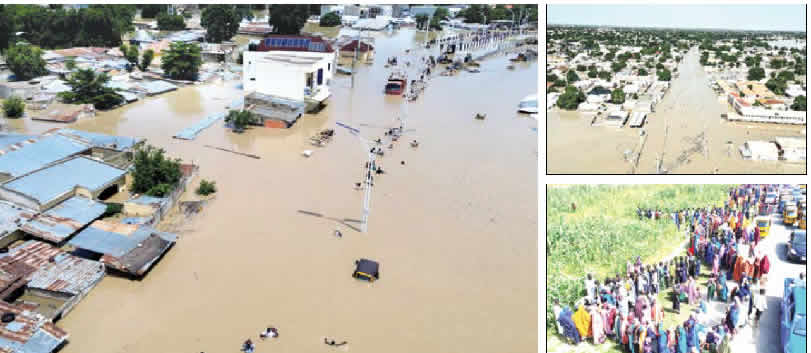
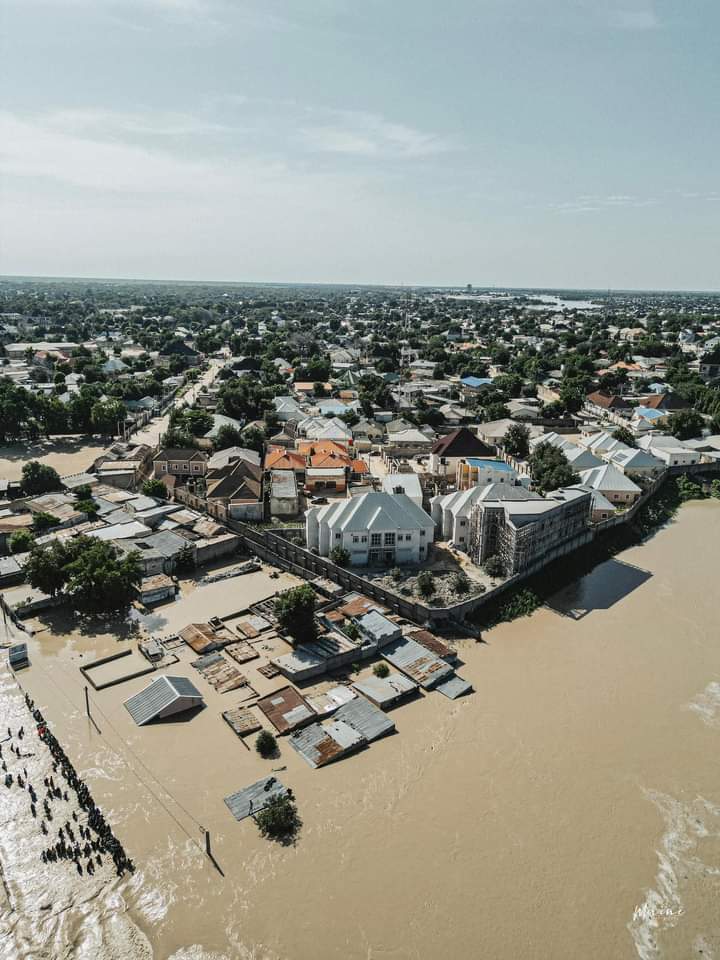
Three weeks after the devastating floods in Maiduguri, Jere, and Mafa Local Government Areas of Borno State, many women and children remain uncertain about their fate. The disaster has displaced over one million people, mostly women and children, who are now struggling to survive.

The floods have ravaged farmlands, leaving many farmers without livelihoods. Some victims rely on their harvests for sustenance, but the floodwaters washed away their crops, leaving them with nothing.

Despite government interventions, some victims are yet to receive relief materials, forcing them to roam the streets in search of shelter and food.

The government's efforts to provide aid through official camps have been hindered by communication gaps, leaving some victims unaware of the available support. Furthermore, irregularities in food distribution and insecurity issues have plagued the process.

Recently, the government urged victims living outside official camps to relocate to nearby camps to receive aid. However, many victims remain unaware of this directive, highlighting the need for effective communication strategies.

Women and children are the most vulnerable members of our society, and their well-being is crucial to our collective future. As caregivers, mothers, and educators, women play a vital role in shaping the next generation. Their loss of livelihoods not only affects their families but also has far-reaching consequences for our communities.

The impact on children is equally alarming. Deprived of education, healthcare, and stability, these young minds are at risk of being forever scarred. The long-term effects of this trauma can lead to a lost generation, perpetuating cycles of poverty and inequality.

Moreover, women's economic empowerment is essential for community development. Their contributions to local economies, food security, and social cohesion cannot be overstated. Neglecting their needs now will have devastating consequences for our societal fabric.

This crisis highlights the need for:

  1. Effective communication strategies to reach all affected victims.

  2. Transparent relief distribution mechanisms.

  3. Enhanced security measures to protect women and children.

  4. Access to healthcare, education, and psychosocial support.

  5. Economic empowerment programs for women.

  6. Agricultural support for affected farmers.

Furthermore, we must recognize:

  1. Women's leadership roles in crisis management and decision-making.

  2. Children's rights to education, healthcare, and protection.

  3. Community-based initiatives for sustainable recovery.

  4. Collaboration between government, NGOs, and local organizations.

  5. Long-term investment in disaster preparedness and infrastructure.

To address the information gap, the government should:

  1. Utilize local languages (Hausa and Kanuri) in communication.

  2. Leverage community leaders and influencers.

  3. Establish feedback mechanisms.

By supporting these critical members of our society, we invest in a resilient, thriving, and equitable future for all.

The fate of Borno's women and children hangs in the balance. Let us act with compassion, urgency, and collective responsibility to alleviate their suffering and rebuild their lives.

We owe it to ourselves, our children, and future generations to ensure that no one is left behind in times of crisis.

BY: ABDULKADIR M LAWAN, SEPTEMBER 22, 2024/ 03:27PM

The recent devastating flood in Borno State, triggered by the Alau Dam overflow, has sparked widespread destruction and displacement.

Over a million people have been affected, with numerous lives lost and properties destroyed.

Despite the state government's efforts to provide emergency relief, accusations of negligence have emerged from non-residents.

In my opinion, these criticisms are unfair and misinformed. Natural disasters are beyond human control, and the state government's prompt response has saved countless lives.

The government's delegation, led by the Secretary to the State Government (SSG), visited the Alau Dam to assess the situation. Based on expert briefings from the Chad Basin Development Authority, the SSG assured the public that Maiduguri was safe. While the situation worsened, it's unreasonable to blame the government for the unpredictable nature of the flood.

Rather than pointing fingers, we should support our leaders during this challenging time. The government's swift response, including food, shelter, and funds for victims, deserves appreciation.

In issues beyond human control, such as natural disasters, it's crucial to rally behind the government. Unity in adversity fosters solidarity among citizens, essential for collective recovery. Supporting the government ensures a more efficient response to the disaster, saving lives and property.

It's heartening to note that many individuals and organizations, both within and outside Borno State, have demonstrated commendable support for the affected communities. Their donations, volunteer work, and advocacy have helped alleviate the suffering and provided vital assistance.

This outpouring of support is a testament to the resilience and compassion of the Nigerian people. I commend those who have contributed to the relief efforts, acknowledging that their selflessness has made a significant difference.

However, despite this progress, some critics continue to politicize the issue, spreading misinformation and fueling unnecessary tensions.

In times of crisis, unity and understanding are vital. We should commend the state government's efforts and encourage them to do more. The people of Borno State deserve our collective support, not armchair criticism from outsiders.

Let's focus on solutions, not scapegoats. The state government's commitment to rebuilding and recovery should be acknowledged and supported.

As a journalist from North East Nigeria, I've witnessed firsthand the resilience of the Borno State people. Together, we can overcome this disaster and rebuild stronger.

In conclusion, let's redirect our energy from blame to support. The people of Borno State need our collective assistance, understanding, and empathy.

By Abdulkadir Lawan,

Journalist, North East Nigeria.